
Chocolate chip cookies are the cookie everyone expects on the tray, and the one allergy families most often have to skip. The classic recipe uses butter, eggs, and wheat flour, and even the chocolate chips can bring milk, soy lecithin, or seed oils along with them. Store-bought “free from” cookies tend to be dry, small, and expensive.
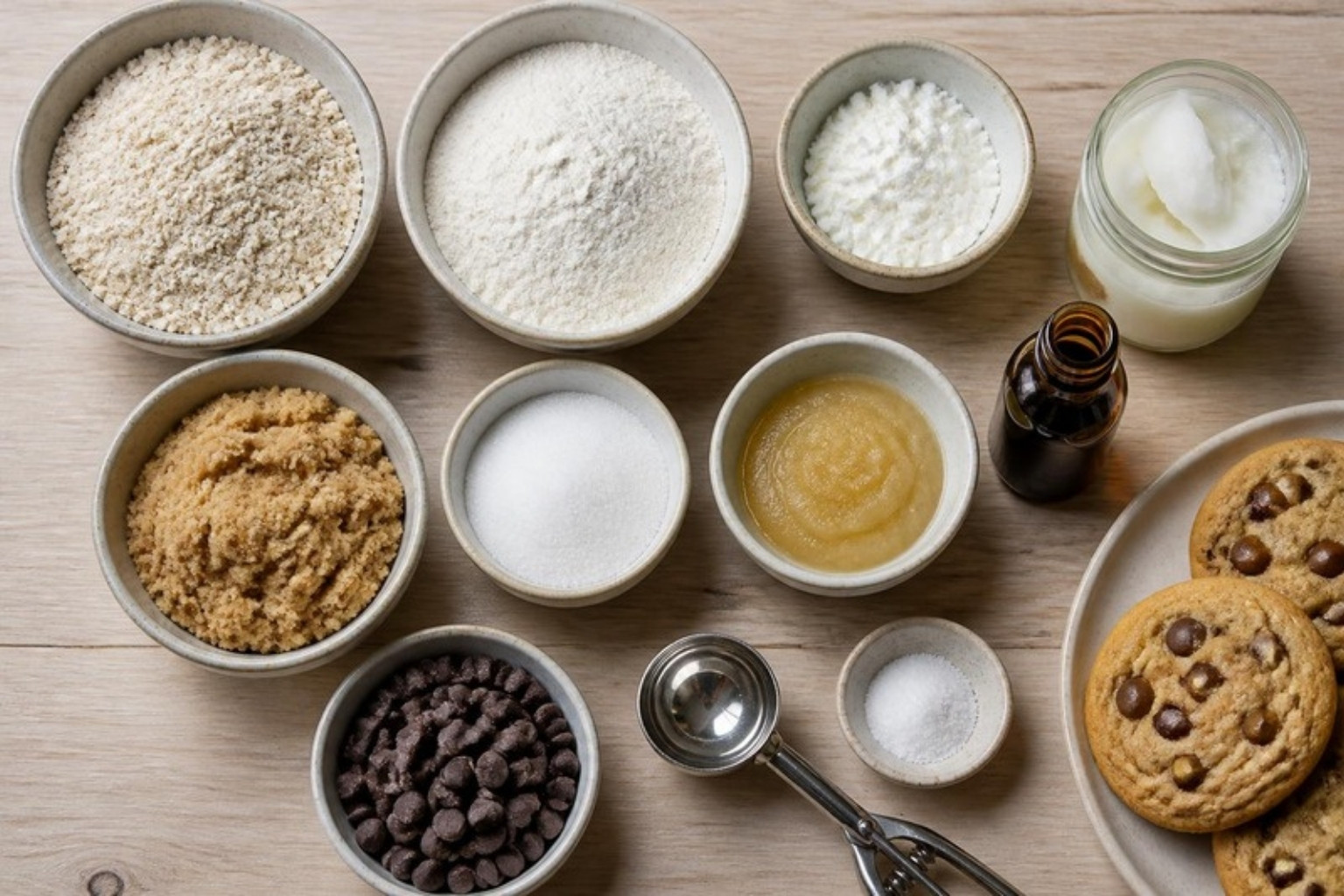
These chocolate chip cookies aim for the bakery-style texture: crisp, golden edges, soft and chewy centers, and plenty of melty chocolate. The dough uses certified gluten-free oat flour, white rice flour, and cornstarch, with brown sugar for chew and caramel flavor, refined coconut oil in place of butter, and a little applesauce to do the binding and moisture work eggs usually handle. Baking soda reacts with the brown sugar’s natural acidity for lift and browning. Pair them with dairy-free, soy-free chocolate chips, and you have a cookie for school snacks, cookie exchanges, and Christmas tins. This is an AI-developed recipe.
Made without: peanuts, tree nuts, milk, eggs, wheat, soy, fish, shellfish, sesame.
Why You’ll Love These Cookies
- Chewy centers, crisp edges, the classic chocolate chip cookie texture.
- No egg replacer: applesauce and the right flour balance do the job.
- No butter or plant butter: refined coconut oil, with a light-tasting olive oil option.
- One bowl plus a whisk for the dry ingredients; no mixer required.
- Freezer-friendly dough you can bake a few at a time all season.
How These Cookies Work Without Eggs, Butter, or Wheat
Wheat flour gives cookies structure through gluten; eggs add binding, moisture, and some lift; butter adds flavor, tenderness, and spread. Here each job is handled a different way. Oat flour brings a soft, slightly wheaty flavor and tenderness. Rice flour adds structure and crisp edges. Cornstarch keeps the centers soft. Together they hold the cookie without gluten.
Applesauce adds moisture and helps the dough bind, much like an egg does, and you can’t taste it next to brown sugar and vanilla. Refined coconut oil is solid at room temperature like butter, so creaming it with sugar traps a little air and keeps the cookies from spreading too thin. The 30-minute rest matters more than it looks: rice flour absorbs liquid slowly, and resting gives a chewier, smoother cookie that isn’t gritty.
Ingredients & Swap Ideas
- Certified gluten-free oat flour (1 1/4 cups / 120 g): oats can pick up barley or wheat during growing and processing, so look for certified gluten-free. You can make your own by blending certified GF rolled oats until fine.
- White rice flour (3/4 cup / 120 g): finely ground gives the smoothest texture.
- Cornstarch (1/4 cup / 32 g): tapioca starch works too.
- Refined coconut oil (1/2 cup / 100 g), softened: it should be solid but scoopable, like soft butter. If you avoid coconut, use 6 1/2 tablespoons light-tasting olive oil (light means refined and mild in flavor, not lower in calories) and chill the dough 1 hour. Skip vegetable oil, shortening, and plant butters.
- Brown sugar and granulated sugar: more brown sugar means chewier cookies.
- Unsweetened applesauce (1/4 cup / 60 g): room temperature, so it doesn’t firm up the coconut oil.
- Dairy-free, soy-free chocolate chips (1 cup / 170 g): this is the most important label check in the recipe. Many chips, including some labeled “dark” or “semisweet,” contain milk or soy lecithin, and some contain added seed oils. Read the ingredient list every time you buy them. A chopped dairy-free chocolate bar you’ve checked also works and gives melty puddles.
Kitchen Equipment
- Two rimmed baking sheets lined with parchment or silicone mats
- Large and medium bowls, whisk, and a sturdy spatula
- 1 1/2-tablespoon cookie scoop for even baking
- Wire cooling rack
Step-by-Step Tips
- Soften, don’t melt, the coconut oil. Melted oil makes flat, greasy cookies. If your kitchen is warm, chill the oil for a few minutes until it’s scoopable.
- Beat the oil and sugars until it looks like damp sand and holds together when pressed.
- Rest the dough 30 minutes. Or refrigerate it up to 2 days for even deeper caramel flavor.
- Bake one sheet at a time on the middle rack for even browning.
- Pull them while the centers look underdone. Golden edges and puffy, pale centers mean they’re ready. They set as they cool on the pan.
Chocolate Chip Cookies (Top 9 Free)
Ingredients
Equipment
Method
- Whisk the oat flour, rice flour, cornstarch, baking soda, and salt in a medium bowl.
- In a large bowl, beat the softened coconut oil with the brown sugar and granulated sugar for 1 to 2 minutes, until the mixture looks like damp sand and holds together when pressed. Beat in the applesauce and vanilla until smooth and glossy.
- Stir in the dry ingredients until no dry streaks remain, then fold in the chocolate chips. The dough will be soft.
- Cover and rest the dough at room temperature for 30 minutes (or refrigerate up to 2 days). Resting lets the rice and oat flours absorb moisture, which gives a chewier, less gritty cookie that spreads more evenly.
- Heat the oven to 350°F (175°C) and line two baking sheets with parchment. Scoop 1 1/2-tablespoon balls of dough 2 inches apart. Press a few extra chips into the tops if you like.
- Bake one sheet at a time for 10 to 12 minutes, until the edges are golden brown and set and the centers look puffed and slightly underdone. They will look soft; that is right.
- Sprinkle with flaky salt, if using. Cool on the pan for 10 minutes (they firm up as they cool), then move to a rack.
Notes
Troubleshooting & Tips
- Cookies spread too much: the coconut oil was too soft or the kitchen was warm. Chill the scooped dough 20 minutes before baking.
- Cookies stayed in tall mounds: press each ball down slightly before baking, or let the dough warm up a bit if it was refrigerated.
- Gritty texture: the dough needed a longer rest, or the rice flour was coarse. Look for a fine grind.
- Crumbly when warm: gluten-free cookies are fragile straight from the oven. Give them the full 10 minutes on the pan.
Make-Ahead, Freezing & Gift Tins
Make ahead: refrigerate the dough, covered, for up to 2 days. Let it sit at room temperature for 15 minutes before scooping.
Freezing: scoop dough balls onto a parchment-lined tray, freeze until firm, then transfer to a freezer bag for up to 3 months. Bake straight from frozen, adding 1 to 2 minutes. Baked, cooled cookies also freeze for up to 2 months; thaw at room temperature in their container.
Tins and gifting: store in an airtight tin at room temperature for up to 4 days, with parchment between layers. For gift tins, pack the cookies once they’re completely cool, and store them apart from crisp cookies like shortbread so the shortbread stays crisp.
Build out your cookie tray with our soft snickerdoodles and classic shortbread cookies, made with the same flours, and see every cookie, candy, and holiday dish in our Christmas recipes collection. Craving the dough itself? Our edible cookie dough without butter is made to eat by the spoonful, with no baking.
FAQ
How do you make chocolate chip cookies without eggs?
This recipe uses applesauce for moisture and binding, and balances oat flour, rice flour, and cornstarch for structure. Baking soda and the natural acidity of brown sugar give lift. There’s no egg replacer powder, flax, or aquafaba.
Can I use all-purpose gluten-free flour instead?
Blends vary a lot, and many contain other flours or gums, so results will differ and you’d need to check that blend’s ingredients. This recipe is written for oat flour, rice flour, and cornstarch.
Do the cookies taste like coconut?
Refined coconut oil is neutral in flavor, unlike virgin coconut oil. If you avoid coconut, light-tasting olive oil works with a 1-hour chill.
Why rest the dough?
Rice and oat flours absorb moisture more slowly than wheat flour. A 30-minute rest helps the cookies bake up chewy and smooth instead of sandy, and they spread more evenly.
A note before you cook: These recipes are ideas and suggestions, not medical or dietary advice. As with any recipe or ingredient, it is each reader’s responsibility to confirm what they can and cannot eat, read every ingredient label, and source quality ingredients that fit their own needs. Ingredient formulations change, so always check the package you’re using.