
If you’ve tried to find snickerdoodles without eggs, butter, or wheat, you’ve probably run into recipes that call for an egg replacer powder, a tub of plant butter, or a gluten-free blend with ingredients you can’t use. These soft snickerdoodles are built from scratch instead: oat flour and rice flour for a tender, chewy crumb, applesauce for moisture, refined coconut oil for richness, and the classic cream of tartar and baking soda that give snickerdoodles their signature tang and crackly tops.
Each dough ball gets a generous roll in cinnamon sugar, then bakes into a puffy, crinkled cookie with set edges and a soft center. They’re one of the easiest cookies to bring to a cookie exchange or tuck into a holiday tin, and they’re made without milk, eggs, wheat, soy, peanuts, tree nuts, fish, shellfish, and sesame.
Made without: peanuts, tree nuts, milk, eggs, wheat, soy, fish, shellfish, sesame. Uses coconut oil; an olive oil option is below.
Why You’ll Love These Snickerdoodles
- That classic snickerdoodle tang from cream of tartar, which also helps the cookies rise and crackle.
- No egg replacer, flax, or aquafaba. Applesauce and a short dough rest do the job.
- No butter or plant butter. Refined coconut oil creams just like butter.
- Freezer-ready dough balls you can bake a few at a time all season.
- About 30 cookies per batch, enough for a tray and a tin.
How Snickerdoodles Work Without Eggs or Wheat
Eggs give a typical snickerdoodle its moisture, some lift, and a bit of chew. Here, unsweetened applesauce supplies the moisture, and the combination of cream of tartar (an acid) and baking soda supplies the lift; that same reaction is what makes the tops puff and crack as they bake. A 30-minute rest in the fridge lets the oat flour and rice flour soak up liquid, which turns a potentially gritty dough into a chewy one, and firms the coconut oil so the cookies don’t spread too far.
Gluten-free dough doesn’t spread as much as wheat dough, so you’ll press each ball gently before baking. That gives you the classic round, slightly domed snickerdoodle shape.
Ingredients & Swap Ideas
- Oat flour (150 g): choose one labeled gluten-free, since oats can carry barley cross-contact.
- White rice flour (160 g) and cornstarch (30 g): tapioca starch works in place of cornstarch.
- Cream of tartar (1 tsp): it’s what makes a snickerdoodle a snickerdoodle. If you don’t have it, use 1 teaspoon baking powder instead of the cream of tartar and baking soda, but the cookies won’t have the same tang or crackle.
- Refined coconut oil (100 g): soft-solid, like room-temperature butter. Refined has no coconut flavor.
- If you avoid coconut: use 1/2 cup minus 1 tablespoon (95 g) light-tasting olive oil and chill the dough a full hour. “Light” means refined and mild, not lower in calories. The cookies will be a little flatter with crisper edges.
- Applesauce (80 g): unsweetened, with no added ingredients.
- Cinnamon sugar: 1/4 cup sugar to 1 tablespoon cinnamon gives a bold coating. Use less cinnamon for a milder look.
Kitchen Equipment
- Stand mixer or hand mixer.
- 1 1/2-tablespoon cookie scoop (about 25 g of dough).
- Two baking sheets lined with parchment.
- A small bowl for the cinnamon sugar and a wire rack.
Step-by-Step Tips
- Cream the coconut oil and sugar for a full 2 minutes. It should look fluffy and lighter in color.
- Don’t worry if it looks curdled after the applesauce goes in; it comes together when the flour is added.
- Aim for play-dough texture. Add water only if a squeezed piece crumbles.
- Don’t skip the rest. Thirty minutes in the fridge is the difference between chewy and sandy.
- Roll, coat, press. Roll balls smooth, coat them well in cinnamon sugar, and press to about 3/4 inch thick.
- Pull them early. Edges set and pale golden, tops cracked, centers puffed and slightly underdone. They finish setting on the hot sheet.
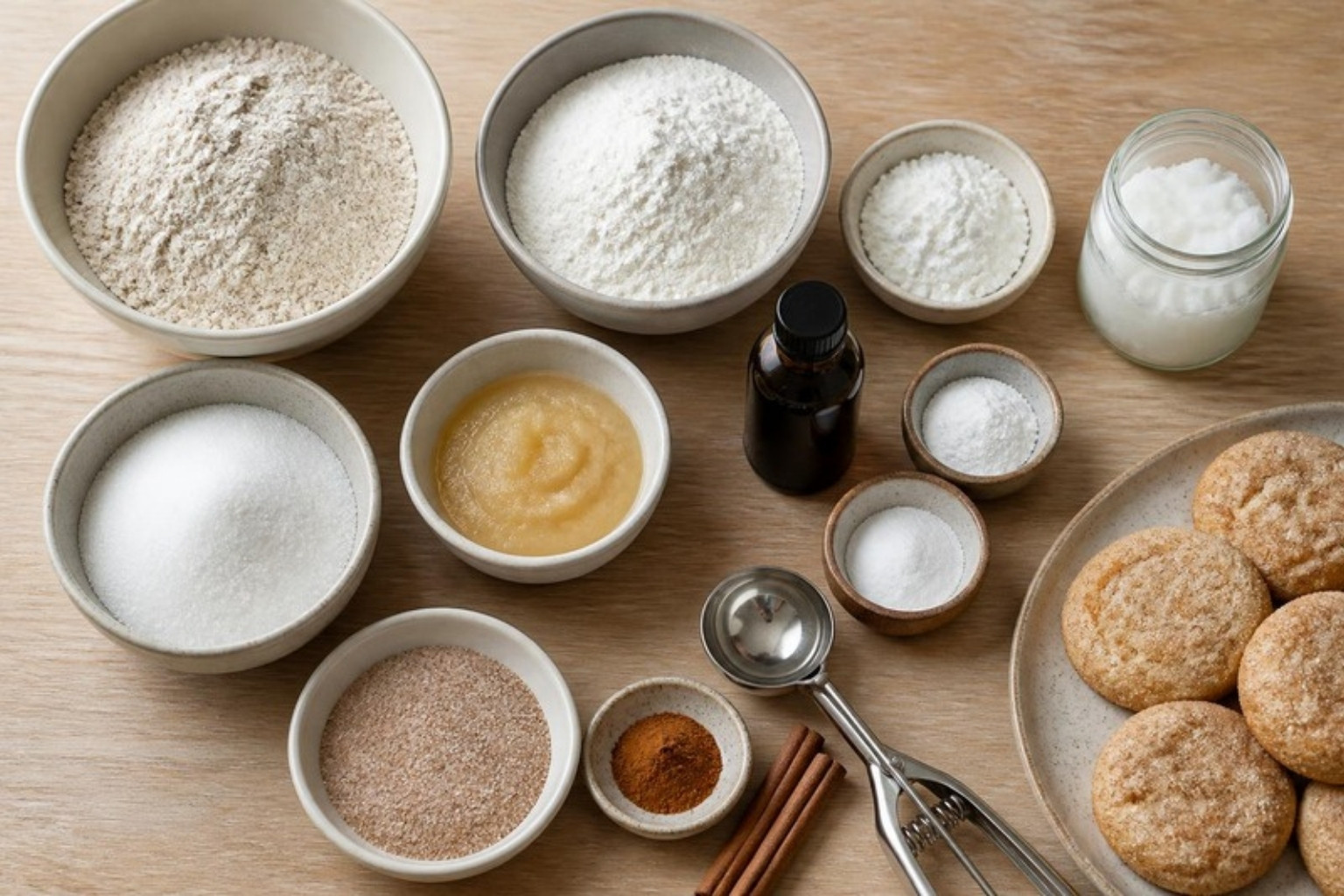
Soft Snickerdoodle Cookies, No Eggs, Butter or Wheat (Top 9 Free)
Ingredients
Equipment
Method
- Whisk the oat flour, rice flour, cornstarch, cream of tartar, baking soda, and salt in a bowl.
- Beat the coconut oil and 1 cup sugar on medium for 2 minutes, until fluffy and lighter in color. Beat in the applesauce and vanilla until smooth; it may look slightly curdled, which is fine.
- Mix in the dry ingredients on low just until a soft, cohesive dough forms, like play dough. If it crumbles when you squeeze it, mix in water 1 tablespoon at a time.
- Cover and refrigerate the dough 30 minutes. This lets the oat and rice flours absorb moisture so the cookies bake up chewy instead of gritty, and firms the coconut oil so they hold their shape.
- Heat the oven to 350°F (175°C). Line two baking sheets with parchment. Stir the cinnamon sugar together in a small bowl.
- Scoop 1 1/2-tablespoon balls (about 25 g each), roll them smooth between your palms, then roll generously in cinnamon sugar. Place 2 inches (5 cm) apart and press each ball gently to about 3/4 inch (2 cm) thick; gluten-free dough spreads less than wheat dough.
- Bake one sheet at a time 10 to 12 minutes, until the edges are set and pale golden, the tops have cracked, and the centers look puffed and slightly underdone.
- Cool on the sheet 5 minutes (the centers settle and set), then move to a rack to cool completely.
Notes
Troubleshooting
- Cookies spread flat: the dough or coconut oil was too warm. Chill the dough balls on the sheet for 10 minutes before baking.
- Cookies stayed in tall balls: press them a little flatter next time; gluten-free dough needs help to spread.
- Gritty texture: the dough didn’t rest long enough, or the rice flour is coarse.
- Dry or crumbly cookies: they were baked too long. Take them out while the centers still look soft.
Make-Ahead, Freezing & Gift Tins
Freeze the dough: roll the dough balls in cinnamon sugar, freeze them on a tray until firm, then move to a freezer bag for up to 3 months. Bake from frozen, pressing gently once they’ve softened for 5 minutes, and add 1 to 2 minutes to the bake.
Baked cookies: store airtight at room temperature up to 4 days, or freeze in a rigid container with parchment between layers for up to 3 months. Thaw at room temperature with the lid on.
Tins and cookie exchanges: snickerdoodles are soft cookies, so pack them in their own tin or a separate section from crisp cookies like shortbread, which can soften when stored next to them. A slice of apple in the tin is an old trick to keep them soft, but replace it daily.
More Christmas Cookies
Find more cookies, candy, and holiday breakfasts in our Christmas recipes hub. For a crisp, sandy cookie to pair with these soft ones, try the classic shortbread cookies, and for a spiced option, the chewy molasses cookies are egg-free and dairy-free (they contain wheat).
FAQ
What makes a snickerdoodle different from a sugar cookie?
Cream of tartar and the cinnamon-sugar coating. The cream of tartar adds a gentle tang and helps create the soft, crackled texture, while a sugar cookie is usually plain or frosted.
Can I make these without oats?
You can try replacing the oat flour with an extra 3/4 cup (120 g) white rice flour plus 1/4 cup (45 g) sweet rice flour. The cookies will be lighter and less chewy, and this swap hasn’t been worked out in detail.
Can I use a different sweetener?
Granulated sugar is important for the texture and the crackled tops. Coconut sugar or brown sugar will work but give a darker, softer, more caramel-flavored cookie.
How far ahead can I bake for a cookie exchange?
Up to 4 days ahead at room temperature, or bake weeks ahead and freeze. Thawed snickerdoodles taste just as soft as fresh ones.
A note before you cook: These recipes are ideas and suggestions, not medical or dietary advice. As with any recipe or ingredient, it is each reader’s responsibility to confirm what they can and cannot eat, read every ingredient label, and source quality ingredients that fit their own needs. Ingredient formulations change, so always check the package you’re using.