
If you’re looking for a sweet potato casserole without pecans, this is it: a nut-free sweet potato casserole with a crunchy brown sugar oat crumble where the pecan streusel usually goes. Most versions use pecans, eggs, and butter: a buttery filling set with eggs, then a thick pecan topping. This one keeps everything people love about the dish, the sweet, silky filling and the crunchy brown sugar topping, and builds it from roasted sweet potatoes, maple, orange juice, and oats.
Roasting the sweet potatoes whole concentrates their natural sugars, so the filling tastes deeply caramelized before you add much sweetener. A little cornstarch helps it hold a soft, spoonable set the way eggs would. The topping is rolled oats, oat flour, and brown sugar bound with melted coconut oil, baked until it’s crisp and toasty. It’s made without milk, eggs, wheat, soy, peanuts, tree nuts, fish, shellfish, and sesame.
Made without: peanuts, tree nuts, milk, eggs, wheat, soy, fish, shellfish, sesame. The crumble uses coconut oil; see the swap below if you avoid coconut.
Why You’ll Love This Sweet Potato Casserole
- Crunchy topping without nuts. The oat crumble gives the same contrast a pecan streusel does.
- No eggs or butter. Cornstarch and olive oil do the work in the filling.
- Make-ahead friendly. Prep the filling and the crumble up to 2 days early, then bake on the day.
- Bright, not cloying. Orange juice and a pinch of salt balance the sweetness.
- Works for Christmas dinner too alongside a roast or ham.
How It Works Without Eggs, Butter, or Pecans
Eggs in a classic sweet potato casserole make the filling a little soufflé-like and help it slice. Here, 2 tablespoons of cornstarch thicken the mash as it bakes, so it sets into a soft, scoopable layer that doesn’t weep. Butter brings richness and flavor; light-tasting olive oil gives the same smooth richness without competing with the maple and spices.
Pecans give the classic topping its crunch and toasty flavor. Old-fashioned rolled oats toast in the oven the same way, and oat flour plus brown sugar bind them into clusters. Squeezing handfuls of the crumble before you scatter it gives you bigger, crunchier pieces.
Ingredients & Swap Ideas
- Sweet potatoes (3 lb / 1.4 kg): orange-fleshed varieties such as Garnet, Jewel, or Beauregard roast up the sweetest and smoothest.
- Brown sugar and pure maple syrup: use real maple syrup, not pancake syrup. You can cut the brown sugar in the filling if your potatoes are very sweet.
- Fresh orange juice (80 ml): a classic pairing that brightens the filling. Apple cider works too.
- Light-tasting olive oil (40 g): “light” means refined and mild, not lower in calories. Use it to grease the dish too; skip cooking spray.
- Cornstarch: tapioca starch also works.
- Oats and oat flour: choose ones labeled gluten-free, since oats can carry barley cross-contact.
- Refined coconut oil (65 g) for the crumble: it crisps the topping nicely and has no coconut flavor. If you avoid coconut, use the same amount of light-tasting olive oil; the crumble will be a little less clumpy but still crunchy.
- Marshmallow fans: you can scatter mini marshmallows over half the dish for the last 5 minutes. Check the label, as marshmallows vary in ingredients.
Kitchen Equipment
- Rimmed baking sheet lined with foil or parchment (sweet potatoes leak sticky syrup).
- 9×13-inch (23×33 cm) or 3-quart baking dish.
- Potato masher or hand mixer.
- Two mixing bowls and a fork for the crumble.
Step-by-Step Tips
- Roast until truly soft. A knife should slide into the thickest potato with no resistance, and you should see dark syrup bubbling out. Underroasted potatoes make a stringy, bland filling.
- Mash while warm. Warm flesh absorbs the oil and sugar more easily and whips smoother.
- Check for cornstarch streaks. Mix until no white specks remain so the filling sets evenly.
- Make the crumble look like damp sand. Then squeeze some into clusters before scattering.
- Bake until the edges bubble. The topping should be deep golden and the filling bubbling at the sides. Rest 10 minutes before serving.
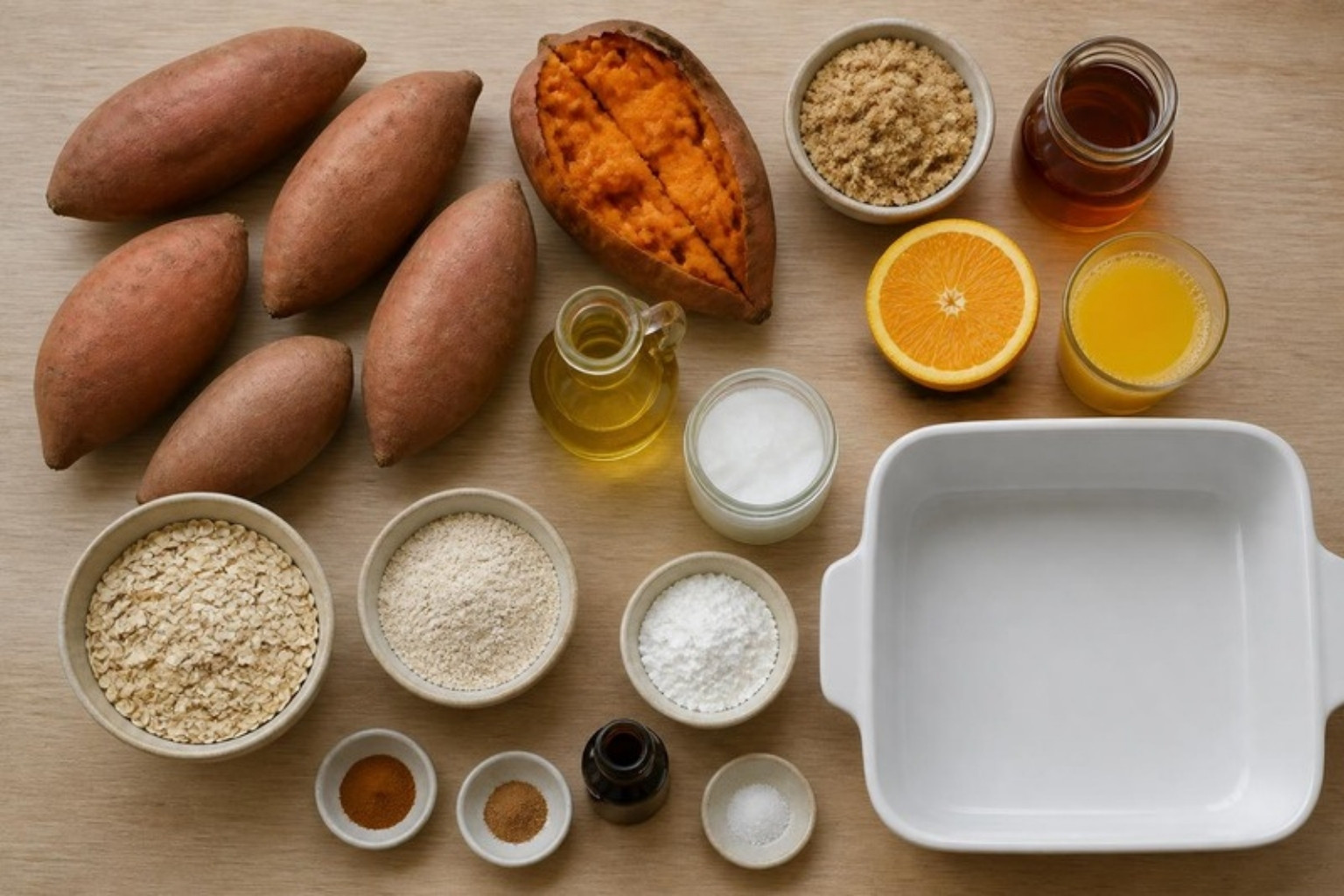
Sweet Potato Casserole with Oat Crumble (Top 9 Free)
Ingredients
Equipment
Method
- Heat the oven to 400°F (205°C). Prick the sweet potatoes a few times with a fork and roast on a lined baking sheet 50 to 60 minutes, until a knife slides into the thickest one with no resistance and dark syrup is bubbling from the skins.
- Let the potatoes cool 10 minutes, then split and scoop the flesh into a large bowl (you should have about 4 cups / 1 kg). Discard the skins.
- Lower the oven to 350°F (175°C). Brush a 9×13-inch baking dish with olive oil.
- Add the brown sugar, maple syrup, orange juice, olive oil, cornstarch, vanilla, cinnamon, nutmeg, and salt to the warm sweet potatoes. Mash or beat with a hand mixer until smooth and fluffy, with no visible streaks of cornstarch. Spread evenly in the dish.
- For the crumble, stir the oats, oat flour, brown sugar, cinnamon, and salt in a bowl. Drizzle in the melted coconut oil and mix with a fork until it looks like damp sand with some pea-sized clumps. Squeeze a handful to make bigger clusters.
- Scatter the crumble over the sweet potatoes in an even layer, right to the edges.
- Bake 30 to 35 minutes, until the topping is deep golden and crisp at the edges and the filling is bubbling around the sides of the dish. Rest 10 minutes before serving so the filling firms up.
Notes
Troubleshooting
- Watery filling: boiled sweet potatoes hold more water than roasted. If you boiled them, drain well and let them steam dry for 5 minutes before mashing.
- Soggy topping: the crumble went onto a cold, wet filling, or it was spread too thin. Bake a few minutes longer, and keep the crumble layer even.
- Topping browning too fast: lay a sheet of foil loosely over the top for the last 10 minutes.
- Too sweet: reduce the brown sugar in the filling to 2 tablespoons and add an extra pinch of salt.
Make-Ahead, Storage & Freezing
Make ahead: spread the filling in the baking dish, cover, and refrigerate up to 2 days. Keep the crumble in a separate container in the fridge. On the day, scatter the crumble over the cold filling and add 10 to 15 minutes to the bake time.
Leftovers: refrigerate covered up to 4 days. Reheat in a 350°F oven until steaming hot in the center; the topping re-crisps better in the oven than in the microwave.
Freeze: freeze the plain filling up to 3 months. Thaw overnight in the fridge, then top with fresh crumble and bake.
More Thanksgiving Sides
Plan the rest of the table with our Thanksgiving recipes hub, sorted by pies, sides, mains, and breakfast. This casserole pairs well with creamy dairy-free mashed potatoes and a pan of maple roasted butternut squash.
FAQ
Can I use canned sweet potatoes or yams?
You can use about 4 cups (1 kg) of drained canned sweet potatoes. Canned ones packed in syrup are already sweet, so reduce or skip the brown sugar in the filling, and drain them very well.
Can I add nuts to the topping?
Classic recipes use pecans, but adding them changes what this recipe is made without. The oat crumble is designed to give the crunch on its own.
How do you make a sweet potato casserole topping without nuts?
Use rolled oats where the pecans would go. Here, old-fashioned oats, oat flour and brown sugar are bound with melted coconut oil (or light-tasting olive oil) and baked until crisp, so you still get a crunchy, toasty layer over the soft filling.
Can I make this nut-free sweet potato casserole ahead for Thanksgiving?
Yes. Spread the filling in the dish and refrigerate it, covered, for up to 2 days, and keep the crumble in its own container. Scatter the crumble on just before baking and add 10 to 15 minutes to the bake time.
Can I make it in a slow cooker?
The filling can stay warm in a slow cooker on low, but the crumble won’t crisp there. Bake the crumble separately on a parchment-lined sheet at 350°F for 12 to 15 minutes and sprinkle it on just before serving.
Is sweet potato casserole a side or a dessert?
At most Thanksgiving tables it’s a side, served alongside turkey and stuffing. With its brown sugar topping, plenty of people also go back for it at dessert.
A note before you cook: These recipes are ideas and suggestions, not medical or dietary advice. As with any recipe or ingredient, it is each reader’s responsibility to confirm what they can and cannot eat, read every ingredient label, and source quality ingredients that fit their own needs. Ingredient formulations change, so always check the package you’re using.