
Swedish meatballs show up at every Midwestern church supper, potluck, and holiday buffet, and they’re usually off the table for allergy families. The classic version leans on eggs and breadcrumbs to bind the meat, then finishes with a gravy built on butter, flour, and heavy cream. This version keeps the parts that matter: tender, warmly spiced beef and pork meatballs in a glossy, savory brown gravy you’ll want to spoon over mashed potatoes.
The meatballs get their tenderness from quick oats soaked in beef broth, and their structure from a minute of kneading with salt. They’re browned in beef tallow for a deep crust, and the gravy is thickened with cornstarch whisked into oat milk, which gives it a creamy look and body without cream. Allspice and nutmeg give the familiar Scandinavian flavor.
Made without: peanuts, tree nuts, milk, eggs, wheat, soy, fish, shellfish, sesame.
Why You’ll Love These Swedish Meatballs
- Classic flavor: allspice, nutmeg, and grated onion, the way potluck meatballs taste.
- No cream soup, no cream: the gravy is built from pan drippings, broth, and a cornstarch slurry.
- One skillet: brown, make the gravy, and simmer in the same pan.
- Freezer-friendly: they freeze well in their gravy for an easy supper later.
- Holiday-ready: a slow cooker of these on low makes an easy Christmas buffet dish.
How These Meatballs Hold Together Without Eggs or Breadcrumbs
Eggs and breadcrumbs do two jobs in a meatball: they bind and they keep the meat moist. Here, quick oats soaked in broth form a soft paste (a panade) that holds moisture inside the meatball as it cooks. Kneading the meat with salt for a minute or two draws out sticky proteins that act like glue, so the meatballs roll neatly and hold their shape in the skillet. You’ll notice the mixture turn from loose and crumbly to tacky. That’s the sign it’s ready.
For the gravy, cornstarch stands in for a butter-and-flour roux. Whisked into cold oat milk first, it thickens the simmering broth in a minute or two and gives a smooth, glossy finish.
Ingredients and Swap Ideas
- Meat: a mix of 85% lean ground beef and plain ground pork gives the best texture. All beef works but is a bit firmer. Ground turkey works if you add an extra tablespoon of tallow or olive oil to the mix.
- Oats: certified gluten-free quick oats soften fastest. Rolled oats pulsed a few times in a blender work too.
- Onion: grate it on a box grater so it melts into the meat. Keep the juices.
- Fat: beef tallow gives the deepest browning. Extra-virgin olive oil or lard also work.
- Oat milk: choose one with no added oil (many contain canola or sunflower oil). For a lighter gravy, use more broth instead.
- No Worcestershire or soy sauce: many recipes add a splash of one. Worcestershire typically contains anchovies and soy sauce contains soy and often wheat, so tomato paste adds the savory depth here instead.
Label check: oats, beef broth (wheat, soy, yeast extract, or added oil), oat milk, ground pork (plain, not seasoned sausage), tallow (pure, not blended), spices, and any lingonberry jam or cranberry sauce you serve alongside.
Kitchen Equipment
- 12-inch cast-iron or stainless skillet with a lid
- Large mixing bowl and a box grater
- Whisk
- Instant-read thermometer
Step-by-Step Tips
- Soak the oats first. Give them 5 minutes in the broth so they turn soft and pasty before the meat goes in.
- Knead until tacky. One to two minutes by hand. Stop when the mixture sticks to itself and holds when squeezed.
- Roll with damp hands. Aim for 1 1/4-inch balls so they cook evenly.
- Don’t crowd the pan. Brown in two batches. Crowded meatballs steam and won’t build the browned bits that flavor the gravy.
- Finish in the gravy. A gentle covered simmer cooks the centers through. Check that they reach 160°F (71°C); see the USDA safe temperature chart.
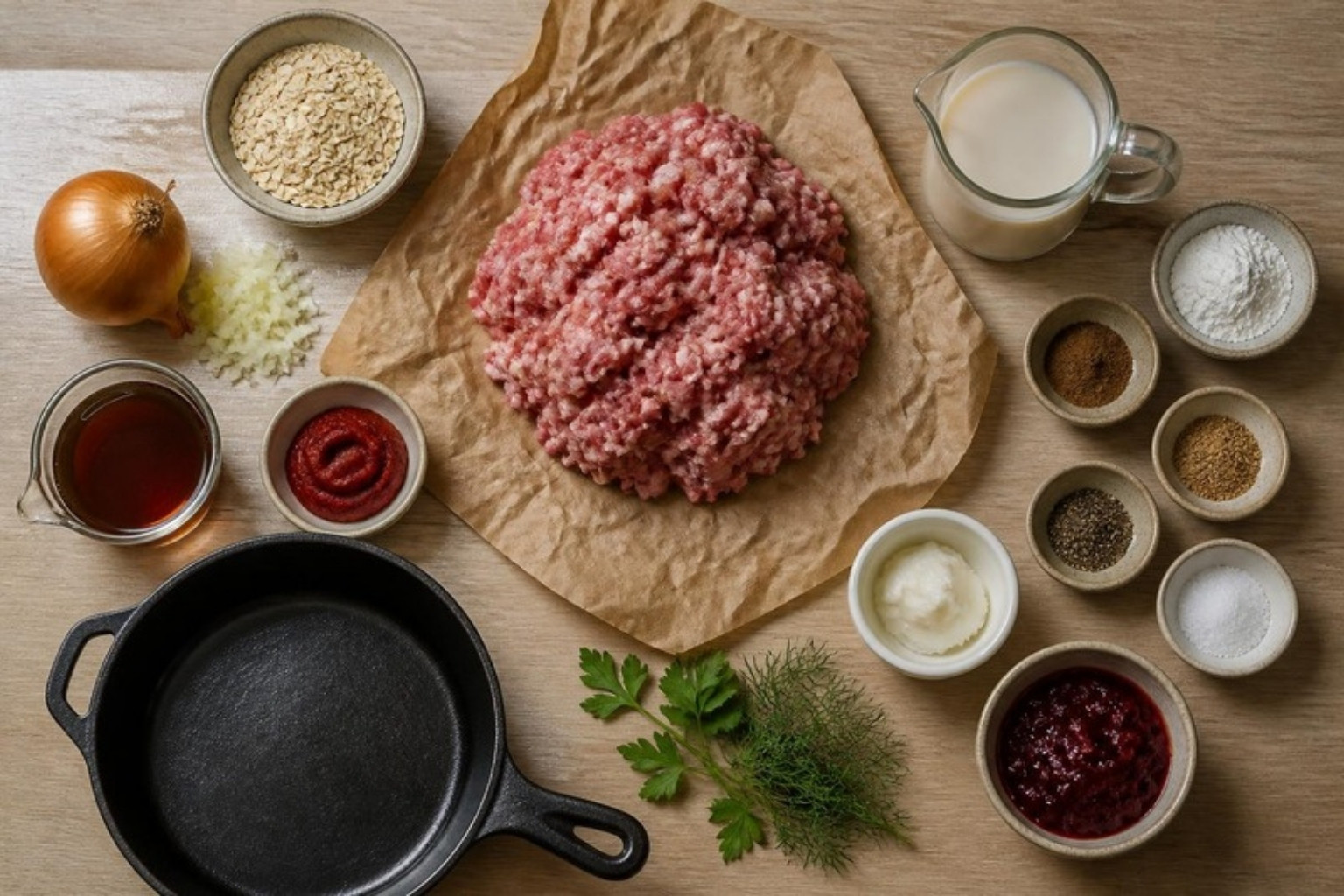
Swedish Meatballs, No Cream or Eggs (Top 9 Free)
Ingredients
Equipment
Method
- In a large bowl, stir the oats into 1/2 cup beef broth and let soak 5 minutes until soft and pasty. Stir in the grated onion with its juices, salt, pepper, 1/2 tsp allspice, and nutmeg.
- Add the ground beef and pork. Mix and knead with your hands for 1 to 2 minutes, until the mixture turns slightly sticky and tacky and holds together when squeezed. This kneading, with the salt and oat paste, does the binding job eggs usually do.
- With damp hands, roll into 1 1/4-inch balls (about 1 heaping tablespoon each). You should get about 30.
- Heat the tallow in a 12-inch skillet over medium heat until it shimmers. Brown the meatballs in two batches without crowding, turning every couple of minutes, 6 to 8 minutes per batch, until deeply browned on most sides. They do not need to be cooked through yet. Transfer to a plate.
- Pour off all but about 1 tablespoon of fat. Add the 2 1/2 cups broth and tomato paste and scrape up the browned bits from the pan. Bring to a simmer.
- Whisk the cornstarch into the cold oat milk until completely smooth, then whisk it into the simmering broth with 1/4 tsp allspice. Simmer, whisking, 1 to 2 minutes, until the gravy turns glossy and coats the back of a spoon.
- Return the meatballs and any juices to the pan. Cover and simmer gently over low heat 8 to 10 minutes, turning once, until the centers reach 160°F (71°C) on an instant-read thermometer and are no longer pink. Season the gravy with salt and pepper.
- Sprinkle with parsley or dill and serve over mashed potatoes or rice, with cranberry sauce or lingonberry jam on the side if you like.
Notes
Troubleshooting
- Meatballs fall apart: the mix needed more kneading, or they were turned too early. Let the bottoms brown a full 2 minutes before moving them.
- Dense or tough meatballs: very lean meat or overcooking. Use 85% lean beef and pull them once they hit 160°F.
- Thin gravy: simmer a few minutes longer, or whisk 1 teaspoon cornstarch into 1 tablespoon cold water and stir it in.
- Lumpy gravy: the cornstarch went into hot liquid without being dissolved first. Always whisk it into the cold oat milk before adding.
Storage, Freezing, and Reheating
Refrigerate the meatballs in their gravy for up to 4 days. To freeze, cool completely and pack in freezer containers for up to 3 months. Thaw overnight in the fridge and reheat gently on the stove until the centers reach 165°F (74°C), adding a splash of broth if the gravy has thickened. For a party, keep them warm in a slow cooker on low.
What to Serve with Swedish Meatballs
Spoon them over our creamy dairy-free mashed potatoes, which are made with olive oil and broth. Add our sweet and sour red cabbage for a classic Scandinavian-style plate. If you like this egg-free binding method, it’s the same idea behind our egg-free meatloaf. For more holiday buffet ideas, see our Christmas recipes.
Swedish Meatballs FAQ
How do you make meatballs without eggs?
Soak oats in broth to make a moist binder, then knead the meat with salt until it turns tacky. Together they hold the meatballs together and keep them juicy.
What makes Swedish meatballs different from Italian meatballs?
Swedish meatballs are smaller, seasoned with warm spices like allspice and nutmeg rather than garlic, oregano, and cheese, and served in a creamy brown gravy instead of tomato sauce.
Can I make Swedish meatballs in the slow cooker?
Brown the meatballs and make the gravy on the stove first, then move everything to a slow cooker on low for 2 to 3 hours. That’s an easy way to keep them warm for a buffet.
Can I bake the meatballs instead of browning them?
Yes. Bake on a parchment-lined sheet pan at 425°F (220°C) for 12 to 15 minutes, until browned. Then make the gravy with 1 tablespoon tallow or olive oil in the skillet and finish the meatballs in it. The gravy will be a bit lighter in flavor without the pan drippings.
A note before you cook: These recipes are ideas and suggestions, not medical or dietary advice. As with any recipe or ingredient, it is each reader’s responsibility to confirm what they can and cannot eat, read every ingredient label, and source quality ingredients that fit their own needs. Ingredient formulations change, so always check the package you’re using.