
Pie without whipped cream feels unfinished, but the tub in the freezer aisle usually has milk in it, and most “dairy-free” toppings lean on seed oils, soy or cashews. If you’ve been serving pumpkin pie bare at Thanksgiving, coconut whipped cream is the fix. It’s what Grandma’s bowl of whipped cream was: soft, cold, lightly sweet and piled high, just made from the thick cream that rises to the top of a can of coconut milk.
How do you make whipped cream without heavy cream? Chill full-fat coconut milk upright for 24 hours, scoop the solid cream off the top into a cold bowl, and beat it 1 to 2 minutes until fluffy. Add powdered sugar, vanilla and a pinch of salt, then whip just to soft peaks. It takes about 10 minutes of work.
Coconut cream whips because of its fat, the same way dairy cream does. Cold firms that fat so it can trap air, and powdered sugar sweetens it without making it gritty while the cornstarch in it adds a little body. The flavor is mild and creamy with only a faint hint of coconut once the vanilla goes in, and it sits nicely on pumpkin pie, cobbler, trifle or a mug of hot cocoa. It’s made without peanuts, tree nuts, milk, eggs, wheat, soy, fish, shellfish and sesame. It does contain coconut.
Made without: peanuts, tree nuts, milk, eggs, wheat, soy, fish, shellfish, sesame. Contains: coconut.
Why You’ll Love This Coconut Whipped Cream
- Four pantry ingredients, with no heavy cream, butter, seed oils or store-bought topping.
- About 10 minutes of hands-on time once the cans are cold.
- Make it up to 3 days ahead, or freeze dollops for the whole holiday season.
- Easy to flavor with maple, pumpkin spice, cocoa or peppermint.
Ingredients and Swap Ideas
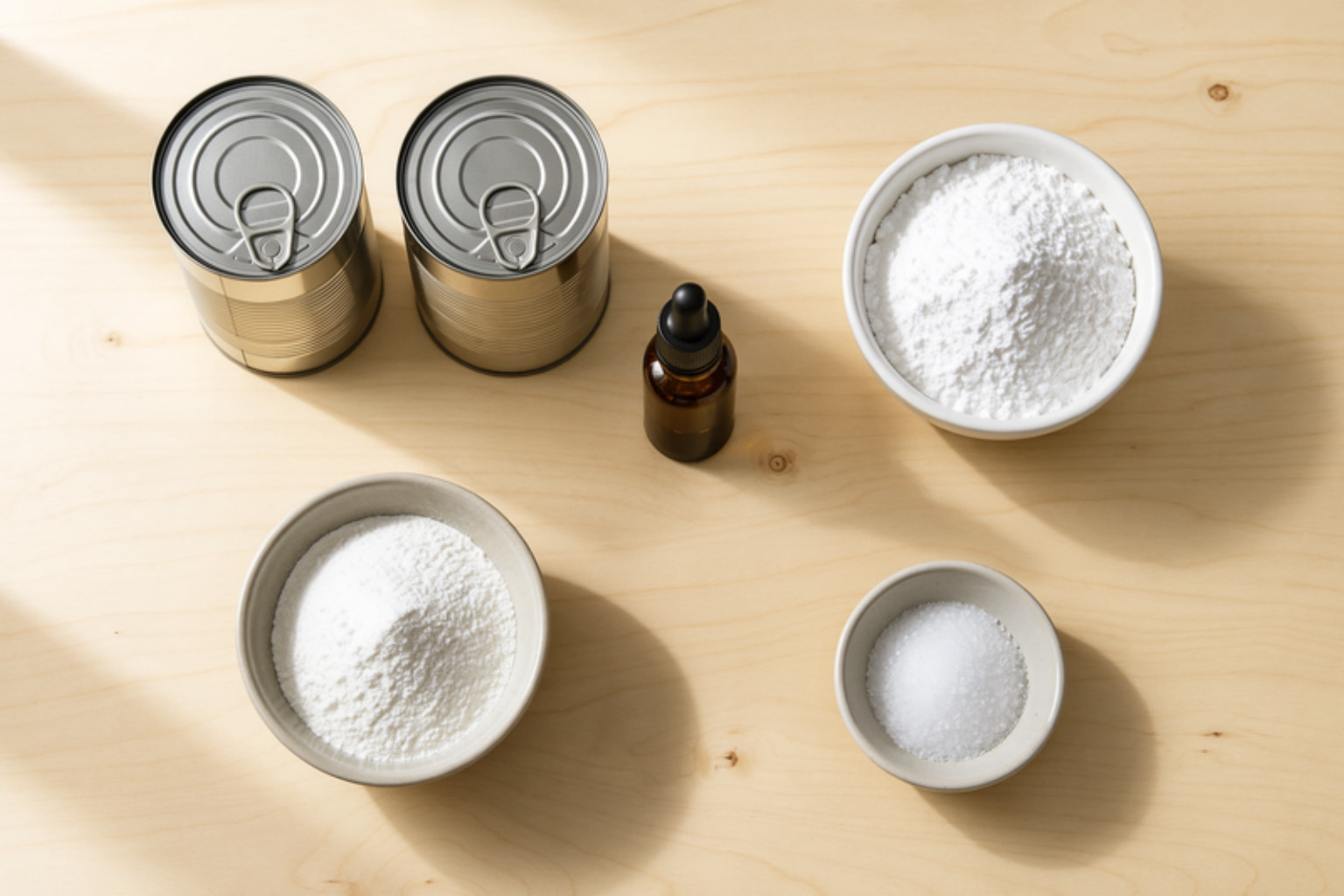
- Full-fat coconut milk (2 cans, 13.5 to 14 oz / 400 ml each): the solid cream on top is what you whip. Light coconut milk and the coconut milk sold in cartons for drinking won’t whip. Canned coconut cream gives more usable cream per can, so one can of it replaces two cans of coconut milk.
- Not cream of coconut: that’s the sweet, syrupy product for piña coladas. It won’t whip and it will be far too sweet.
- Powdered sugar (1/4 cup / 30 g): dissolves instantly and its cornstarch helps the cream hold. Start with 2 tablespoons for a barely sweet topping. For maple whipped cream, use 2 tablespoons of pure maple syrup instead; the cream will be a little softer.
- Vanilla and salt: vanilla rounds out the coconut flavor, and a pinch of salt makes it taste creamier.
- Cornstarch (2 teaspoons, optional): for a firmer cream that pipes cleanly and holds its shape on a pie overnight in the fridge.
Brands of coconut milk vary a lot. Some separate into a thick, solid layer after chilling; others stay thin no matter how long they sit. Read the ingredient label on the can you buy, and pick up one extra can in case one doesn’t firm up. A can that stays thin is still good for soup, curry or rice.
Kitchen Equipment
A large metal or glass bowl (chilled), a hand mixer or stand mixer with the whisk attachment, a spoon for scooping the cream, and an airtight container for storage. A balloon whisk works too, but plan on a few minutes of brisk whisking.
How to Make Coconut Whipped Cream
- Chill the cans. Stand the unopened cans upright in the back of the fridge for at least 24 hours. Don’t shake them; you want the cream to rise and set firm on top.
- Chill the bowl. Put the bowl and beaters in the freezer for 15 minutes. Cold tools keep the coconut fat firm while it whips.
- Scoop the cream. Open the cans without tipping them. Spoon the thick, waxy-looking cream into the bowl and stop when you reach the clear liquid underneath. Save that liquid for smoothies or cooking.
- Whip. Beat on medium-high for 1 to 2 minutes, until the cream loosens, turns smooth and looks fluffy.
- Sweeten. Add the powdered sugar (and cornstarch, if using), vanilla and salt. Beat 1 to 2 minutes more, just until you have soft, billowy peaks that hold when you lift the beaters.
- Adjust. Too stiff or a little grainy? Beat in 1 to 2 teaspoons of the reserved coconut liquid. Too soft? Chill the bowl 10 minutes and beat briefly again.
- Serve or store. Spoon it onto pie right away, or cover and refrigerate. Rewhip for a few seconds before serving.
Troubleshooting and Tips
- It won’t thicken: the cream was too warm or had too much liquid in it. Coconut fat starts to soften at room temperature, so a warm kitchen works against you. Chill everything again and whip in shorter bursts.
- The can had no solid layer: it wasn’t cold long enough, or that brand doesn’t separate well. Try another can, or switch to canned coconut cream.
- Grainy or lumpy texture: it was overbeaten or the cream was very cold and hard. Beat in a teaspoon or two of the coconut liquid and it smooths out.
- Topping a pie for a buffet: use the cornstarch version and add it within an hour of serving, then keep the pie in a cool spot. Like dairy whipped cream, it softens if it sits near the stove.
Storage, Make-Ahead and Freezing
Coconut whipped cream keeps in an airtight container in the fridge for up to 3 days. It firms up as it chills, so rewhip it for 15 to 30 seconds before serving. For Thanksgiving, whip it the day before and keep it next to the pies. To freeze, pipe or spoon dollops onto a parchment-lined tray, freeze until solid, then store them in a freezer bag for up to 1 month. Set frozen dollops on slices of pie and they’re ready in about 10 minutes.
Flavor variations
- Maple: 2 tablespoons pure maple syrup in place of the powdered sugar.
- Pumpkin spice: 1/2 teaspoon pumpkin pie spice with the sugar.
- Chocolate: 2 tablespoons sifted cocoa powder plus an extra tablespoon of powdered sugar.
- Peppermint: 1/4 teaspoon peppermint extract, for cocoa and Christmas desserts.
Pile it on our pumpkin pie without eggs or milk, the oatmeal pie that tastes like pecan pie without pecans or a coconut cream pie. It’s also the topping in our Christmas trifle. Find the rest of the menu on our Thanksgiving recipes page.
Coconut Whipped Cream FAQ
Does coconut whipped cream taste like coconut?
A little, but less than you’d expect. With vanilla and a pinch of salt it tastes mostly creamy and sweet, and next to pumpkin pie or chocolate the coconut fades into the background. Maple or pumpkin spice hide it even more.
Why won’t my coconut milk whip?
Usually it’s light coconut milk, a can that wasn’t chilled long enough, or too much of the clear liquid scooped in with the cream. Some brands simply don’t separate well. Chill a full-fat can for 24 hours, use only the solid layer, and keep the bowl cold.
Can I use coconut cream instead of coconut milk?
Yes, and it’s often easier. Canned coconut cream has more fat and less liquid, so one chilled can gives about the same amount of whipped cream as two cans of coconut milk. Don’t confuse it with sweetened cream of coconut for cocktails.
How far ahead can I make whipped cream for Thanksgiving pies?
Up to 3 days ahead in the fridge. Rewhip it briefly before serving. Add the optional cornstarch if you want to top a whole pie in advance and have the swirls hold their shape overnight.
Coconut Whipped Cream (Whipped Cream Without Heavy Cream)
Ingredients
Equipment
Method
- Chill the cans of coconut milk upright in the back of the fridge for at least 24 hours without shaking them. Put the mixing bowl and beaters in the freezer for 15 minutes before whipping.
- Open the cans without tipping them. Scoop the thick, solid cream off the top into the cold bowl, stopping when you reach the clear liquid. Save the liquid for smoothies, rice or soup.
- Beat the coconut cream on medium-high for 1 to 2 minutes, until it loosens, turns smooth and looks fluffy.
- Add the powdered sugar (and cornstarch, if using), vanilla and salt. Beat 1 to 2 minutes more, just until the cream holds soft, billowy peaks. Taste and add more sugar if you like.
- If the cream is stiff or grainy, beat in 1 to 2 teaspoons of the reserved coconut liquid. If it looks soft and droopy, chill the bowl for 10 minutes and beat again briefly.
- Spoon onto pie or dessert right away, or cover and refrigerate. Rewhip for 15 to 30 seconds before serving if it firms up in the fridge.
Notes
A note before you cook: These recipes are ideas and suggestions, not medical or dietary advice. As with any recipe or ingredient, it is each reader’s responsibility to confirm what they can and cannot eat, read every ingredient label, and source quality ingredients that fit their own needs. Ingredient formulations change, so always check the package you’re using.
Leave a Reply