
Lebkuchen are the soft, honey-sweet spice cookies of German Christmas markets, and they’re one of the hardest holiday cookies to find without nuts. Traditional Nuremberg-style lebkuchen are built on ground almonds and hazelnuts, held together with eggs, and baked on thin wheat wafers. If you’ve wanted that deep honey-and-spice flavor for your cookie tin without any of those, this lebkuchen recipe is for you: soft and chewy, scented with cinnamon, ginger, cloves, and cardamom, studded with candied orange peel, and finished with a thin lemon glaze or a coat of dark chocolate.
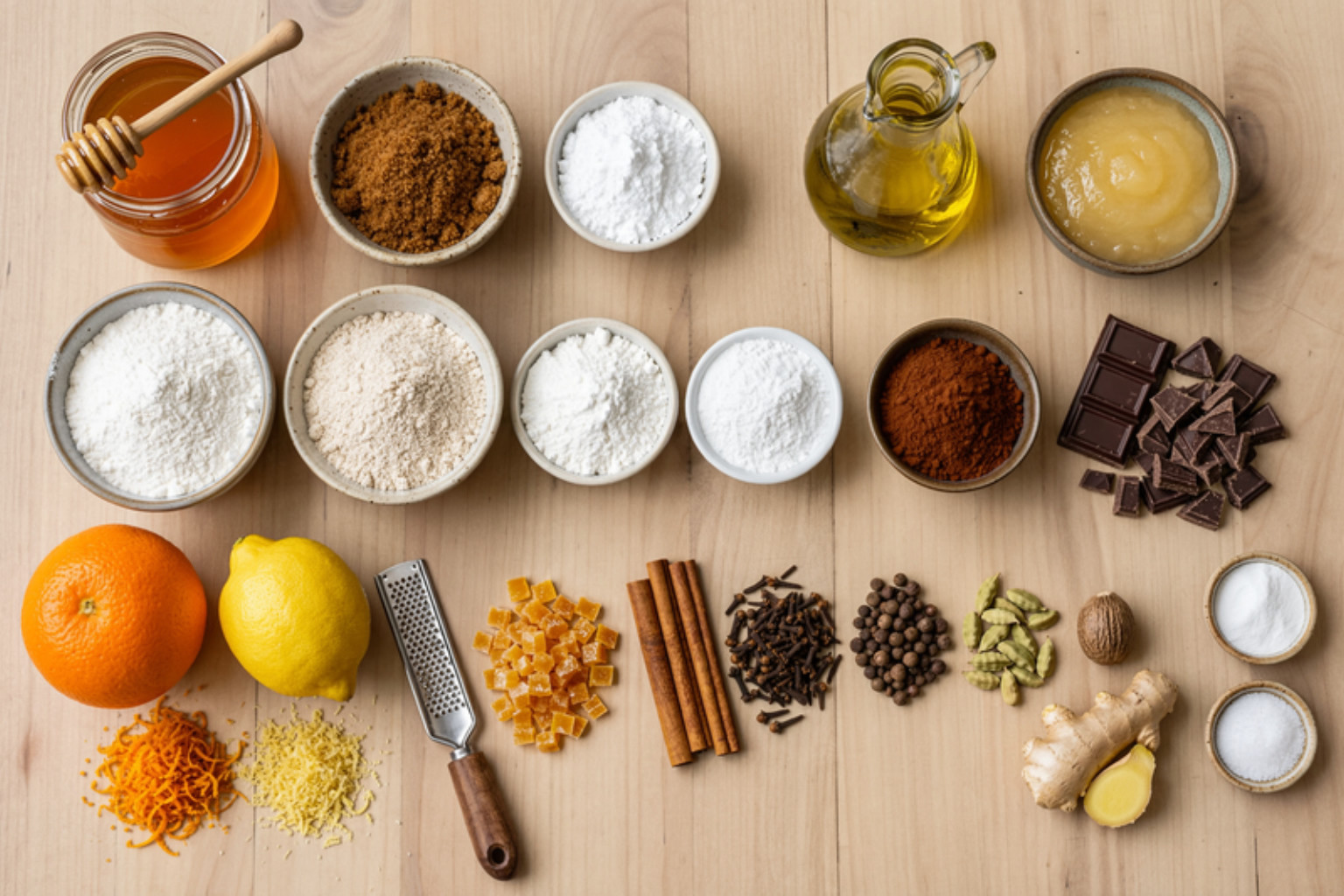
Instead of nut meal, the dough uses white rice flour, certified gluten-free oat flour, and a little sweet rice flour. Applesauce stands in for the eggs, and light-tasting olive oil replaces butter. Like the originals, these cookies improve after a day or two in a tin, which makes them a natural make-ahead cookie for gifting and cookie exchanges.
Made without: peanuts, tree nuts, milk, eggs, wheat, soy, fish, shellfish, sesame.
Why You’ll Love This Lebkuchen
- Soft, cakey-chewy texture with a thin, crackly glaze.
- Big holiday flavor from honey, seven warm spices, citrus zest, and candied orange peel.
- No nuts, eggs, butter, or wheat, and no egg replacer.
- Gets better with time: bake a week ahead and the flavor deepens in the tin.
- Two finishes: classic white glaze or dark chocolate, so one batch fills a tray.
How Lebkuchen Work Without Nuts or Eggs
In traditional lebkuchen, ground nuts provide most of the structure, fat, and moisture, and eggs bind everything into a thick batter. Here the flours split those jobs. Sweet rice flour (glutinous rice flour, which contains no gluten) turns tacky when hydrated and holds the dough together. White rice flour sets the shape, oat flour adds tenderness and a mellow, almost nutty flavor, and cornstarch keeps the crumb fine and soft.
Honey does a lot of the work, too. It keeps the cookies moist for weeks, and its natural acidity, along with the brown sugar and applesauce, reacts with baking soda to puff the cookies. Warming the honey with the brown sugar and olive oil dissolves the sugar so the cookies bake up smooth. Chilling the dough firms it enough to scoop and lets the spices bloom.
Ingredients and Swap Ideas
- Honey (170 g): a mild clover or wildflower honey keeps the spices in front. A darker honey like buckwheat makes a stronger, more old-fashioned cookie.
- Dark brown sugar (100 g): light brown sugar works for a milder flavor.
- Light-tasting olive oil (55 g): “light” means refined with a mild flavor, not fewer calories. Skip vegetable oil, margarine, shortening, and plant butters.
- Applesauce: unsweetened, at room temperature. Pumpkin puree works the same way and makes the cookies a little darker.
- Flours: white rice flour, certified gluten-free oat flour (oats are often cross-contacted with wheat and barley), sweet rice flour, and cornstarch. For oat-free cookies, replace the oat flour with more white rice flour by weight.
- Spices: cinnamon, ginger, cloves, allspice, nutmeg, cardamom, and a pinch of black pepper. If you have a lebkuchen spice blend (Lebkuchengewürz), use 1 tablespoon plus 1 teaspoon in place of the individual spices, and check the label.
- Candied orange peel (80 g): finely chopped. Some candied peel contains glucose syrup made from wheat, sulfites, or an oil coating, so read the label. Finely chopped dried apricots or dried cranberries (check for sunflower oil coatings) are good swaps.
- Chocolate (optional): dairy-free dark chocolate; check the label for milk, soy lecithin, nuts, and seed oils.
Kitchen Equipment
- Two rimmed baking sheets lined with parchment
- Small saucepan
- Two mixing bowls, a whisk, and a sturdy spatula
- 2-tablespoon cookie scoop
- Pastry brush and a cooling rack
Step-by-Step Tips
- Warm, don’t boil. Heat the honey, sugar, and oil just until smooth. Boiling honey can make the cookies hard.
- Cool before mixing. Add the applesauce and zest once the honey mixture is just warm, so the baking soda doesn’t start reacting too early.
- Expect a sticky dough. It looks more like thick batter than cookie dough until it chills. Don’t add extra flour.
- Chill at least an hour. Overnight is even better and is closer to how lebkuchen dough is traditionally rested.
- Use damp hands. Wet fingertips keep the dough from sticking as you roll and flatten each cookie.
- Pull them while soft. They’re done when the edges look dry and the tops spring back. Overbaking makes them hard instead of chewy.
- Glaze while warm. A thin coat brushed on warm cookies sets into the classic translucent shell.
Lebkuchen (German Christmas Spice Cookies), No Nuts, No Eggs
Ingredients
Equipment
Method
- Warm the honey, brown sugar, and olive oil in a small saucepan over medium-low heat, stirring, just until the sugar dissolves and the mixture is smooth, 2 to 3 minutes. Don’t let it boil. Pour into a large bowl and cool 10 minutes, until just warm to the touch.
- Whisk the applesauce, orange juice, orange zest, and lemon zest into the honey mixture.
- In another bowl, whisk the rice flour, oat flour, sweet rice flour, cornstarch, cocoa, cinnamon, ginger, cloves, allspice, nutmeg, cardamom, pepper, baking soda, and salt.
- Stir the dry ingredients into the honey mixture with a sturdy spatula until no dry streaks remain, then fold in the candied peel. The dough will be soft and sticky, like thick cookie batter.
- Cover and chill at least 1 hour, or up to 2 days (a longer rest deepens the spice flavor). The chilled dough should be firm enough to scoop and roll.
- Heat the oven to 350°F (175°C) with racks in the upper and lower thirds. Line two baking sheets with parchment.
- Scoop 2-tablespoon portions (about 30 g), roll into balls with damp hands, and set 2 inches apart. Flatten each to a round about 2 1/2 inches wide and 1/2 inch thick.
- Bake 11 to 13 minutes, rotating the pans halfway, until the cookies are puffed, the edges look set and dry, and the tops spring back when touched lightly. The bottoms should be just golden. They’ll seem soft but firm up as they cool.
- Let the cookies cool 3 minutes on the pans.
- Whisk the powdered sugar and lemon juice, adding water a few drops at a time until the glaze is thin and brushable, like heavy syrup.
- Brush a thin coat over the warm cookies. Move them to a rack and let the glaze dry until no longer tacky, about 1 hour. It should look like a thin, slightly translucent white shell.
- For chocolate: let the cookies cool completely. Melt the chocolate gently in short bursts in the microwave, stirring often. Dip the tops or spread a thin layer over each cookie and let it set at room temperature.
Notes
Troubleshooting
- Cookies spread flat: the dough was too warm or not chilled long enough. Chill the scooped balls for 15 minutes before baking.
- Cookies came out hard: they baked a little too long, or the honey boiled. Store them in a tin with a slice of apple for a day or two and they’ll soften.
- Glaze is thick and white instead of thin: add water a few drops at a time until it brushes on like syrup, and apply it while the cookies are still warm.
- Dough too sticky to scoop even after chilling: flours vary. Chill 30 minutes longer, or work in 1 to 2 tablespoons of white rice flour.
Make-Ahead, Gifting and Freezing
Tins and gifts: once the glaze or chocolate is fully set, layer the cookies between sheets of parchment in a tin. They keep at room temperature for up to 2 weeks and taste best after the first day or two. A slice of apple in the tin, replaced every couple of days, keeps them soft. Pack them separately from crisp cookies like shortbread, which will soften next to them.
Freezing: freeze glazed or unglazed cookies in an airtight container for up to 3 months and thaw in the container so condensation doesn’t spot the glaze. The dough can also be refrigerated up to 2 days before baking.
More Christmas Spice Cookies
Browse the whole cookie aisle on our Christmas recipes page. For more German-style spice, try our nut-free pfeffernüsse, the crisp speculoos cookies, or another honey-soaked holiday classic, melomakarona (Greek Christmas honey cookies).
FAQ
What is lebkuchen?
Lebkuchen is a traditional German Christmas cookie, a soft honey gingerbread flavored with warm spices and candied citrus peel. It’s usually glazed or dipped in chocolate and is especially associated with Nuremberg and German Christmas markets.
Does lebkuchen have nuts?
Traditional lebkuchen usually does. The classic recipes use ground almonds and hazelnuts, and many are baked on wheat wafers called oblaten. This version is made without nuts or wafers; rice and oat flours give it structure.
What’s the difference between lebkuchen and pfeffernüsse?
Both are German spice cookies. Lebkuchen are larger, flat, soft rounds with honey, candied peel, and a glaze or chocolate. Pfeffernüsse are small, domed cookies with a peppery bite, usually rolled in powdered sugar.
Why are my lebkuchen hard?
Lebkuchen firm up as they cool and can feel hard on day one, especially if they baked a minute too long. Stored airtight with a slice of apple, they soften within a day or two.
A note before you cook: These recipes are ideas and suggestions, not medical or dietary advice. As with any recipe or ingredient, it is each reader’s responsibility to confirm what they can and cannot eat, read every ingredient label, and source quality ingredients that fit their own needs. Ingredient formulations change, so always check the package you’re using.
Leave a Reply