
Most biscuit recipes start with cold butter and a cup of buttermilk, and most “dairy-free” versions swap in a plant butter that leans on seed oils. If you’ve searched for biscuits without milk and found nothing that rises tall and flakes apart, this recipe goes back to an older way of doing it: cold lard cut into the flour, a soured liquid for tang and lift, and a couple of letter folds to build layers. The result is a golden, tender biscuit with flaky sides you can pull apart, ready for gravy, jam, or a bowl of soup.
Instead of wheat flour, the dough uses a simple from-scratch blend of white rice flour, sweet rice flour, and cornstarch, with no gums and no oats. Water or oat milk with a spoonful of vinegar plays the part of buttermilk.
Made without: peanuts, tree nuts, milk, eggs, wheat, soy, fish, shellfish, sesame.
Why You’ll Love These Biscuits
- No milk, no buttermilk, no butter, and no plant butter.
- Flaky layers from cold lard and two quick folds.
- A simple three-ingredient flour blend: no gums, no oats, no specialty mix.
- Freeze the cut biscuits and bake them straight from the freezer.
- Ready in under an hour, including a short chill.
How Biscuits Work Without Milk or Buttermilk
Buttermilk does two things in a biscuit: it adds liquid, and its acidity reacts with baking soda for a fast, tender rise. Stirring apple cider vinegar into cold water or oat milk gives you the same acid, so the baking soda and baking powder still do their job. Flakiness comes from solid fat. Little pieces of cold lard stay separate in the dough, melt in the hot oven, and release steam that pushes the layers apart. Folding the dough twice stacks those pieces into sheets.
Without wheat there’s no gluten to hold the dough together, so sweet rice flour (made from glutinous rice, which contains no gluten despite the name) adds a soft, slightly sticky binding, and cornstarch keeps the crumb light.
Ingredients and Swap Ideas
- White rice flour (160 g), sweet rice flour (75 g), cornstarch (64 g): weigh them if you can; rice flours pack differently. Potato starch or tapioca starch can replace the cornstarch.
- Cold lard, 1/2 cup (100 g): pick a pure, non-hydrogenated lard. Solid refined coconut oil also works (it contains coconut), but chill it well. Light-tasting olive oil won’t make layers here because the fat has to be solid. Skip shortening, margarine, and plant butters.
- Cold water or oat milk with no added oil, 3/4 cup (180 ml): oat milk browns a little more; water gives the crispest crust. Many oat milks contain canola or sunflower oil, so read the label.
- Apple cider vinegar, 1 tablespoon: lemon juice or white vinegar work the same.
- Baking powder: check that it’s fresh and wheat-free.
Kitchen Equipment
- Large bowl and a pastry cutter (or two forks)
- 2 1/2-inch round biscuit cutter, or a sharp knife to cut squares
- Parchment paper, for patting and folding the soft dough
- Rimmed baking sheet or a 10-inch cast iron skillet
Step-by-Step Tips
- Keep everything cold. Chill the lard pieces and the soured liquid. Warm fat smears into the flour and you lose the layers.
- Leave some pea-sized pieces. When cutting in the lard, stop while you can still see small lumps of fat.
- Use the parchment to fold. This dough is softer than wheat dough. Lift the parchment to flip each third over instead of handling the dough directly.
- Cut straight down. Twisting the cutter pinches the edges shut and keeps the biscuits from rising.
- Bake them touching. Biscuits that touch push each other upward. Look for golden tops and deep golden bottoms.
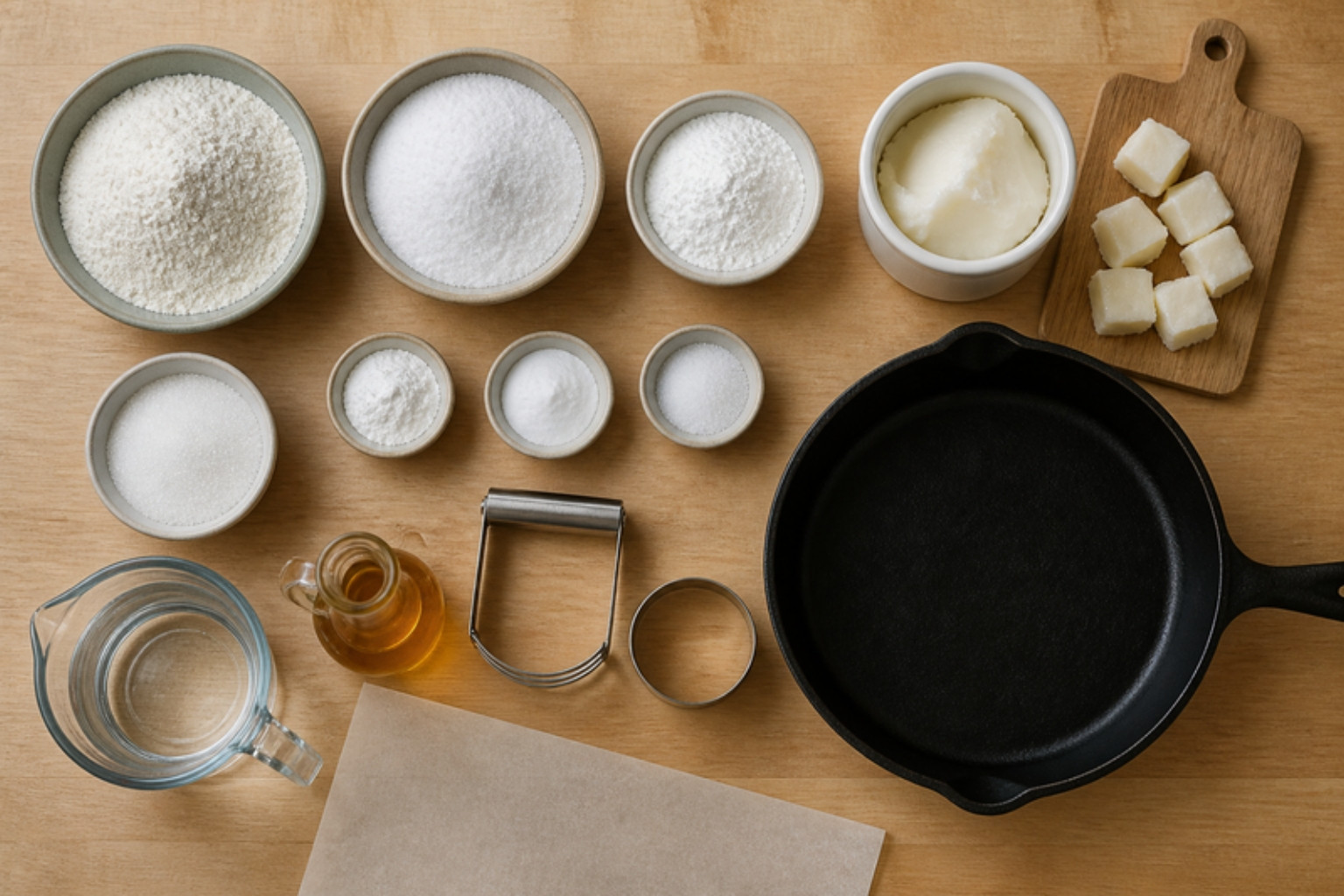
Biscuits Without Milk (Flaky Lard Biscuits), No Eggs or Wheat
Ingredients
Equipment
Method
- Heat the oven to 425°F (220°C) and line a rimmed baking sheet with parchment. Stir the vinegar into the cold water or oat milk and set it in the refrigerator while you work.
- In a large bowl, whisk the rice flour, sweet rice flour, cornstarch, sugar, baking powder, baking soda, and salt.
- Scatter the cold lard over the flour and cut it in with a pastry cutter or two forks until most of the mixture looks like coarse crumbs with some pea-sized pieces of fat left.
- Pour in the soured liquid and stir with a fork just until a shaggy, soft dough forms and no dry flour remains. It will feel softer and stickier than a wheat dough. If it’s too wet to pat, add rice flour a tablespoon at a time.
- Turn the dough onto a lightly rice-floured sheet of parchment. Pat it into a rectangle about 3/4 inch thick. Using the parchment to lift, fold it in thirds like a letter. Pat out again and fold once more. Pat to 1 inch thick.
- Chill the dough on its parchment for 10 minutes so the fat firms up.
- Cut straight down with a floured 2 1/2-inch cutter without twisting. Gently press the scraps together once and cut again; you should get 8 biscuits. Set them on the baking sheet so the sides just touch, which helps them rise taller.
- Brush the tops with melted lard. Bake 14 to 16 minutes, until the tops are golden, the bottoms are deep golden, and the sides look dry and flaky when you pull two apart.
- Cool on the pan 5 minutes before serving; the centers finish setting as they cool slightly.
Notes
Troubleshooting
- Dough cracks when folding: it’s a little dry. Brush the surface with a teaspoon of cold water and fold again.
- Biscuits spread flat: the lard got warm, or the dough was too wet. Chill the cut biscuits 10 more minutes before baking.
- Gummy centers: they needed a few more minutes. Rice flour doughs look done before the middle sets, so go by deep golden bottoms and rest them 5 minutes.
- Gritty texture: use a finely milled white rice flour.
Storage, Freezing and Reheating
Rice-flour biscuits are best the day they’re baked. Store leftovers airtight at room temperature for 1 day, or freeze baked biscuits up to 2 months and reheat at 350°F (175°C) for 6 to 10 minutes. For fresh biscuits any morning, freeze the cut, unbaked biscuits on a tray, bag them, and bake from frozen at 425°F, adding 3 to 5 minutes.
Ways to Use These Biscuits
Split them under the peppery sausage gravy from our biscuits and gravy made without milk, eggs, or wheat, or serve them alongside a bowl of dairy-free chicken corn chowder. For a holiday bread basket, try our sweet potato biscuits, and browse more ideas in baking.
Frequently Asked Questions
Can you make biscuits without milk?
Yes. Water works as the liquid, and a spoonful of vinegar adds the acidity buttermilk normally brings, so the baking soda still reacts and the biscuits rise.
What can I use instead of buttermilk in biscuits?
Stir 1 tablespoon of apple cider vinegar or lemon juice into 3/4 cup of cold water or oat milk with no added oil. Use it right away, cold.
Can I make these biscuits without butter or lard?
Solid refined coconut oil is the other fat that works, because it stays firm when cold. Liquid oils, including olive oil, make a softer, cakier biscuit without flaky layers.
Can I use all-purpose flour?
All-purpose flour contains wheat, so the biscuits would no longer be made without wheat. If wheat is fine for you, use 2 1/4 cups (280 g) all-purpose flour in place of the three flours and a little less liquid.
A note before you cook: These recipes are ideas and suggestions, not medical or dietary advice. As with any recipe or ingredient, it is each reader’s responsibility to confirm what they can and cannot eat, read every ingredient label, and source quality ingredients that fit their own needs. Ingredient formulations change, so always check the package you’re using.
Leave a Reply