
It’s Saturday morning, someone asks for pancakes, and there’s no milk in the fridge and no eggs on the list. If you’ve searched for pancakes without milk or eggs and found recipes that lean on a box of egg replacer, plant butter, or a carton of something you don’t keep, this one is for you. These are plain, golden, diner-style pancakes: lightly sweet, soft in the middle, with crisp lacy edges, and they come together with water or oat milk, rice flour, oat flour, and a little light-tasting olive oil.
Can you make pancakes without milk? Yes: water or oat milk with no added oil works as the liquid. Baking powder, baking soda and apple cider vinegar give the lift instead of eggs, and a 10-minute rest lets the rice and oat flours thicken the batter so the pancakes hold together.
The lift comes from baking powder and a little baking soda reacting with apple cider vinegar, so the batter puffs on the griddle without eggs. A short 10-minute rest lets the rice and oat flours soak up the liquid, which is what gives the pancakes body instead of a gritty, flat stack. They freeze well, too, so a double batch covers school mornings.
Made without: peanuts, tree nuts, milk, eggs, wheat, soy, fish, shellfish, sesame.
Why You’ll Love These Pancakes
- Pantry ingredients: water works as the liquid, so you don’t need milk of any kind.
- No eggs, no flax, no commercial egg replacer, and no plant butter.
- A plain, classic flavor that takes maple syrup, fruit, or jam.
- One bowl, about 40 minutes start to finish, including the batter rest.
- Freezer-friendly and reheats in the toaster.
How Pancakes Work Without Milk or Eggs
In a standard pancake, milk adds liquid and a little browning, and eggs bind and help hold the air bubbles. Here each job is covered by something else:
- Lift: baking powder does most of the work; baking soda plus apple cider vinegar gives a quick extra boost and a tender crumb. You won’t taste the vinegar.
- Binding: oat flour and cornstarch hydrate during the rest and thicken the batter, so the pancakes hold together when you flip them.
- Browning: the sugar and olive oil in the batter give golden color, even when you use plain water.
- Structure: fine white rice flour stands in for wheat flour and gives a light, fluffy center.
Ingredients and Swap Ideas
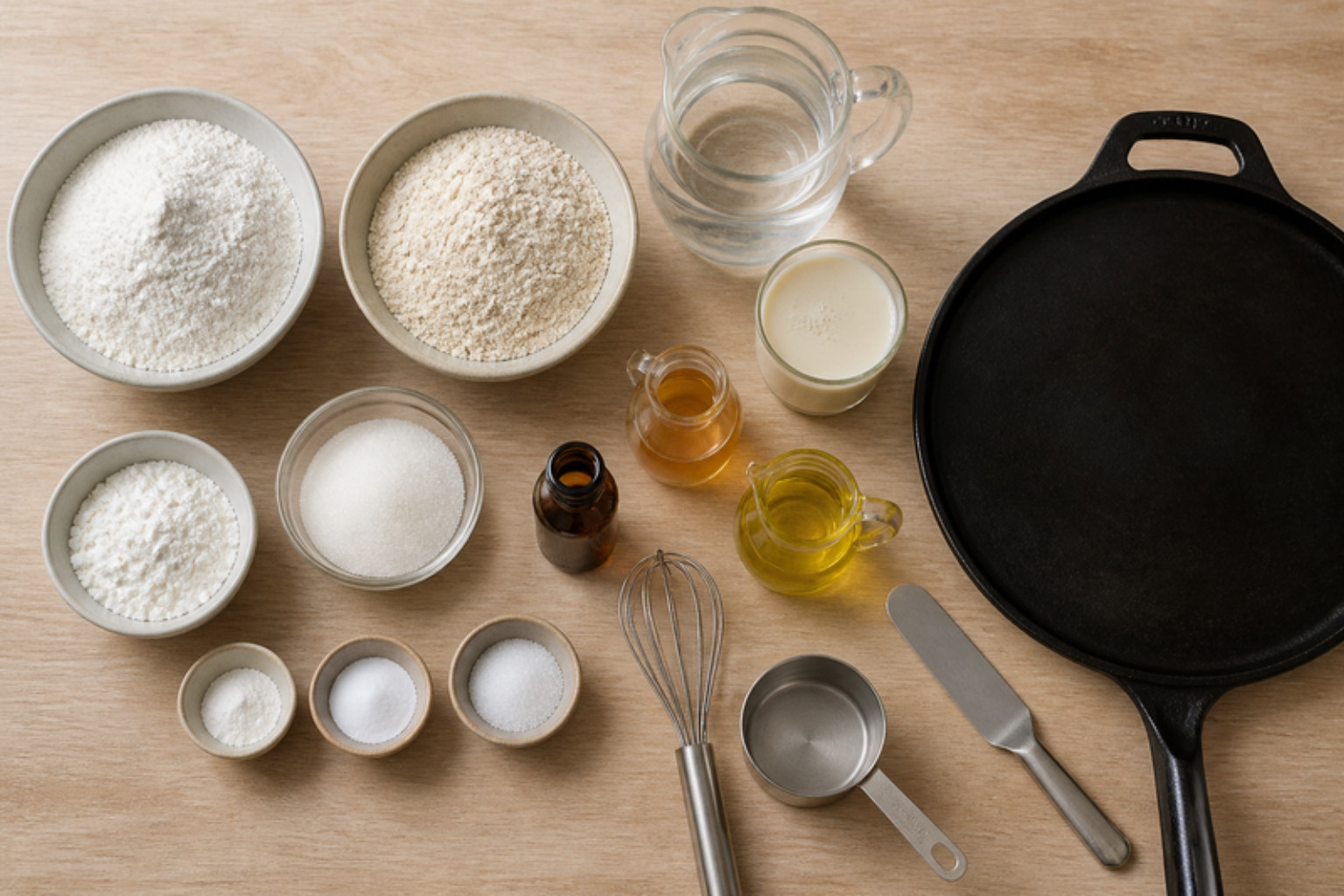
- White rice flour, 1 cup (160 g): choose a finely milled one; coarse rice flour can taste sandy. Brown rice flour works but makes a denser, nuttier-tasting pancake.
- Oat flour, 1/2 cup (50 g): look for certified gluten-free. You can grind certified GF rolled oats in a blender until powdery.
- Cornstarch, 1/4 cup (32 g): potato starch or tapioca starch work the same way.
- Water or oat milk with no added oil, 1 1/3 cups (320 ml): room temperature. Oat milk gives a slightly richer, browner pancake; water gives the lightest one. Many oat milks contain canola or sunflower oil, so read the label.
- Light-tasting olive oil, 3 tablespoons (40 g): “light” means refined and mild, not fewer calories. Melted refined coconut oil works too (if you avoid coconut, stay with light-tasting olive oil). Skip vegetable oil, margarine, plant butters, and cooking spray.
- Apple cider vinegar, 1 tablespoon: lemon juice works the same way.
- Baking powder, 1 tablespoon: check that it’s fresh and that the label doesn’t list wheat starch.
Want it a little sweeter or spiced? Add 1/2 teaspoon cinnamon to the dry ingredients, or scatter fresh blueberries onto each pancake right after pouring.
Kitchen Equipment
- Large mixing bowl and whisk
- Electric griddle (350 to 375°F) or a 12-inch cast iron or nonstick skillet
- 1/4-cup measuring cup for even pancakes
- Thin metal spatula
- Wire rack and sheet pan if you’re keeping pancakes warm in the oven
Step-by-Step Tips
- Whisk the dry ingredients well. Pockets of baking powder cause bitter spots and uneven rise.
- Don’t skip the rest. Right after mixing, the batter looks thin. After 10 minutes it thickens and mounds slightly on the spoon. That’s the cue it’s ready.
- Test the heat. A drop of water should sizzle and dance, not vanish instantly. Too hot and the outsides brown before the middles set; too cool and the pancakes spread thin and pale.
- Flip on the bubbles. Wait until bubbles pop and stay open and the edges look matte. Flipping early is the most common reason egg-free pancakes tear.
- Flip once. Pressing the pancake with the spatula squeezes out the air.
Fluffy Pancakes Without Milk or Eggs
Ingredients
Equipment
Method
- In a large bowl, whisk the rice flour, oat flour, cornstarch, sugar, baking powder, baking soda, and salt until evenly combined with no streaks of baking powder.
- In a measuring jug, stir together the water (or oat milk with no added oil), vinegar, 3 tablespoons light-tasting olive oil, and vanilla.
- Pour the wet ingredients into the dry and whisk just until smooth, about 20 strokes. The batter will look thin at first.
- Let the batter rest 10 minutes. It should thicken to a pourable but mounding consistency and show small bubbles on the surface. If it is too thick to spread, whisk in 1 to 2 tablespoons more water.
- Heat a griddle to 350 to 375°F (175 to 190°C), or a skillet over medium heat, until a drop of water sizzles and skitters. Brush lightly with light-tasting olive oil.
- Pour 1/4 cup batter per pancake, leaving room to spread. Cook 2 to 3 minutes, until bubbles on top pop and stay open, the edges look matte and dry, and the underside is golden brown.
- Flip once and cook 1 to 2 minutes more, until the second side is golden and the center springs back when pressed lightly. Re-oil the griddle lightly between batches.
- Serve right away, or hold in a single layer on a rack in a 200°F (95°C) oven while you finish the batch.
Notes
Troubleshooting
- Gummy centers: the griddle was too hot, or the pancakes were too thick. Lower the heat slightly and spread the batter a little with the back of the cup.
- Flat pancakes: the baking powder may be old, or the batter sat longer than 30 minutes. Test baking powder by stirring a spoonful into hot water; it should fizz hard.
- Gritty texture: use a finely milled rice flour and give the batter the full rest.
- Batter too thick to pour: oat flours vary. Whisk in water a tablespoon at a time.
Storage, Freezing and Reheating
Cool the pancakes completely on a rack so they don’t steam and go soft. Refrigerate in a covered container up to 3 days. To freeze, lay them in a single layer on a sheet pan until firm, then stack with parchment between layers in a freezer bag for up to 2 months. Reheat straight from frozen in a toaster, or on a sheet pan at 350°F (175°C) for 8 to 10 minutes, until hot and crisp at the edges.
More Breakfasts to Try
For a heartier stack, try our egg-free oatmeal pancakes, or make a fall batch of pumpkin pancakes made without eggs, milk, or wheat. Round out the plate with maple sage breakfast sausage patties, or browse every breakfast recipe on the site.
Frequently Asked Questions
Can you make pancakes without milk?
Yes. Milk mostly adds liquid, so water works well. A little sugar and oil in the batter keep the pancakes golden and tender. Oat milk with no added oil is an option if you want a slightly richer flavor.
What can I use instead of milk in pancakes?
Use the same amount of water or oat milk with no added oil: 1 1/3 cups (320 ml) at room temperature in this recipe. Water gives the lightest pancake, and oat milk gives a slightly richer, browner one.
What can I use instead of eggs in pancakes?
In this recipe nothing replaces the egg directly. Baking powder, baking soda, and vinegar provide the lift, and oat flour and cornstarch thicken the batter during a short rest so the pancakes hold together.
Can I use regular all-purpose flour?
All-purpose flour contains wheat, so the pancakes would no longer be made without wheat. If wheat is fine for your household, 1 3/4 cups (220 g) all-purpose flour can replace the rice flour, oat flour, and cornstarch; skip the rest and use a little less liquid.
Can I make the batter the night before?
The leaveners lose strength overnight, so mix the dry ingredients and the wet ingredients in separate containers the night before, then combine them in the morning and rest 10 minutes.
A note before you cook: These recipes are ideas and suggestions, not medical or dietary advice. As with any recipe or ingredient, it is each reader’s responsibility to confirm what they can and cannot eat, read every ingredient label, and source quality ingredients that fit their own needs. Ingredient formulations change, so always check the package you’re using.
Leave a Reply