
|
Listen to this article (AI-narrated)
Getting your Trinity Audio player ready…
|
What’s It Doing There? · Episode 3 · A weekly look at what ingredients actually do, and how to cook without the top 9 allergens
We eat with our eyes first, and our eyes are very fond of brown. A golden pie crust, a crackly cookie edge, a deep sear on a roast: all of it signals flavor before the first bite. So it’s a letdown when a recipe made without butter, milk or eggs comes out of the oven fully cooked but pale.
That paleness isn’t a mystery. Butter, milk and eggs all happen to be loaded with the exact ingredients browning runs on. Take them out and you take away the fuel. Put the right fuel back and the color, and the flavor that comes with it, comes back too.
The two-minute version
- Two kinds of browning: the Maillard reaction (protein plus sugar, the savory brown of crusts and sears) and caramelization (sugar alone, the sweet brown of caramel).
- Butter, milk and eggs are browning fuel. Milk sugar and the proteins in all three feed the Maillard reaction, so recipes without them often come out pale.
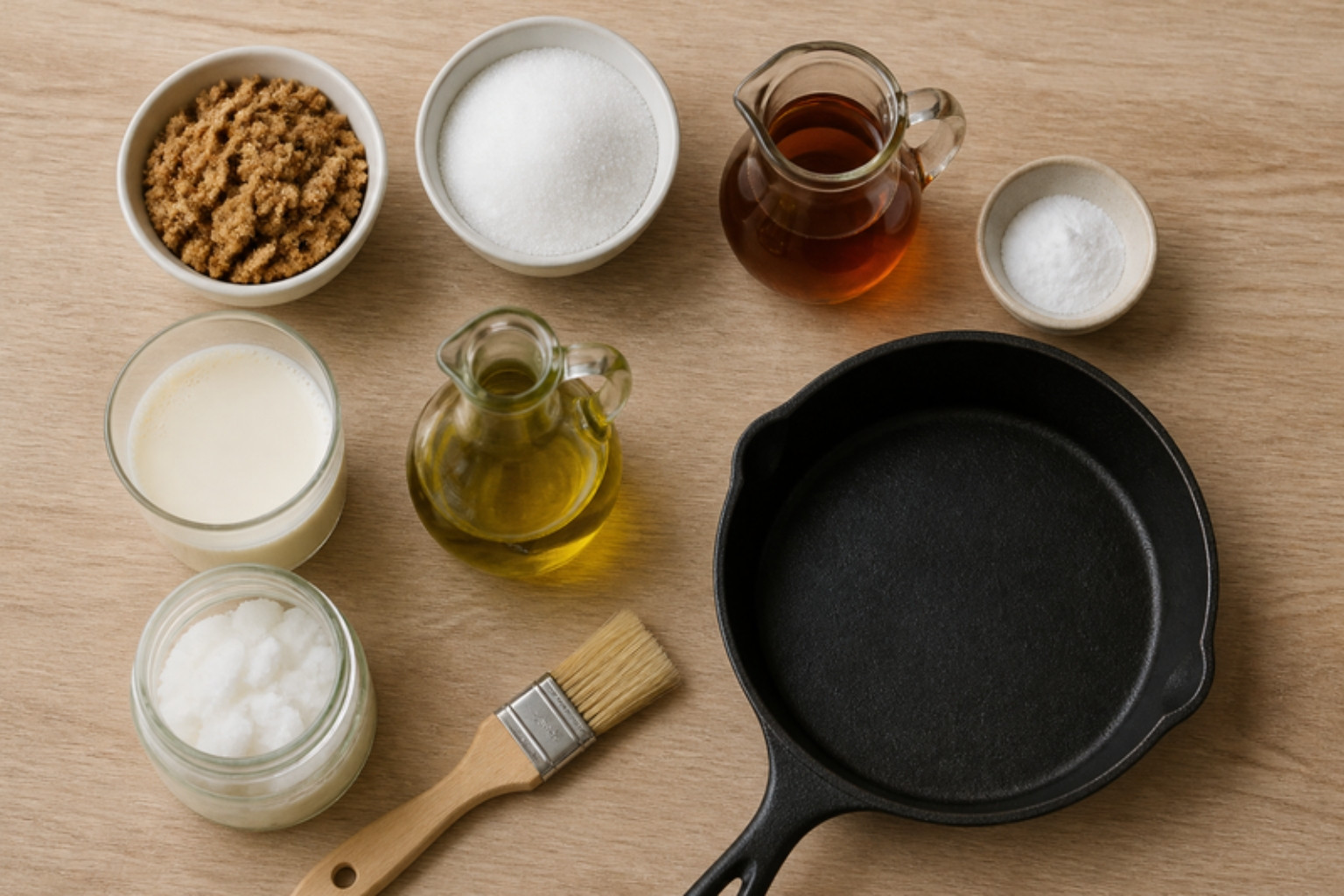
- Bring the fuel back: brown sugar or maple syrup, an oat milk or maple wash, a light brush of olive oil, or a tiny pinch of baking soda.
- Browning needs a dry, hot surface. Water can’t get hotter than 212°F, so pat things dry, don’t crowd the pan, and fully preheat.
- Brown isn’t burnt. If the outside races ahead of the inside, lower the heat a little or tent loosely with foil.
Two reactions, one color
Browning in the kitchen mostly comes from two different processes that often happen side by side.
The Maillard reaction is a chain of reactions between amino acids, the building blocks of protein, and certain sugars. It’s named for Louis-Camille Maillard, the French chemist who described it in 1912. It creates hundreds of flavor and aroma compounds, which is why a seared steak, toasted bread and roasted coffee taste so much deeper than their pale versions. It happens slowly at lower temperatures but really takes off on surfaces around 280 to 330°F.
Caramelization involves sugar alone. Heat sugar enough and its molecules break apart and recombine into new compounds that taste nutty, toasty and slightly bitter. Table sugar starts caramelizing around 320 to 340°F; fructose, the sugar abundant in fruit and honey, starts lower. Caramelization gives you the brown of a caramel sauce or the glassy top on roasted squash with brown sugar.
Most golden-brown food uses both. A cookie edge browns from the Maillard reaction between its proteins and sugars and from its sugar caramelizing at the hottest spots.
Why butter, milk and eggs brown so easily
- Milk brings lactose, a sugar that reacts readily in the Maillard reaction, plus milk proteins. That’s why a milk wash browns bread and why brown butter tastes nutty: it’s the milk solids browning.
- Eggs bring a lot of protein. An egg wash is basically a coat of browning fuel painted on the surface.
- Butter is about 80% fat and 15–18% water, plus a little protein and milk sugar. The fat conducts heat into the surface, and the milk solids brown.
Take all three away and the batter or dough is left with less protein, less of the most reactive sugar, and nothing on the surface to kick-start color. The food is cooked; it just didn’t get the reaction.
Putting the fuel back
Choose browning-friendly sugars
Brown sugar carries molasses, which includes glucose and fructose, both of which brown faster than plain table sugar. Maple syrup is mostly table sugar but carries small amounts of those quicker-browning sugars and a little protein, which is why maple-glazed foods color so nicely. Swapping some white sugar for brown sugar, or adding a tablespoon of maple syrup, is often enough to bring back a golden crust.
Brush the surface
An egg-free, dairy-free wash does the same job as an egg wash. Oat milk works well because making it breaks some of the oat starch into sugars. Choose oat milk with no added oil, and check the label. For more color and a little shine, stir a teaspoon of maple syrup into 2 tablespoons of oat milk. A light brush of olive oil adds gloss and helps heat reach the surface, which is useful on roasted vegetables and savory breads.
A pinch of baking soda
The Maillard reaction runs faster in slightly alkaline conditions, and baking soda is alkaline. A small pinch in a batter, or on sliced onions in a skillet, speeds browning noticeably. The catch is that a little too much turns flavors soapy and textures mushy. A pinch means a pinch.
Use the right fat
Fat moves heat into food far better than air does, which is why a sear needs a film of fat in the pan. Beef tallow, lard and light-tasting olive oil (light means refined and mild, not fewer calories) all handle high heat. Refined coconut oil works for baking and pan-frying; if you avoid coconut, use light-tasting olive oil.
The 212°F problem
Here’s the rule that explains most pale, steamed-looking food. As long as a surface is wet, it can’t get much hotter than 212°F, the boiling point of water, and that’s well below where browning takes off. The pan or oven spends its energy boiling off water first. Only once the surface dries does it climb into browning territory.
- Pat meat and vegetables dry before they hit the pan.
- Don’t crowd the pan. Packed food steams in its own moisture; leave space between pieces.
- Preheat fully, pan and oven both. A pan that’s hot before the food goes in sears instead of simmers.
- Leave it alone. Moving food every few seconds keeps cooling the surface. Let it sit until it releases on its own.
- Dark pans brown more than shiny ones, and the top third of most ovens browns tops faster.
The cheat sheet
| If it comes out pale… | Try | Watch out for |
|---|---|---|
| Cookies and bars | Swap some white sugar for brown sugar; a pinch of baking soda | More spread; soapy taste if overdone |
| Bread, scones, pie crust | Oat milk and maple wash; bake on a dark pan | Maple scorches fast at very high heat |
| Roasted vegetables | Dry them well, toss in olive oil, give them space, 400–425°F | Crowding steams them |
| Seared meat | Pat dry, hot pan, tallow or light olive oil, don’t move it | Smoke if the fat is past its limit |
| Onions | A tiny pinch of baking soda | Mushy texture if overdone |
Try this at home: the onion race
- Thinly slice one onion and split it between two skillets, each with a tablespoon of olive oil, over the same medium heat.
- Into one skillet, sprinkle a tiny pinch of baking soda (about ⅛ teaspoon). Leave the other plain.
- Stir both every minute or two and compare. The baking soda onions brown noticeably faster and turn soft and jammy sooner. Taste both: the plain ones keep more texture, which shows the trade-off.
Same onions, same heat, different pH. That’s the Maillard reaction responding to chemistry, not just temperature.
Common mistakes
- Turning up the heat to fix pale baking. The outside burns before the inside sets. Add browning fuel instead, or move the pan up a rack for the last few minutes.
- Adding lots of extra sugar. A little helps color; a lot changes texture and spread.
- Confusing brown with burnt. Browning tastes savory or toasty. Black, bitter and acrid means it has gone past browning.
- Wet food, cold pan. Most “it won’t brown” problems are the 212°F problem.
See it in action
Roasted acorn squash with brown sugar (caramelization), smoked brisket (a Maillard bark), twice-baked potatoes (crisp, browned skins), pumpkin scones with maple glaze and soft pumpkin cookies.
FAQ
What’s the difference between the Maillard reaction and caramelization?
The Maillard reaction needs protein (amino acids) and sugar and creates savory, roasted flavors. Caramelization is sugar alone breaking down with heat and gives sweet, nutty, slightly bitter flavors. Most browned foods use both.
What can I brush on bread instead of egg wash?
Oat milk with no added oil, alone or with a little maple syrup stirred in, browns well. A light brush of olive oil adds shine. Check the label on any plant milk.
Does baking soda make cookies brown?
Yes. It makes the dough slightly alkaline, which speeds the Maillard reaction. Use only what the recipe calls for; extra makes cookies spread, darken quickly and taste soapy.
Why does my meat steam instead of sear?
The surface is wet, the pan isn’t hot enough, or the pan is crowded. Pat the meat dry, preheat the pan with a film of fat, and cook in batches with space between pieces.
Why do dairy-free baked goods come out pale?
Milk sugar and milk and egg proteins are major fuel for browning. Without them, there’s less to react. Brown sugar, maple syrup and an oat milk wash bring color back.
Next week
Episode 4: fat’s three jobs, and why lard, coconut oil and olive oil behave so differently in a pie crust.
Further reading: Food52: what the heck is the Maillard reaction? · Food Republic: Maillard vs. caramelization · Khymos: speeding up the browning of onions
A note before you cook: These recipes are ideas and suggestions, not medical or dietary advice. As with any recipe or ingredient, it is each reader’s responsibility to confirm what they can and cannot eat, read every ingredient label, and source quality ingredients that fit their own needs. Ingredient formulations change, so always check the package you’re using.
Leave a Reply