
Fall Saturdays in the Midwest mean football, tailgates, and a smoker running from early morning. Smoked pulled pork is the classic crowd feeder: a pork shoulder rubbed with brown sugar and paprika, cooked low and slow until a dark, sticky bark forms on the outside and the inside turns so tender it falls apart with a fork. One shoulder feeds a dozen people, and leftovers freeze beautifully.
The catch with barbecue is that a lot of the flavor often comes from bottles. Store-bought sauces and rubs can include Worcestershire sauce (often made with anchovies), soy sauce, or mustard. This version builds everything from scratch: a simple pantry-spice rub, a vinegar spritz, and a tangy, glossy barbecue sauce made from ketchup, cider vinegar, brown sugar, and molasses. No smoker? There’s an oven method in the recipe notes.
Made without: peanuts, tree nuts, milk, eggs, wheat, soy, fish, shellfish, sesame.
Why You’ll Love This Recipe
- Feeds a crowd: one 8-pound shoulder makes about 12 generous servings.
- Everything from scratch: rub and sauce come from common pantry spices, with no Worcestershire, soy sauce, or mustard.
- Forgiving cut: pork shoulder has enough fat and connective tissue to stay juicy through a long cook.
- Great leftovers: it freezes well for quick weeknight dinners.
How This BBQ Works Without Worcestershire, Soy, or Mustard
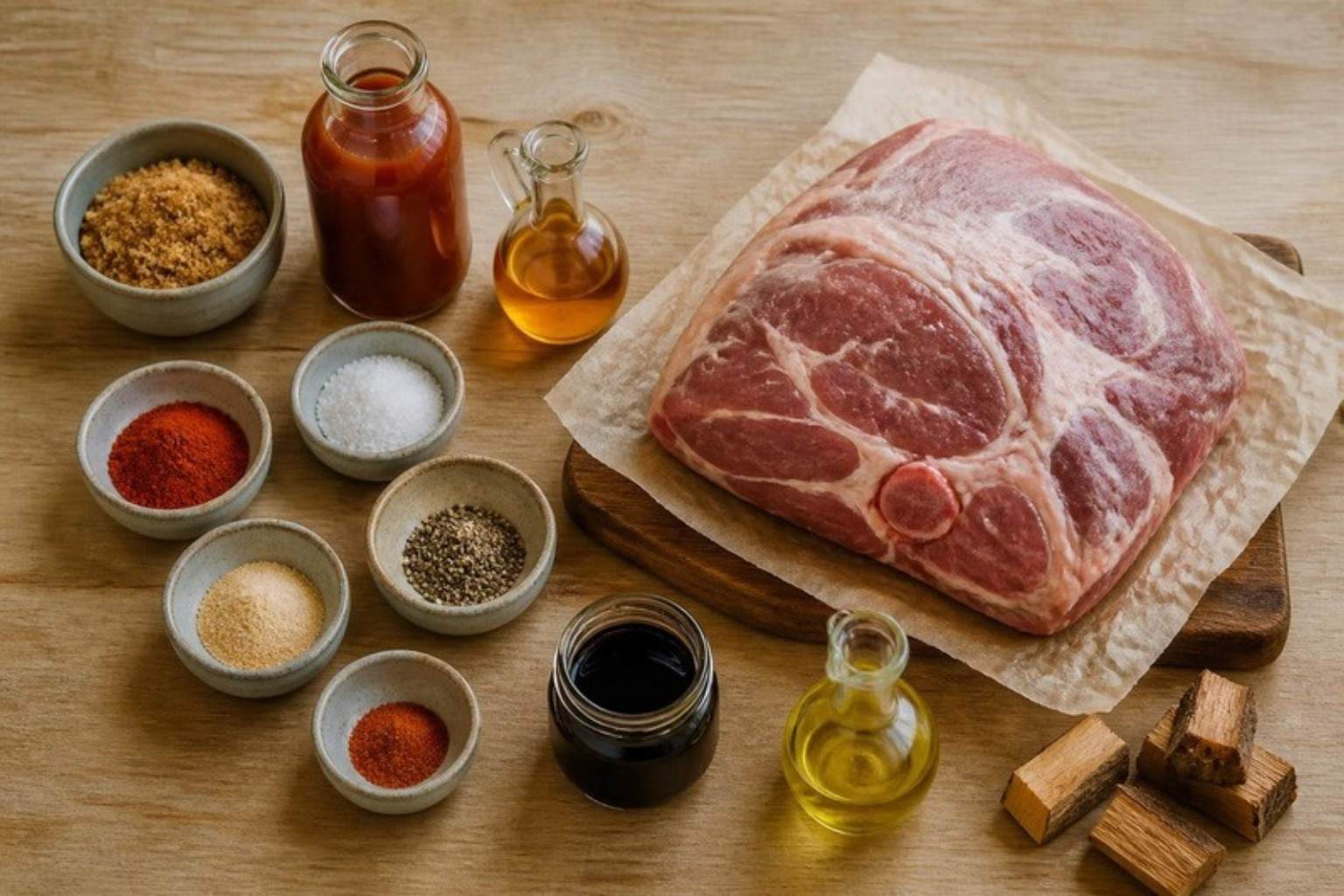
Pitmasters often smear a pork shoulder with yellow mustard before adding the rub. The mustard flavor mostly cooks off; its real job is helping the rub stick. A thin coat of light-tasting olive oil does the same thing. (“Light” means refined and mild in flavor, not lower in calories.)
In the sauce, Worcestershire and soy sauce usually add savory depth. Here, molasses brings that dark, slightly bitter richness, smoked paprika adds smokiness, and cider vinegar gives the tang that cuts through fatty pork. Simmering the sauce for 15 to 20 minutes concentrates the flavor and gives it a glossy body that clings to the meat.
Ingredients & Swap Ideas
- Bone-in pork shoulder (8 lb / 3.6 kg): often sold as Boston butt. Boneless works; it cooks about an hour faster.
- Light-tasting olive oil (2 Tbsp / 27 g): the rub binder. Melted lard also works.
- Rub spices: brown sugar, sweet paprika, kosher salt, black pepper, garlic powder, onion powder, and optional cayenne. We use single spices rather than pre-mixed BBQ rubs, which can contain other ingredients; check labels either way.
- Ketchup (1 1/2 cups / about 400 g): the sauce base. Ingredients vary by brand, so read the label.
- Apple cider vinegar, molasses, brown sugar: tang, depth, and sweetness. Use plain cider vinegar rather than malt vinegar, which is made from barley.
- Wood: apple or cherry for mild, sweet smoke; hickory for a stronger, classic flavor.
Kitchen Equipment
- A smoker that holds 250°F (121°C), or a charcoal grill set up for indirect heat.
- A leave-in probe thermometer (the single most useful tool for this cook).
- Unwaxed butcher paper or heavy-duty foil, a spray bottle, and a small saucepan.
Step-by-Step Tips
- Rub it the night before. An overnight rest in the fridge lets the salt work into the meat and dries the surface for a better bark.
- Don’t peek early. Leave the lid closed for the first 3 hours. Start spritzing only once the bark looks set and dry.
- Wrap through the stall. Somewhere around 160 to 170°F (71 to 77°C), the temperature can sit still for hours as moisture evaporates. Wrapping pushes it through.
- Cook to tenderness, not time. Pork is safe to eat at 145°F (63°C) with a rest, per the USDA safe temperature chart, but pulled pork needs 198 to 203°F (92 to 95°C) to break down its connective tissue. The probe should slide in like it’s going into soft butter.
- Rest it. A one-hour rest in a dry cooler keeps the juices in the meat when you pull it.
Smoked Pulled Pork with Homemade BBQ Sauce
Ingredients
Equipment
Method
- The night before (or at least 1 hour ahead), pat the pork shoulder dry and trim any thick, hard fat cap to about 1/4 inch. Rub all over with the light-tasting olive oil. Mix the rub ingredients and coat the pork on every side. Refrigerate uncovered overnight, or let it sit at room temperature while the smoker heats.
- Heat the smoker to 250°F (121°C) with apple, cherry, or hickory wood. Place the pork fat side up, insert a probe thermometer into the thickest part (not touching bone), and close the lid.
- Smoke undisturbed for 3 hours, until a dark mahogany bark has set and the rub no longer looks wet. Then spritz with the vinegar-water mixture every 45 to 60 minutes.
- When the internal temperature stalls around 160 to 170°F (71 to 77°C), usually after 5 to 6 hours, wrap the pork tightly in butcher paper or heavy-duty foil and return it to the smoker.
- Continue cooking until the internal temperature reaches 198 to 203°F (92 to 95°C) and a probe slides into the meat like soft butter with no resistance, about 10 to 12 hours total. The bone should wiggle loosely.
- Rest the wrapped pork in a dry cooler or off-heat oven for at least 1 hour (up to 3 hours).
- While it rests, make the sauce: whisk all sauce ingredients in a small saucepan. Simmer over medium-low heat, stirring often, for 15 to 20 minutes, until glossy and thick enough to coat a spoon. Cool slightly.
- Unwrap the pork, saving the juices. Pull out the bone and shred the meat with two forks or gloved hands, discarding large pieces of fat. Toss with 1/2 cup of the reserved juices and about 1 cup of sauce. Serve with the remaining sauce on the side.
Notes
Troubleshooting & Tips
- Bark is soft after wrapping: foil steams the bark. Butcher paper keeps it firmer, or unwrap for the last 30 minutes.
- Meat is tough or won’t shred: it isn’t done yet, even if the thermometer reads close. Keep cooking and check tenderness every 30 minutes.
- Running behind schedule: after wrapping, you can finish the pork in a 275°F (135°C) oven. It has already taken on all the smoke it will absorb.
- Sauce too sharp: simmer a few more minutes or add another tablespoon of brown sugar.
Serving Ideas
Buns are where wheat, eggs, milk, soy, and sesame most often show up, so read the package or choose a bun that fits your needs. Pulled pork is also great over a baked potato or a scoop of dairy-free mashed potatoes, with a crunchy coleslaw dressed with vinegar and olive oil instead of store-bought mayo.
Storage, Freezing & Reheating
Fridge: store pulled pork with some of its juices for up to 4 days; the sauce keeps 2 weeks in a jar. Freezer: freeze in flat bags with a few spoonfuls of juices for up to 3 months. Reheat: warm covered in a 300°F (150°C) oven or in a covered skillet with a splash of water until steaming.
More From the Grill and Smoker
Pair this with our grilled apple cider brined pork chops for a weeknight pork fix, or try the hands-off slow cooker pot roast when the weather turns cold.
FAQ
How long does it take to smoke an 8-pound pork shoulder?
Plan on 10 to 12 hours at 250°F (121°C), plus at least an hour to rest. Every shoulder is different, so start early and use temperature and tenderness as your guide.
Can I make pulled pork in the oven?
Yes. Roast the rubbed shoulder covered at 275°F (135°C) until it reaches 198 to 203°F, about 7 to 8 hours. Add a little extra smoked paprika to the rub for a smoky note.
Why no mustard binder?
Mustard is traditional but optional. A thin layer of light-tasting olive oil holds the rub just as well, and leaving mustard out keeps the ingredient list shorter.
Can I make the BBQ sauce ahead?
Yes. It keeps in a sealed jar in the fridge for up to 2 weeks, and the flavor improves after a day.
A note before you cook: These recipes are ideas and suggestions, not medical or dietary advice. As with any recipe or ingredient, it is each reader’s responsibility to confirm what they can and cannot eat, read every ingredient label, and source quality ingredients that fit their own needs. Ingredient formulations change, so always check the package you’re using.