
Butternut squash soup shows up on a lot of Thanksgiving tables, and most recipes finish it with a pour of heavy cream, a knob of butter, and a sprinkle of toasted pumpkin seeds or pecans. If cream and nuts are off the menu at your house, it can feel like the soup isn’t for you. This version gets its silky texture from the squash itself: roasting brings out its sweetness, and a good blender does the rest.
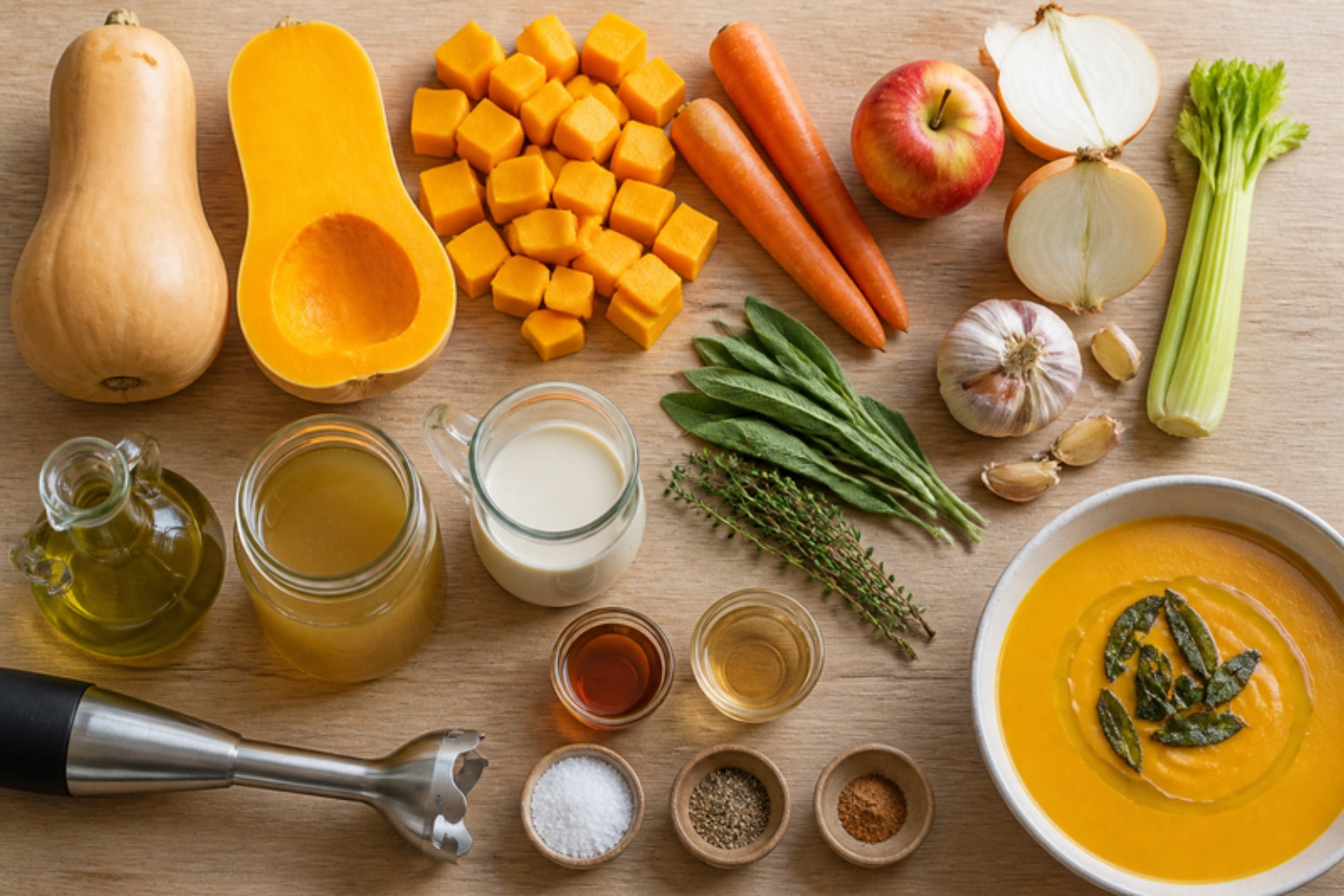
The squash roasts with carrots and an optional apple until the edges caramelize, then simmers briefly with onion, celery, garlic, sage, and thyme in broth. A splash of oat milk makes it a little creamier, a spoonful of maple rounds out the flavor, and a teaspoon of cider vinegar keeps it bright. Crispy fried sage leaves on top add crunch without nuts or seeds. It reheats beautifully, so you can make it days before the holiday.
Made without: peanuts, tree nuts, milk, eggs, wheat, soy, fish, shellfish, sesame.
Why You’ll Love This Butternut Squash Soup
- Creamy without cream. Roasted squash blends into a naturally velvety soup.
- Deep, roasted flavor. Caramelized edges on the squash and carrots give more flavor than boiling.
- Holiday make-ahead. It keeps 4 days in the fridge and freezes for months, freeing up the stove on the big day.
- Flexible. Serve small cups as a Thanksgiving starter or bowls for a cozy weeknight supper.
How It Gets Creamy Without Dairy
Cream and butter add richness and body to a classic squash soup. Here’s how this recipe covers that:
- Starchy squash. Butternut squash is dense and low in water, so once it’s roasted and blended, it thickens the soup on its own.
- Olive oil for richness. Extra-virgin olive oil in the roasting pan and the pot emulsifies into the soup when blended, giving it a smooth, rounded feel.
- A little oat milk. Optional, but it softens the color and adds a mild, creamy note.
- Acid and sweetness. Maple and cider vinegar balance the earthiness, the way a swirl of crème fraîche would in a restaurant version.
Ingredients and Swap Ideas
Exact amounts in cups and grams are in the recipe card below.
- Squash: one large butternut, or about 2 1/2 pounds (1.1 kg) of pre-cut cubes. Kabocha or sugar pumpkin also work and give a slightly thicker soup.
- Broth: chicken or vegetable broth. Many boxed broths contain wheat, soy, yeast extract, or added oil, so read the label, or use homemade.
- Oat milk: unsweetened, certified gluten-free, and with no added oil (many oat milks contain canola or sunflower oil). Full-fat coconut milk is a richer swap for anyone who doesn’t avoid coconut; it adds a light coconut flavor.
- Fat: extra-virgin olive oil throughout. Bacon fat is a smoky option for sautéing the onion. Skip butter substitutes and vegetable oil.
- Apple: optional, but a sweet-tart apple like Honeycrisp adds a fresh, fruity note.
- Toppings: classic garnishes include toasted pumpkin seeds and pecans. They aren’t used here; crispy sage gives the crunch instead.
Equipment
- A large rimmed baking sheet and a large pot or Dutch oven
- An immersion blender or countertop blender
- A sturdy vegetable peeler and a sharp chef’s knife for the squash
Step-by-Step Tips
- Peel the squash safely. Trim both ends, cut the neck from the round bottom so each piece sits flat, then peel with a sturdy Y-peeler.
- Give the pan room. Crowded vegetables steam instead of browning. Use two pans if needed.
- Roast until caramelized. The squash is ready when a fork slides in easily and the edges are deep golden brown.
- Blend longer than you think. A full minute or two with an immersion blender gives the smoothest texture.
- Season at the end. Broths vary in salt, so taste after blending and adjust salt and vinegar last.
Roasted Butternut Squash Soup (No Cream or Butter)
Ingredients
Equipment
Method
- Heat the oven to 425°F (220°C). Toss the squash, carrots, and apple with 2 tablespoons olive oil, 3/4 teaspoon salt, and the pepper. Spread in a single layer on the baking sheet.
- Roast 35-40 minutes, turning once halfway, until the squash is fork-tender and browned and caramelized at the edges.
- While the vegetables roast, warm the remaining 1 tablespoon olive oil in a large pot over medium heat. Add the onion, celery, and 1/2 teaspoon salt and cook 8-10 minutes, stirring, until soft and golden at the edges. Add the garlic, chopped sage, and thyme and cook 1 minute, until fragrant.
- Scrape the roasted vegetables into the pot, add the broth, and bring to a simmer. Simmer 10 minutes so the flavors blend.
- Blend until completely smooth with an immersion blender, or in batches in a countertop blender with the lid vented and covered with a towel (hot liquid expands).
- Stir in the oat milk, maple syrup, nutmeg, and vinegar. Warm through without boiling. Taste and adjust with salt and a few drops more vinegar. Thin with broth or water if it’s thicker than you like.
- For the crispy sage, heat 2 tablespoons olive oil in a small skillet over medium heat. Fry the sage leaves a few at a time for 10-20 seconds, until they turn darker green and stop bubbling. Drain on a paper towel and sprinkle with flaky salt.
- Ladle the soup into bowls and top with crispy sage and a drizzle of the sage oil.
Notes
Troubleshooting
- Soup tastes flat: add salt a pinch at a time, then a few more drops of cider vinegar. Both wake up the squash flavor.
- Too thick: thin with warm broth or water, 1/4 cup at a time.
- Too thin: simmer uncovered for 5 to 10 minutes, stirring, to reduce.
- Stringy texture: blend longer, or press the soup through a fine-mesh strainer for an extra-silky finish.
Make-Ahead, Storage, and Freezing
- Fridge: cool the soup quickly and refrigerate up to 4 days. The flavor deepens by day two.
- Freezer: freeze up to 3 months in airtight containers with an inch of headspace. If you can, freeze it before adding the oat milk and stir that in when reheating.
- Reheat: warm on the stove over medium-low, stirring often, until steaming hot (165°F / 74°C). Thin with a little broth if needed.
- Holiday timing: make the soup up to 3 days before Thanksgiving and fry the sage the morning of.
Find more make-ahead sides in the Sides aisle of our Thanksgiving recipes. If you’d rather serve squash as a side, try the maple roasted butternut squash with crispy sage, and for a heartier weeknight pot, there’s our hamburger soup.
FAQ
How do you make butternut squash soup creamy without cream?
Roast the squash so it’s dense and sweet, blend it thoroughly with olive oil and broth, and add a splash of oat milk at the end. The squash’s own starch gives the soup body.
Can I use frozen butternut squash?
Yes. Roast frozen cubes straight from the freezer at 425°F (220°C), spread well apart, for 40 to 45 minutes. They brown less than fresh squash, so the soup is a little milder.
Can I make it in a slow cooker?
A slow-cooker version hasn’t been worked out for this recipe. Skipping the roasting step would also lose much of the caramelized flavor.
What goes with butternut squash soup?
On a holiday table, serve small cups before the turkey. For dinner, pair it with roast chicken, a crisp green salad, or warm cornbread.
A note before you cook: These recipes are ideas and suggestions, not medical or dietary advice. As with any recipe or ingredient, it is each reader’s responsibility to confirm what they can and cannot eat, read every ingredient label, and source quality ingredients that fit their own needs. Ingredient formulations change, so always check the package you’re using.