
When you cook without milk, wheat, or eggs, a lot of easy pasta-night sides drop off the menu: buttered noodles, anything with parmesan, garlic bread. Spaghetti squash fills that spot without any substitutes at all. Roasted cut side down until the edges caramelize, it pulls apart into long, tender strands with a mild, slightly sweet flavor. A quick garlic oil, a little oregano, lemon, and fresh parsley turn it into a side that goes with almost any fall dinner.
This post walks through how to cook spaghetti squash so the strands come out tender but not mushy, how to cut a hard squash more easily, and how to keep the finished dish from turning watery. It’s a weeknight side that takes about ten minutes of hands-on time.
Made without: milk, eggs, wheat, soy, peanuts, tree nuts, fish, shellfish, sesame.
Why You’ll Love This Recipe
- No butter or cheese needed: garlic olive oil and lemon carry the flavor.
- About 10 minutes of hands-on time; the oven does the rest.
- Works as a side or as a base for meatballs or a meat sauce.
- Uses one sheet pan and one small skillet.
Big Flavor Without Butter or Parmesan
Many spaghetti squash recipes finish the strands with butter and a heavy snowfall of parmesan. Here the flavor comes from three places instead. First, roasting cut side down at 400°F browns the edges where the squash touches the pan, adding a nutty, caramelized flavor (no nuts involved). Second, garlic warmed gently in extra-virgin olive oil infuses the oil, so every strand gets coated in garlic flavor without harsh raw bites. Third, lemon zest, lemon juice, and parsley at the end brighten the whole bowl the way a salty cheese would.
Ingredients and Swap Ideas
- Spaghetti squash (3 to 4 lb / 1.4 to 1.8 kg): Choose one that feels heavy for its size with firm, pale yellow skin and no soft spots. Smaller squash roast faster; check them at 30 minutes.
- Extra-virgin olive oil (3 tbsp / 45 ml total): For a smoky version, use rendered bacon fat for roasting and keep the olive oil for the garlic.
- Garlic: Fresh cloves give the best flavor. If you use jarred minced garlic, check the label; some is packed in seed oil.
- Dried oregano and red pepper flakes: Use single spices rather than an Italian seasoning blend unless you’ve checked its label. Fresh thyme or basil also work.
- Lemon and parsley: A splash of apple cider vinegar can stand in for lemon juice. Skip malt vinegar, which is made from barley.
Skip butter substitutes, which are usually made with seed oils, and brush the pan with olive oil rather than using cooking spray. Dairy-free cheese shreds often contain nuts, soy, or seed oils, so read the label if you add any.
Kitchen Equipment
- Rimmed baking sheet
- A large, sharp chef’s knife and a stable cutting board (set a damp towel underneath)
- Small skillet for the garlic oil
- A fork for shredding the strands
Step-by-Step Tips
- Make cutting easier. Trim off the stem so the squash stands flat, then cut down from the top. For a very hard squash, poke it a few times and microwave it whole for 3 to 4 minutes to soften the shell.
- Scrape it clean. Remove all the seeds and stringy pulp with a sturdy spoon. The strands you want are in the firm flesh underneath.
- Roast cut side down. This steams the inside while browning the edges. Flip it once at the end if you want more color on top.
- Check doneness by feel. The skin should give slightly when pressed and a knife should slide in easily. Underdone squash won’t shred; overdone squash turns mushy.
- Keep the garlic pale. Warm it gently and pull it off the heat as soon as the edges turn light gold. Browned garlic turns bitter.
- Shred lengthwise. Rake a fork from end to end along the length of the squash for the longest strands.
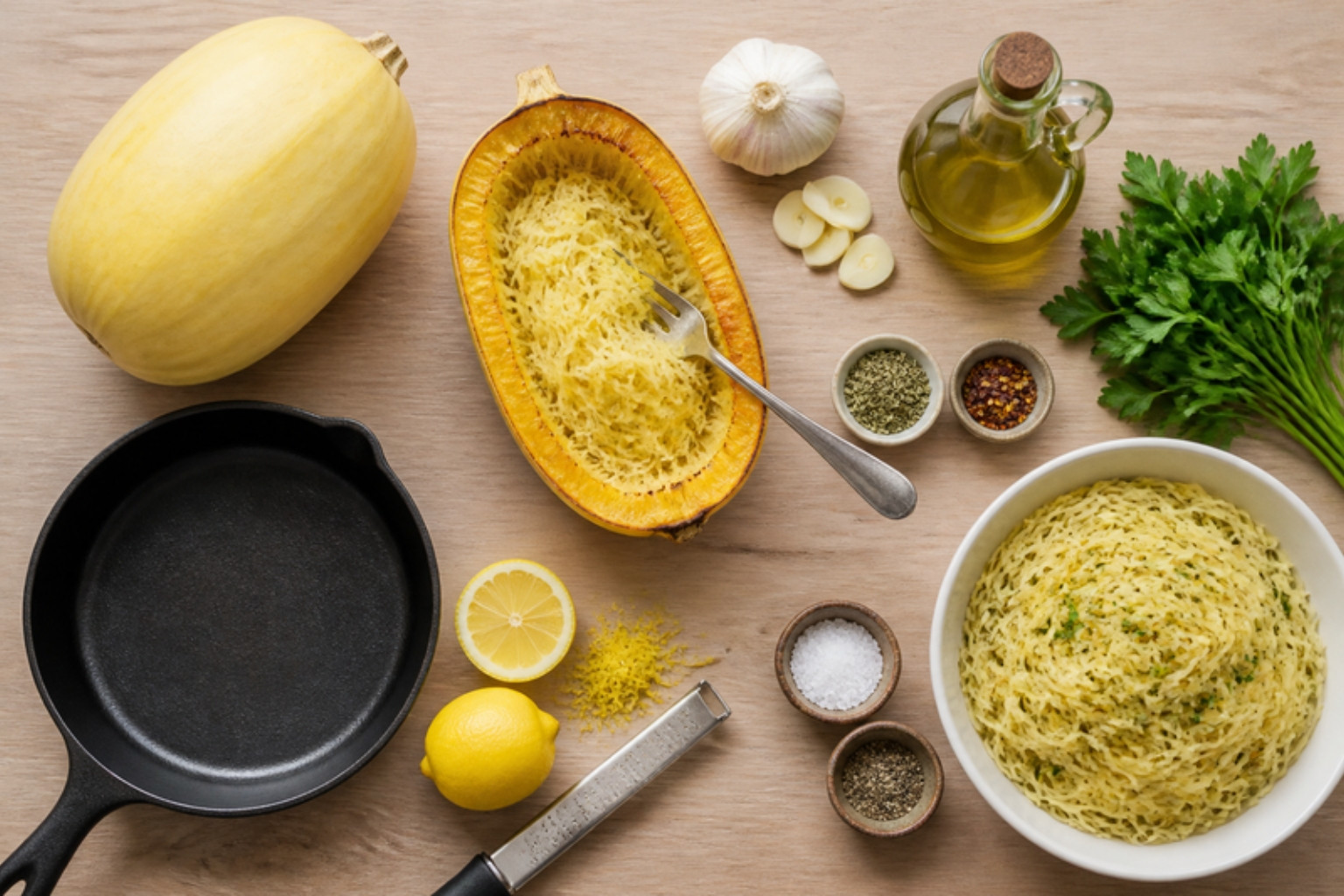
Roasted Spaghetti Squash with Garlic and Herbs
Ingredients
Equipment
Method
- Heat the oven to 400°F (200°C) with a rack in the middle. Brush a rimmed baking sheet with olive oil.
- Trim the stem end, stand the squash on that flat end, and cut it in half lengthwise. (If it’s very hard, microwave the whole squash 3 to 4 minutes after poking it a few times with a knife.) Scoop out the seeds and strings and discard them.
- Brush the cut sides with 1 tablespoon olive oil and season with 1/2 teaspoon salt and the pepper. Place cut side down on the baking sheet.
- Roast 35 to 45 minutes, until the skin gives when pressed, a knife slides easily through the thickest part, and the cut edges are golden brown. Let cool 5 to 10 minutes.
- Meanwhile, warm 2 tablespoons olive oil with the garlic in a small skillet over medium-low heat. Cook 2 to 3 minutes, until the garlic is fragrant and just pale gold at the edges (don’t let it brown). Remove from the heat and stir in the oregano and red pepper flakes.
- Use a fork to scrape the flesh into long strands, working from the sides toward the center. Pile the strands into a bowl or right back into the shells.
- Toss the strands with the garlic oil, lemon zest and juice, parsley, and 1/4 teaspoon salt. Taste, adjust the salt, and serve warm.
Notes
Troubleshooting
- Watery strands: Let the cooked squash rest a few minutes, then pile the strands in a colander for 5 minutes before tossing. Salting too early also draws out water.
- Strands won’t separate: The squash needs more time. Return it to the oven for 5 to 10 minutes.
- Mushy texture: It roasted too long. Next time, start checking 10 minutes earlier, especially for a smaller squash.
- Bland: Add another pinch of salt and a squeeze of lemon. Squash needs more seasoning than you’d expect.
Storage, Freezing, and Reheating
Refrigerate leftovers in an airtight container for up to 4 days. Reheat in a skillet over medium heat with a teaspoon of olive oil, tossing until hot and any extra moisture cooks off, or microwave covered for 1 to 2 minutes. You can roast the squash a day ahead and toss it with the garlic oil just before serving. Freezing isn’t recommended because the strands turn watery when thawed.
Ways to Serve It
Spaghetti squash makes a good base for saucy dishes: spoon our homemade sloppy joes with no Worcestershire over a pile of strands, or serve it under Swedish meatballs made without cream or eggs. For more fall squash sides, try the maple roasted delicata squash rings.
FAQ
How do you know when spaghetti squash is done?
The skin gives slightly when pressed, a knife slides easily through the thickest part, and the flesh pulls into strands with a fork. At 400°F that’s usually 35 to 45 minutes for a 3 to 4 pound squash.
Should spaghetti squash be roasted cut side up or down?
Cut side down gives more tender strands and browned edges. Cut side up dries the surface more and can leave the strands a little firmer, which some people like.
Can I cook spaghetti squash in the microwave?
Yes, though you lose the caramelized flavor. Microwave the halves cut side down in a dish with a splash of water, covered, for 10 to 14 minutes, until tender.
Can I roast the seeds?
You can, the same way as pumpkin seeds, but this recipe discards them to keep it seed-free. Skip them if seeds are a concern in your house.
A note before you cook: These recipes are ideas and suggestions, not medical or dietary advice. As with any recipe or ingredient, it is each reader’s responsibility to confirm what they can and cannot eat, read every ingredient label, and source quality ingredients that fit their own needs. Ingredient formulations change, so always check the package you’re using.