
If you cook for a family that avoids eggs, the classic diner breakfast can feel like a minefield. The hash usually arrives under a fried egg, the home fries are cooked on a griddle shared with pancake batter and butter, and canned hash comes with an ingredient list long enough to need a magnifying glass. Making corned beef hash at home fixes all of that. It’s one of the simplest and most satisfying breakfasts there is: crisp, golden potatoes and salty, tender corned beef cooked together in a cast-iron skillet until the edges crackle.
This version is built for a deep crust. The potatoes are parboiled first so they cook through quickly, then pressed into hot beef tallow and left alone long enough to brown. A splash of broth near the end loosens the browned bits and helps the corned beef and potatoes stick together into true hash. There’s no egg on top, no butter, and no flour, and it’s made without the top nine allergens.
Made without: peanuts, tree nuts, milk, eggs, wheat, soy, fish, shellfish, sesame.
Why You’ll Love This Recipe
- Real diner-style crust from a hot cast-iron skillet and beef tallow.
- A smart use for leftover corned beef, or a quick buy from the deli counter.
- One skillet, about 45 minutes, and pantry seasonings.
- Hearty enough for breakfast-for-dinner on a cold fall night.
How It Works Without Eggs or Butter
Hash doesn’t need eggs to hold together. What binds it is starch and browning. Parboiling the diced potatoes softens their surfaces, and when those starchy edges hit hot fat they fuse into a crust that grabs onto the corned beef. Pressing the hash flat with a spatula increases contact with the pan, and leaving it undisturbed gives that crust time to form. Beef tallow has a high smoke point and a savory flavor that suits corned beef, so you get the same browned richness butter would give without the milk solids that scorch. The fried egg on top is a serving tradition, not part of the dish, and the hash stands on its own with ketchup or hot sauce.
Ingredients and Swap Ideas
- Potatoes (1 1/2 lb / 680 g): Yukon Golds hold their shape and turn creamy inside; russets get a little crispier and fluffier. Either works. Peeling is optional.
- Cooked corned beef (12 oz / 340 g): leftovers from a brisket you cooked yourself are ideal. Thick-sliced corned beef from the deli counter works too; ask for a single 1/2-inch slab so you can dice it. Brines and spice packets vary, and some blends include mustard seed or coriander seed, so ask the deli or read the package.
- Beef tallow or bacon fat (3 tbsp / 40 g): both give a deep, savory crust. Choose pure tallow that isn’t blended with seed oils, and bacon with a simple cure. Lard works too. Skip vegetable oil and butter substitutes.
- Onion and green pepper: the classic diner pair. Leave out the pepper if you prefer, or swap in a diced red pepper for sweetness.
- Beef broth (1/4 cup / 60 ml): check the label for wheat, soy, yeast extract, and added oil. Water works in a pinch.
- Salt: taste before adding any. Corned beef carries plenty.
Kitchen Equipment
- A 12-inch cast-iron skillet. A smaller pan crowds the potatoes and they steam instead of brown.
- A large pot and colander for parboiling.
- A thin, sturdy metal spatula for pressing and flipping.
Step-by-Step Tips
- Start the potatoes in cold, salted water. They cook evenly from the outside in. Pull them when a fork goes in with a little resistance; mushy potatoes turn to paste in the skillet.
- Dry them. Five minutes on a towel lets the steam escape. This is the difference between crisp and soggy.
- Get the fat hot. The tallow should shimmer before the onion goes in. Soften the onion and pepper first so they don’t stay raw under the potatoes.
- Press and wait. Spread the potatoes evenly, press them down, and leave them for 5 to 6 minutes. If they stick, they aren’t ready to flip yet.
- Add the corned beef after the first flip. It’s already cooked and only needs to heat through and crisp at the edges.
- Use the broth to build the crust. As it evaporates, it dissolves the browned bits and glues the hash together.
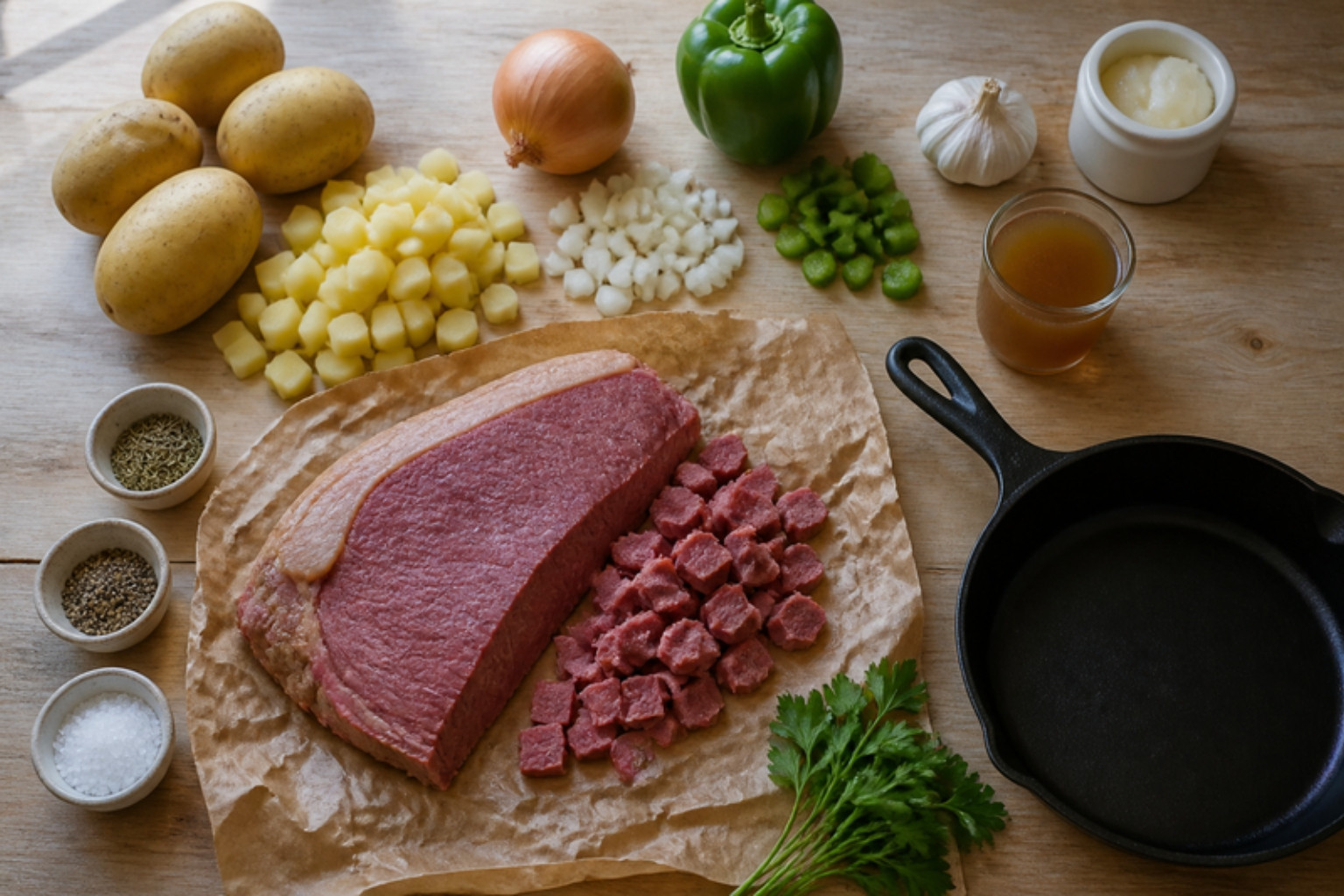
Corned Beef Hash, Diner-Style and Crispy
Ingredients
Equipment
Method
- Put the diced potatoes in a large pot, cover with cold water by 1 inch, and add 1 tablespoon kosher salt. Bring to a boil and cook 4 to 6 minutes, until the edges are just tender but a cube still holds its shape when pierced with a fork.
- Drain well and spread the potatoes on a towel-lined tray for 5 minutes to steam dry. Dry potatoes brown; wet potatoes steam.
- Heat 2 tablespoons tallow in a 12-inch cast-iron skillet over medium-high heat until it shimmers. Add the onion and green pepper and cook 4 minutes, stirring, until softened and starting to brown at the edges.
- Push the vegetables to the sides, add the remaining tablespoon of tallow, and spread the potatoes in an even layer. Press down with a spatula and cook undisturbed 5 to 6 minutes, until the bottom is deep golden and releases easily.
- Flip the potatoes in sections. Scatter the corned beef, garlic, thyme, and pepper over the top, stir once, and press everything into an even layer.
- Drizzle the broth around the pan. It will sizzle and loosen the browned bits. Cook undisturbed 4 to 5 minutes, until the liquid is gone and a crust forms on the bottom.
- Flip in sections once more and cook 3 to 4 minutes, until crisp in spots and the corned beef is hot all the way through. Taste and add salt only if needed. Sprinkle with parsley and serve hot.
Notes
Troubleshooting and Tips
- No crust: the pan was crowded or not hot enough, or the potatoes were wet. Cook in two batches in a 10-inch skillet, and be patient before flipping.
- Potatoes falling apart: they were parboiled too long. Next time, check them at 4 minutes.
- Too salty: some corned beef is saltier than others. Add an extra handful of diced potato, or serve with something fresh like sliced tomatoes.
- Serving ideas: ketchup and hot sauce are classic; check the labels, since some contain wheat-based vinegar, fish, or added oils.
Storage, Freezing and Reheating
Refrigerate leftover hash in a covered container for up to 4 days. To bring the crust back, heat a teaspoon of tallow in a skillet over medium-high heat, press the hash in an even layer, and cook undisturbed for 3 to 4 minutes per side until crisp and hot (165°F). You can also freeze cooled hash flat in a freezer bag for up to 2 months and re-crisp it straight from frozen in a skillet, adding a few minutes. Corned beef is cooked to at least 145°F, and leftovers should be reheated to 165°F; see the USDA safe temperature chart.
More Hearty Breakfasts
For an all-potato skillet, try our crispy diner-style hash browns. If you’d rather make your own breakfast meat, the homemade maple sage breakfast sausage patties are simple and freezer-friendly, and the Cincinnati goetta is another old-fashioned Midwestern breakfast fried until deeply crisp.
FAQ
Can I use canned corned beef?
Canned corned beef (not canned hash) works and gives a softer, more blended hash. Break it into small pieces and add it at the same point. Check the label, since formulations vary, and add salt sparingly.
Do I have to parboil the potatoes?
You can cook raw diced potatoes in the skillet, but they take 25 to 30 minutes and tend to burn before the centers are tender. Parboiling is faster and gives a creamier inside with a crisper outside.
What can I serve instead of a fried egg?
Try sliced tomatoes, a spoonful of homemade salsa, sautéed greens, or fresh fruit on the side. The hash is rich enough to be the whole meal.
Can I make it with leftover roast beef or pot roast?
Yes. Leftover roast beef makes a milder hash. Add an extra 1/4 teaspoon of salt and a pinch of smoked paprika to make up for the cured flavor of corned beef.
A note before you cook: These recipes are ideas and suggestions, not medical or dietary advice. As with any recipe or ingredient, it is each reader’s responsibility to confirm what they can and cannot eat, read every ingredient label, and source quality ingredients that fit their own needs. Ingredient formulations change, so always check the package you’re using.