
If you’re feeding someone who can’t have eggs, milk, or wheat, breakfast meat gets tricky fast. Store-bought sausage links and breakfast patties can include milk powder, soy protein, wheat fillers, or seasoning blends you can’t fully read, and most “breakfast casseroles” lean on eggs and cheese. Goetta solves a lot of that. This Cincinnati classic is nothing more than ground pork and beef cooked slowly with steel-cut oats, onion, and a few seasonings, packed into a loaf pan, chilled, then sliced and fried until the outside turns deep brown and shatteringly crisp.
German immigrants in the Ohio River valley made goetta to stretch a little meat with a lot of grain, and it is still a weekend breakfast fixture in Cincinnati and northern Kentucky. The oats do the work that eggs or breadcrumbs do in other recipes: they swell, turn creamy, and set firm when chilled, so the loaf slices cleanly without any binder. The fried slices are crunchy on the edges and soft and savory inside, and this version is made without the top nine allergens.
Made without: peanuts, tree nuts, milk, eggs, wheat, soy, fish, shellfish, sesame.
Why You’ll Love This Recipe
- Crispy, deeply browned slices with a soft, savory center.
- No eggs, breadcrumbs, or commercial binders: the steel-cut oats hold it together.
- Make one loaf on the weekend and fry slices all week.
- Freezer-friendly: fry slices straight from frozen.
- Simple pantry ingredients and one pot.
How Goetta Holds Together Without Eggs
Steel-cut oats (sometimes sold as pinhead oats) are whole oat groats chopped into pieces. During a long simmer they release starch and absorb water, so the pot turns into a thick, sticky porridge. When the cooked meat is stirred in and the mixture is chilled, that starch sets into a firm, sliceable loaf. Rolled or quick oats break down too far and turn the loaf pasty, so stick with steel-cut.
The other key is patience in the skillet. Goetta needs medium heat and time to form its crust. Flip too early and it will stick and fall apart; leave it alone for 5 to 7 minutes and the slice releases on its own with a dark, crunchy face.
Ingredients and Swap Ideas
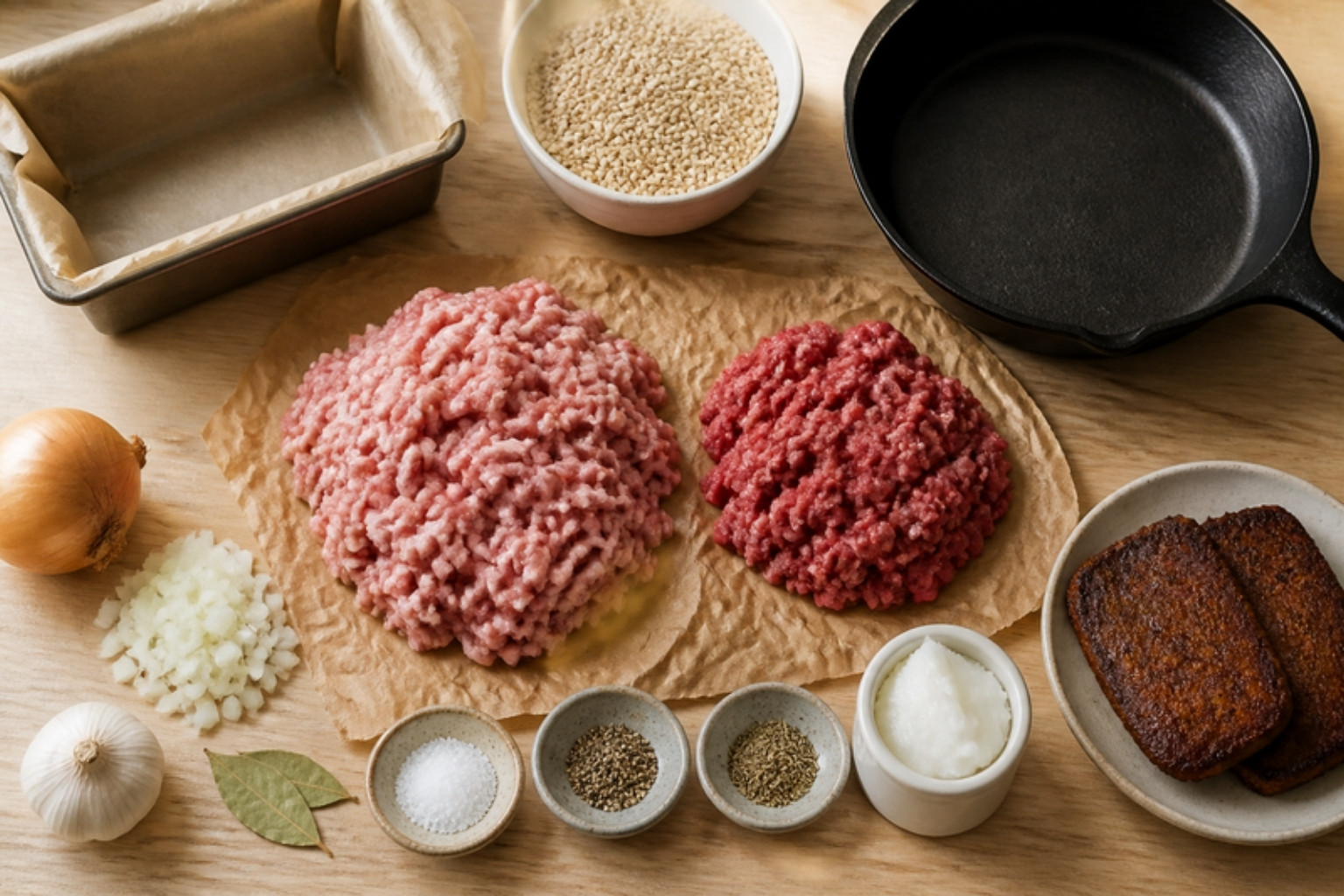
- Steel-cut oats (1 1/4 cups / 220 g): choose certified gluten-free oats, since regular oats can carry wheat and barley cross-contact. Don’t swap rolled or quick oats.
- Ground pork (1 lb / 450 g) and ground beef (8 oz / 225 g): use plain ground pork, not seasoned sausage. All-pork goetta works too; use 1 1/2 lb pork.
- Onion and garlic: chopped finely so they melt into the loaf.
- Bay leaves, black pepper, and thyme: traditional and simple. Buy single spices rather than blends so you can read every ingredient.
- Water (4 cups / 950 ml): some cooks use part broth. If you do, label check it for wheat, soy, yeast extract, and added oil, and cut back on the salt.
- Lard for frying: pure lard (not hydrogenated or blended) gives the best crust. Bacon fat is a great swap. Light-tasting olive oil also works; “light” means refined and mild in flavor, not lower in calories. Skip vegetable oil and cooking spray.
Kitchen Equipment
- A large, heavy Dutch oven (5 to 6 quart), so the oats don’t scorch during the long simmer.
- A 9×5-inch loaf pan and parchment paper for a lift-out sling.
- A cast-iron or heavy skillet and a thin metal spatula for frying.
Step-by-Step Tips
- Cook the oats first. Boil the water with the salt, pepper, bay, and thyme, then stir in the oats and simmer on low with the lid ajar for 1 1/2 to 2 hours. Stir every 15 minutes and scrape the bottom. They’re ready when the grains are soft and the pot looks like stiff porridge.
- Add the raw meat. Crumble the pork and beef right into the oats with the onion and garlic and stir hard to break up the meat. It should disappear into the oats in fine bits.
- Simmer until very thick. Cook about an hour more, stirring often. When a spoon dragged across the bottom leaves a path that holds for a second, it’s ready. The meat cooks well beyond 160°F in this time.
- Pack and chill. Press the hot mixture firmly into a parchment-lined loaf pan, cool, then refrigerate overnight until completely firm.
- Slice and fry. Cut 1/2-inch slices and fry in shimmering lard over medium heat, 5 to 7 minutes on the first side and 4 to 6 on the second, until both faces are deep brown and crisp.
For food-safety temperatures for ground pork and beef, see the USDA safe temperature chart.
Cincinnati-Style Goetta (Pork and Oat Breakfast Sausage)
Ingredients
Equipment
Method
- In a large heavy Dutch oven, bring the water, salt, pepper, bay leaves, and thyme to a boil over high heat.
- Slowly stir in the steel-cut oats. Reduce the heat to low, cover with the lid slightly ajar, and simmer 1 1/2 to 2 hours, stirring every 15 minutes and scraping the bottom, until the oats are very tender, swollen, and thick like stiff porridge. Add a splash of hot water if it starts to catch on the bottom.
- Crumble in the raw ground pork and beef, then add the onion and garlic. Stir hard to break the meat into fine bits and mix it completely into the oats.
- Cover and cook on low about 1 hour more, stirring every 10 to 15 minutes, until the mixture is very thick, the meat is fully cooked with no pink, and a spoon dragged across the bottom leaves a path that holds for a second. The meat cooks well past 160°F during this long simmer. Remove the bay leaves and taste for salt.
- Brush a 9×5-inch loaf pan with olive oil and line it with a parchment sling. Pack the hot mixture into the pan, pressing it flat with a spatula to remove air pockets. Cool 30 minutes, cover, and refrigerate at least 8 hours or overnight, until completely firm.
- Lift the loaf out and cut into 12 slices about 1/2 inch thick.
- Heat lard in a cast-iron skillet over medium heat until it shimmers. Fry the slices in a single layer without moving them for 5 to 7 minutes, until a deep brown crust forms and they release easily. Flip and cook 4 to 6 minutes more, until both sides are crisp and the centers are hot. Serve right away.
Notes
Troubleshooting and Tips
- Slices fall apart in the pan: the mixture wasn’t cooked thick enough, or the loaf wasn’t fully chilled. Next time cook a little longer after adding the meat, and chill overnight. For now, fry the pieces as crispy crumbles; they’re still excellent.
- Goetta sticks to the skillet: heat the fat until it shimmers before adding slices, and wait for the crust to release on its own before flipping.
- Oats are scorching: lower the heat, stir more often, and add a splash of hot water. A heavy pot makes a big difference.
- Too bland: goetta is meant to be mild and savory, but you can add a pinch of ground allspice or a little dried sage with the oats.
Storage, Freezing and Reheating
Wrap the unsliced loaf and refrigerate up to 5 days, cutting slices as you need them. To freeze, slice the chilled loaf, stack the slices with parchment between them, and freeze in a zip-top bag up to 3 months. Fry slices straight from frozen over medium heat, adding 2 to 3 minutes per side, until crisp and hot through to 165°F.
More Breakfasts to Try
Goetta is a close cousin of crispy fried cornmeal mush, another chill-slice-and-fry farmhouse breakfast. If you’d rather have quick patties, try our homemade maple sage breakfast sausage, and serve either one with crispy diner-style hash browns.
FAQ
What is goetta?
Goetta (pronounced GET-uh) is a Cincinnati-area breakfast sausage made from ground pork, often with beef, slow-cooked with steel-cut oats and onion, chilled into a loaf, and fried in slices. It’s similar to scrapple, but made with oats instead of cornmeal and buckwheat.
Can I make goetta in a slow cooker?
Many Cincinnati families do. Combine the water, seasonings, and oats in the slow cooker and cook on high about 2 hours, then stir in the meat, onion, and garlic and cook on low 3 to 4 hours more, stirring once or twice, until very thick. Leave the lid off for the last 30 to 60 minutes if it looks loose. The stovetop timing above is the method this card is written for.
Can I use rolled oats instead of steel-cut?
We don’t recommend it. Rolled and quick oats break down into mush during the long cook, and the loaf turns pasty and won’t crisp the same way. Steel-cut oats keep a little chew and set firmly when chilled.
Is goetta gluten-free?
This recipe uses no wheat, barley, or rye ingredients. Oats are often grown and processed alongside wheat and barley, so look for steel-cut oats labeled certified gluten-free if that matters for your table.
A note before you cook: These recipes are ideas and suggestions, not medical or dietary advice. As with any recipe or ingredient, it is each reader’s responsibility to confirm what they can and cannot eat, read every ingredient label, and source quality ingredients that fit their own needs. Ingredient formulations change, so always check the package you’re using.