
Holiday candy is one of the hardest things to shop for when you’re avoiding allergens. Boxed assortments are full of milk chocolate, nuts, and “may contain” warnings, and even simple-looking candies can carry soy lecithin or wax coatings. Old-fashioned hard tack candy is the opposite: sugar, corn syrup, water, color, and flavoring, cooked on the stovetop and cracked into glassy shards. Many Midwestern families make a pan of red cinnamon every December, and it’s a pretty, inexpensive edible gift.
The only real tool you need is a candy thermometer. The syrup is boiled to the hard-crack stage, 300 to 310°F, where nearly all the water is gone and the sugar cools into a hard, clear glass. Flavoring and color go in at the end, the candy is poured into a thin sheet, and once it’s cold you crack it into pieces and toss them in powdered sugar so they don’t stick together. Made with nothing from the top nine allergens.
Made without: peanuts, tree nuts, milk, eggs, wheat, soy, fish, shellfish, sesame.
Why You’ll Love This Recipe
- Only a handful of simple ingredients.
- Bright, clear colors that look like stained glass in a jar.
- Endless flavors: cinnamon, peppermint, wintergreen, cherry, lemon.
- Keeps for about a month, so it’s easy to make ahead for gifts.
- About 40 minutes of active time for over a pound of candy.
How Hard Candy Works
As sugar syrup boils, water evaporates and the temperature climbs. Each temperature range matches a candy stage: soft ball for fudge, firm ball for caramels, and hard crack (300 to 310°F / 149 to 154°C) for hard candy and brittle. At hard crack, there’s so little water left that the syrup cools into a solid glass instead of a chewy candy.
Corn syrup keeps that glass clear. It interferes with sugar crystals forming, so the candy doesn’t turn grainy or cloudy. That’s also why you stop stirring once it boils and wash down the sides of the pan: a stray sugar crystal can start the whole batch crystallizing.
Ingredients & Swap Ideas
- Granulated sugar, 2 cups (400 g).
- Light corn syrup, ⅔ cup (220 g): keeps the candy smooth and clear. It’s made from corn, so note it if corn is a concern for you.
- Water, ¾ cup (180 ml).
- Concentrated candy flavoring, 1 teaspoon: regular baking extracts are mostly alcohol and cook off at these temperatures, so hard candy uses super-strength flavorings or food-grade flavor oils. Read the label: some flavorings use a carrier oil, and you want one without soybean, sunflower, canola, or other seed oils. If you use a pure food-grade essential oil such as peppermint, start with ½ teaspoon; it’s very strong.
- Gel food coloring, ¼ to ½ teaspoon: red for cinnamon, green for wintergreen or mint. Check the label for ingredients you avoid.
- Powdered sugar, ½ cup (60 g): for the pan and for coating. It contains cornstarch (or sometimes tapioca starch); check the label.
- Refined coconut oil or light-tasting olive oil, about 1 teaspoon: a thin film on the pan. “Light” olive oil means refined and mild, not lower in calories. Skip cooking spray.
Kitchen Equipment
- Heavy 2- to 3-quart saucepan
- Candy thermometer (test it in boiling water first; it should read about 212°F at sea level)
- 10 x 15-inch rimmed baking sheet
- Pastry brush and a cup of water
- Heatproof silicone spatula
Step-by-Step Tips
- Prep the pan first. Brush it lightly with oil and sift on half the powdered sugar. Have the color and flavoring open and ready.
- Dissolve, then hands off. Stir the sugar, corn syrup, and water only until the sugar dissolves and the syrup boils. After that, don’t stir.
- Wash down the sides. Brush the inside of the pan with a wet pastry brush to dissolve any crystals.
- Watch the bubbles and the thermometer. Near hard crack, the bubbles turn small, thick, and slow. Pull the pan at 300 to 310°F, while the syrup is still clear or very pale straw, before it turns amber.
- Color, then flavor, off the heat. Let the bubbling settle for a few seconds. Stand back, stir in the color, then the flavoring. Cinnamon oil steam is strong enough to sting your eyes, so turn on the fan.
- Pour, don’t scrape. Scraping the pan can pull in crystallized bits. Tilt the sheet to spread the candy about ¼ inch thick.
- Crack and coat. When it’s completely cool and hard, crack it into pieces and shake them with the rest of the powdered sugar.
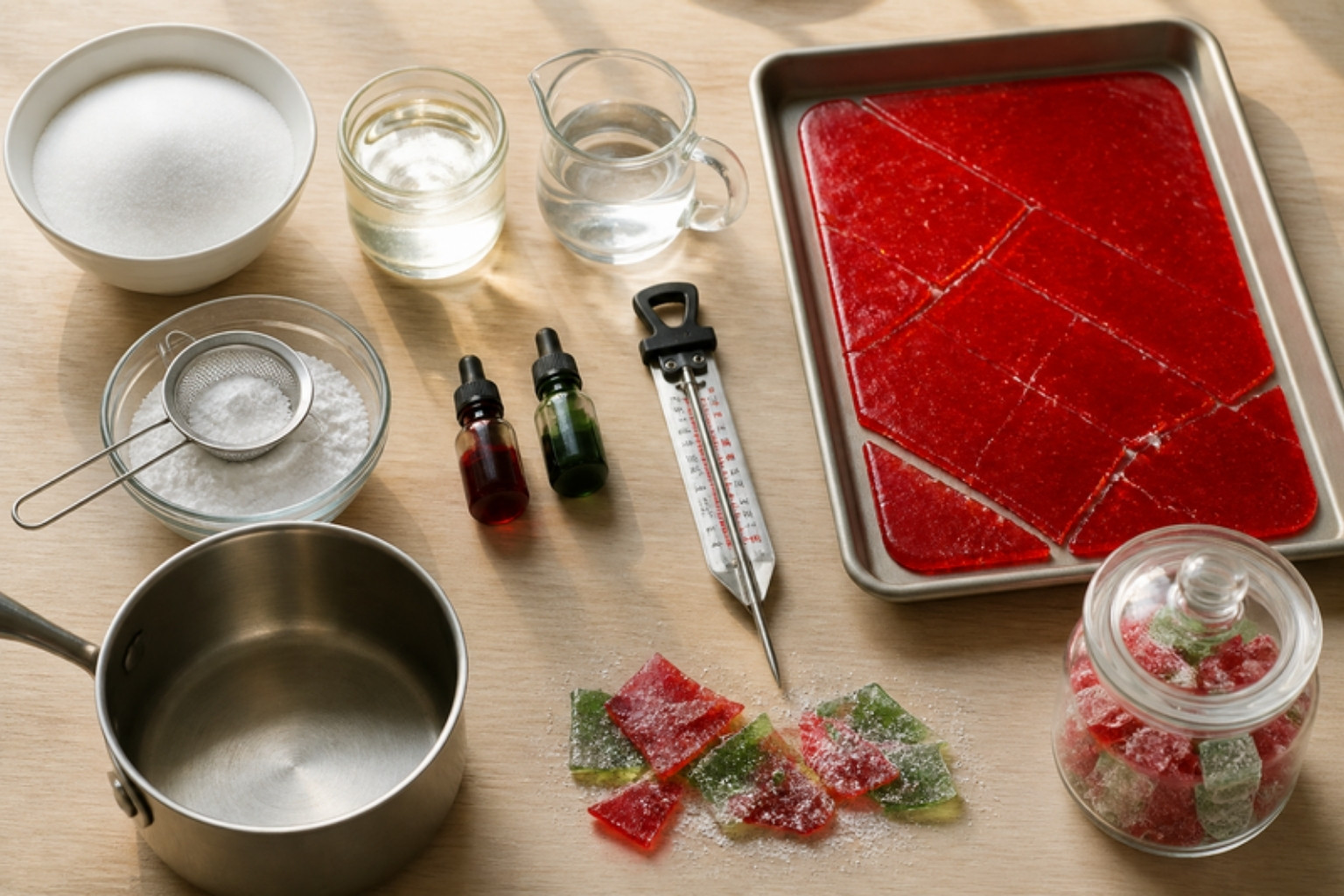
Old-Fashioned Hard Tack Candy
Ingredients
Equipment
Method
- Brush the baking sheet very lightly with coconut oil or light-tasting olive oil, then sift about half the powdered sugar over it in an even layer. Set it on a heatproof surface.
- In a heavy saucepan, stir the sugar, corn syrup, and water over medium heat until the sugar dissolves and the syrup is clear, then bring to a boil.
- Stop stirring. Clip on the candy thermometer. Brush down the sides of the pan with a wet pastry brush to dissolve any sugar crystals.
- Boil without stirring until the syrup reaches 300 to 310°F (149 to 154°C), the hard-crack stage, 20 to 30 minutes. The bubbles will turn small, thick, and slow, and the syrup stays clear or very pale straw. Pull it off before it turns amber.
- Remove from the heat and let the bubbles settle for 10 to 20 seconds. Stand back (the steam is strong, especially with cinnamon) and stir in the coloring, then the flavoring, with a heatproof spatula until evenly colored.
- Pour onto the prepared sheet without scraping the pan. Tilt gently to spread it about ¼ inch thick. Let cool completely, 30 to 45 minutes, until hard and glassy.
- Lift and crack the slab into bite-size shards (tap it with the handle of a butter knife). Toss the pieces with the remaining powdered sugar in a bag or bowl and shake off the excess.
Notes
Troubleshooting & Tips
- Candy is sticky or bends: it didn’t reach hard crack, or the thermometer reads low. Check the thermometer in boiling water and adjust.
- Candy turned amber and tastes burnt: it went past 310°F. Pull it a few degrees sooner next time; the temperature keeps rising for a moment off the heat.
- Grainy or cloudy candy: sugar crystals got in. Don’t stir after boiling, wash down the sides, and don’t scrape the pan when pouring.
- Pieces stick together in the jar: humidity. Re-toss them in powdered sugar and store them airtight with parchment between layers.
Safety, Storage & Gifting
Sugar syrup above 300°F sticks to skin and causes serious burns. Keep children and pets out of the kitchen while it cooks and pours, don’t taste it until it’s cool, and keep a bowl of cold water nearby in case of a splash.
Store hard tack in an airtight tin or jar, layered with parchment, at room temperature for up to 1 month. Don’t refrigerate or freeze it: condensation makes it sticky. For gifts, pack the shards in small glass jars or cellophane bags tied with ribbon, and list the ingredients on the tag so the recipient can check them.
More Christmas Candy and Edible Gifts
Find more candy and gift ideas in our Christmas recipes collection. Fill out a gift box with peppermint bark with dairy-free dark chocolate, candied orange peel, or a batch of homemade marshmallows.
FAQ
Can I make hard candy without a thermometer?
You can use the cold-water test: drop a little syrup into ice water. At hard crack it forms brittle threads that snap cleanly. A thermometer is much more reliable, especially for a first batch.
Why use flavoring oil instead of extract?
Most baking extracts are alcohol-based, and the alcohol and much of the flavor flash off in 300°F syrup. Concentrated candy flavorings are made to hold up at that temperature.
Can I pour it into molds?
Yes. Use molds rated for hard candy (at least 320°F), lightly oiled, and pour quickly before the syrup thickens.
Why is my hard candy sticky the next day?
Sugar pulls moisture from the air. Make it on a dry day if possible, coat it well in powdered sugar, and keep it sealed.
A note before you cook: These recipes are ideas and suggestions, not medical or dietary advice. As with any recipe or ingredient, it is each reader’s responsibility to confirm what they can and cannot eat, read every ingredient label, and source quality ingredients that fit their own needs. Ingredient formulations change, so always check the package you’re using.