
If you’ve been looking for a cake without eggs, milk, or butter that doesn’t need special egg replacers, the answer may be in Grandma’s recipe box. Depression cake, also called boiled raisin cake, war cake, or “milkless, eggless, butterless cake,” dates back to times when those ingredients were scarce or rationed. Home bakers made do with raisins, brown sugar, spices, and water, and the result was so good that families kept making it long after the hard times ended.
The method is unusual and almost foolproof. You simmer raisins, brown sugar, spices, and fat in water to make a fragrant syrup, let it cool, then stir it into the dry ingredients. The plumped raisins and syrup keep the cake moist for days. Traditional versions use wheat flour and lard or shortening. This one uses certified gluten-free oat flour, rice flour, and cornstarch with light-tasting olive oil, so it’s made without peanuts, tree nuts, milk, eggs, wheat, soy, fish, shellfish, and sesame.
Made without: peanuts, tree nuts, milk, eggs, wheat, soy, fish, shellfish, sesame.
Why You’ll Love This Recipe
- Egg-free by design. This cake never had eggs, milk, or butter, so nothing is being imitated.
- Moist for days. The boiled raisin syrup keeps the crumb tender, and the flavor improves on day two.
- Pantry ingredients. Raisins, brown sugar, spices, and a few flours.
- Smells like fall. Cinnamon, nutmeg, and cloves simmering on the stove fill the house.
How Depression Cake Works Without Eggs or Wheat
In most cakes, eggs bind the batter, add moisture, and help it rise. Depression cake handles each of those jobs a different way. The simmered raisins release natural sugars and pectin into the syrup, which adds moisture and a little binding. Brown sugar is slightly acidic, so it reacts with baking soda to make the cake rise. A teaspoon of cider vinegar gives that reaction a boost.
To replace the wheat, oat flour brings a soft, tender crumb and mild nutty-sweet flavor. Rice flour adds structure, and cornstarch keeps the texture light. Resting the batter for 5 minutes before baking gives these flours time to absorb the syrup, which helps prevent a gritty or gummy cake. For the fat, light-tasting olive oil replaces the old-fashioned lard or shortening. “Light-tasting” means refined and mild in flavor, not lower in calories, so the spices and raisins stay front and center.
Ingredients & Swap Ideas
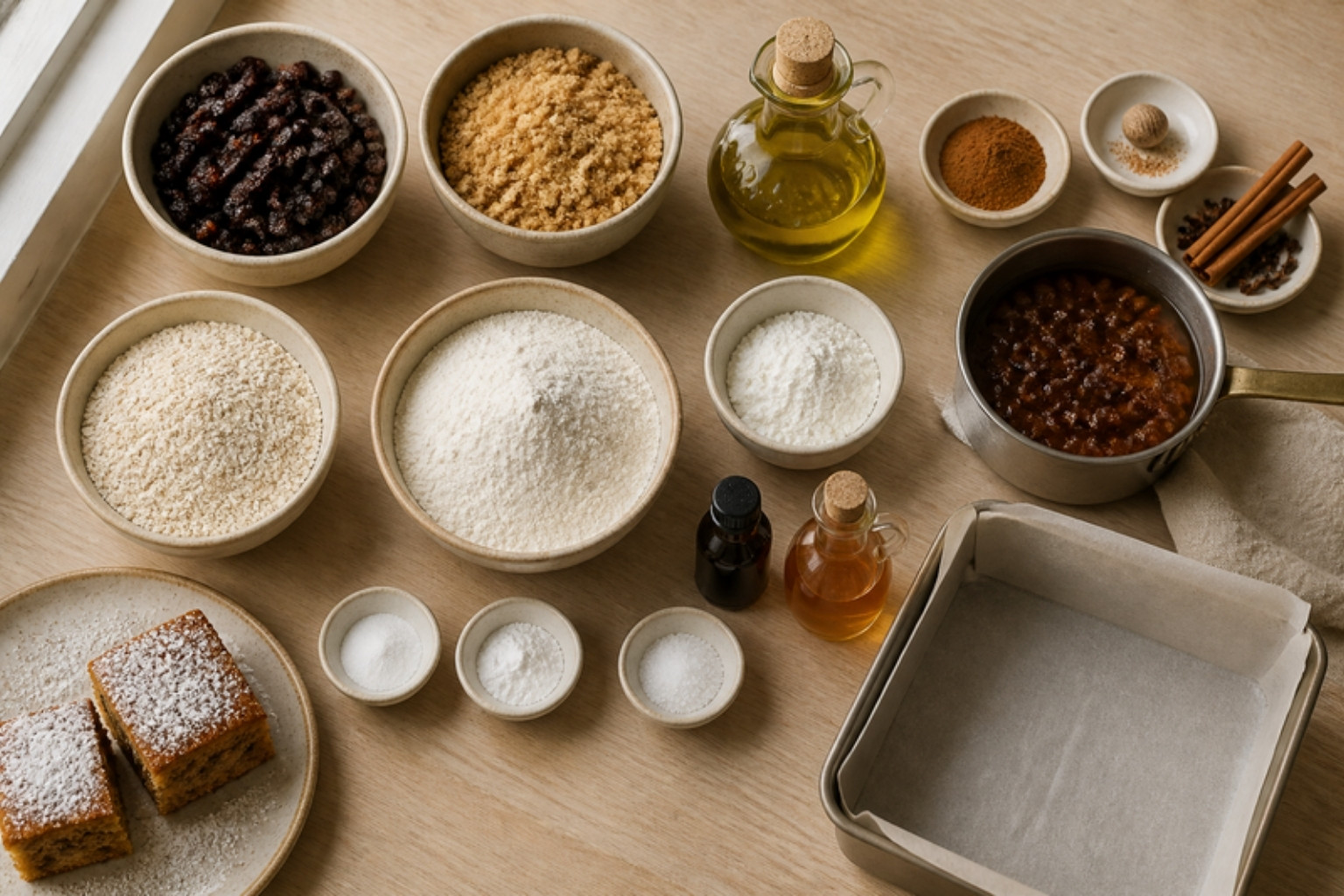
- Raisins (220 g): dark or golden. Some raisins are coated in sunflower oil to keep them from clumping, so check the label for raisins with no added oil. Chopped dates or dried currants also work.
- Light brown sugar (200 g): dark brown sugar makes a deeper, more molasses-like cake.
- Light-tasting olive oil (65 g): melted refined coconut oil also works; if you avoid coconut, stick with olive oil. Skip shortening, margarine, and vegetable oil, which are made from seed oils.
- Certified gluten-free oat flour (100 g): oats can pick up barley during processing, so certified gluten-free is the one to look for.
- White rice flour (105 g) and cornstarch (30 g): finely ground rice flour avoids grittiness. Tapioca starch can replace the cornstarch.
- Spices: cinnamon, nutmeg, and cloves. A 1/2 teaspoon of ground ginger or allspice is a nice addition.
- Nuts: many old recipes add chopped walnuts. That would add tree nuts, so they’re left out here.
Kitchen Equipment
- 8×8-inch metal baking pan (a 9-inch round also works; start checking at 30 minutes)
- Medium saucepan
- Large bowl and whisk
- Parchment paper for an easy lift-out (grease the pan with a little olive oil; no cooking spray needed)
Step-by-Step Tips
- Simmer the full 5 minutes. The raisins should look plump and glossy, and the syrup should smell strongly of spice.
- Cool the syrup to lukewarm. If it’s hot, the baking soda starts reacting before the cake reaches the oven and the cake can sink. It should feel just warm on your wrist.
- Stir just until combined. Overmixing isn’t as risky as with wheat, but a light hand keeps the bubbles from the soda.
- Rest the batter 5 minutes. It thickens noticeably as the flours hydrate.
- Bake until the center springs back. The top should be domed and deep golden-brown, and a toothpick should come out clean or with a few moist crumbs.
- Cool before slicing. Oat and rice flour cakes finish setting as they cool. Cut too early and the center can seem underdone.
Depression Cake (Boiled Raisin Spice Cake), No Eggs, Milk or Butter (Top 9 Free)
Ingredients
Equipment
Method
- Combine the water, brown sugar, raisins, olive oil, cinnamon, nutmeg, cloves, and salt in a saucepan. Bring to a boil over medium heat, then simmer 5 minutes, stirring now and then. The raisins will plump and the kitchen will smell like spice cake.
- Take the pan off the heat and let the syrup cool until just lukewarm, about 30 minutes. (Hot syrup would set off the baking soda too early.)
- Heat the oven to 350°F (175°C). Rub an 8×8-inch pan with a little olive oil and line it with a parchment sling.
- Whisk the oat flour, rice flour, cornstarch, baking soda, and baking powder in a large bowl. Stir the vanilla and vinegar into the cooled raisin syrup.
- Pour the syrup into the dry ingredients and stir just until no dry streaks remain. The batter will be fairly thick and studded with raisins. Rest it 5 minutes so the flours hydrate, then spread it in the pan.
- Bake 35 to 40 minutes, until the top is domed and deep golden-brown, the center springs back when pressed, and a toothpick comes out clean or with a few moist crumbs (not wet batter).
- Cool in the pan at least 30 minutes before lifting out and slicing; the crumb finishes setting as it cools. Dust with powdered sugar if you like.
Notes
Troubleshooting & Tips
- Cake sank in the middle: the syrup was probably still hot, or the cake came out a few minutes early. Cool the syrup fully and bake until the center springs back.
- Gummy streak at the bottom: the cake needed more baking time or was cut while warm. Glass pans bake slower; add 5 minutes if using one.
- Gritty texture: use a finely ground rice flour and don’t skip the 5-minute rest.
- All the raisins sank: the batter was too thin. Let it rest a little longer before spreading it in the pan.
Storage, Freezing & Reheating
Keep the cake covered at room temperature for up to 3 days. It’s often better on the second day, once the spices settle in. Refrigerate for up to a week. To freeze, wrap individual squares tightly and freeze for up to 3 months. Thaw at room temperature, or warm a square in the microwave for 10 to 15 seconds for a just-baked feel. It’s sturdy enough for lunchboxes and travels well to potlucks.
More Old-Fashioned Desserts
Depression cake has a famous cousin: our chocolate wacky cake, another make-do classic that never used eggs or milk. For a bigger chocolate crowd-pleaser, try the chocolate sheet cake with fudge frosting, or keep the old-fashioned theme going with stovetop rice pudding.
FAQ
Why is it called Depression cake?
It became popular during the Great Depression and the world wars, when eggs, butter, and milk were expensive or rationed. Home bakers built a moist cake from cheap pantry staples instead.
Does Depression cake have eggs?
No. The traditional recipe has no eggs, milk, or butter. The boiled raisin syrup provides moisture, and baking soda reacting with brown sugar and vinegar provides the rise.
Can I use all-purpose flour?
That’s how the original was made, but it adds wheat. If wheat isn’t a concern, replace the oat flour, rice flour, and cornstarch with 2 cups (250 g) all-purpose flour.
Can I frost it?
It’s traditionally served plain or with a dusting of powdered sugar. A simple glaze of powdered sugar and apple cider is a nice fall touch. Check the powdered sugar label for anything you avoid.
A note before you cook: These recipes are ideas and suggestions, not medical or dietary advice. As with any recipe or ingredient, it is each reader’s responsibility to confirm what they can and cannot eat, read every ingredient label, and source quality ingredients that fit their own needs. Ingredient formulations change, so always check the package you’re using.