
Rolled and cut-out sugar cookies are a December tradition, but they take an afternoon, and when the dough is made without eggs, butter, or wheat, rolling it out adds its own learning curve. Sugar cookie bars skip all of that. The dough goes into one 9×13 pan, bakes into a soft, thick, vanilla cookie layer, and gets a swoop of fluffy frosting and a shower of sprinkles. Cut them into squares and you have two dozen bakery-style treats for a party, a classroom, or a cookie exchange.
This version uses white rice flour, certified gluten-free oat flour, and a little tapioca and cornstarch for structure, refined coconut oil in place of butter, and applesauce and oat milk in place of eggs. The frosting is powdered sugar whipped with coconut oil and vanilla.
Made without: peanuts, tree nuts, milk, eggs, wheat, soy, fish, shellfish, sesame. (Contains coconut: refined coconut oil.)
Why You’ll Love This Recipe
- All the sugar cookie, none of the rolling. One pan, one bake, 24 bars.
- Soft and thick. A tender, cakey-chewy texture like the frosted sugar cookies in bakery cases.
- Easy to theme. Change the frosting color and sprinkles for Christmas, birthdays, or any party.
- Freezer-friendly. Bake the base weeks ahead and frost the day you serve.
- No egg replacer. Applesauce, oat milk, and a balanced flour blend do the job.
How Sugar Cookie Bars Work Without Eggs or Butter
Eggs give classic sugar cookie bars their lift, moisture, and the binding that keeps a thick bar from crumbling. Here, applesauce and oat milk add moisture, while tapioca starch provides chew and helps the crumb hold together. Baking powder and baking soda, activated by cider vinegar, give the rise. Refined coconut oil stands in for butter: it’s solid at room temperature, so it creams with sugar and traps air, and it gives the bars a clean, neutral flavor that lets the vanilla come through.
The flour mix is mostly rice flour for a fine, light crumb, with oat flour for tenderness and a little flavor. A short rest after mixing lets both flours absorb liquid, which keeps the bars from tasting sandy.
Ingredients and Swap Ideas
- Refined coconut oil: use refined so the bars don’t taste like coconut. It should be soft like room-temperature butter. If you avoid coconut, use 2/3 cup (130 g) light-tasting olive oil in the bars (they will be a little denser) and top them with egg-free royal icing instead of the coconut oil frosting. “Light” olive oil means mild flavor, not fewer calories.
- Flours: finely ground white rice flour and certified gluten-free oat flour (oats can carry barley cross-contact). Weighing gives the most consistent results.
- Applesauce and oat milk: unsweetened applesauce and unsweetened oat milk with no added oil. Many oat milks contain canola or sunflower oil.
- Baking powder: choose one labeled gluten-free.
- Sprinkles: read the label. Sprinkles and sanding sugars can contain milk, soy lecithin, wheat, or seed-oil coatings.
- Flavor ideas: add 1/2 teaspoon peppermint extract to the frosting for a candy-cane version, or lemon zest to the bars.
Kitchen Equipment
- 9×13-inch (23×33 cm) metal baking pan (glass bakes slower and browns the edges more)
- Parchment paper
- Stand mixer or hand mixer
- Offset spatula
Step-by-Step Tips
- Line with a parchment sling. Leave an overhang on the long sides so you can lift the whole slab out to cut clean squares.
- Cream until fluffy. Beat the coconut oil and sugar for two to three minutes, until pale.
- Rest, then spread. After a 10-minute rest the dough is thick and soft. A lightly oiled offset spatula spreads it without sticking.
- Bake to pale gold. Pull the pan when the edges are lightly golden, the center springs back, and a toothpick shows a few moist crumbs at most. Browned tops mean dry bars.
- Cool completely. Coconut oil frosting melts on even slightly warm bars, so give them about 1 1/2 hours.
- Chill before cutting. Twenty minutes in the refrigerator firms the frosting. Wipe the knife between cuts.
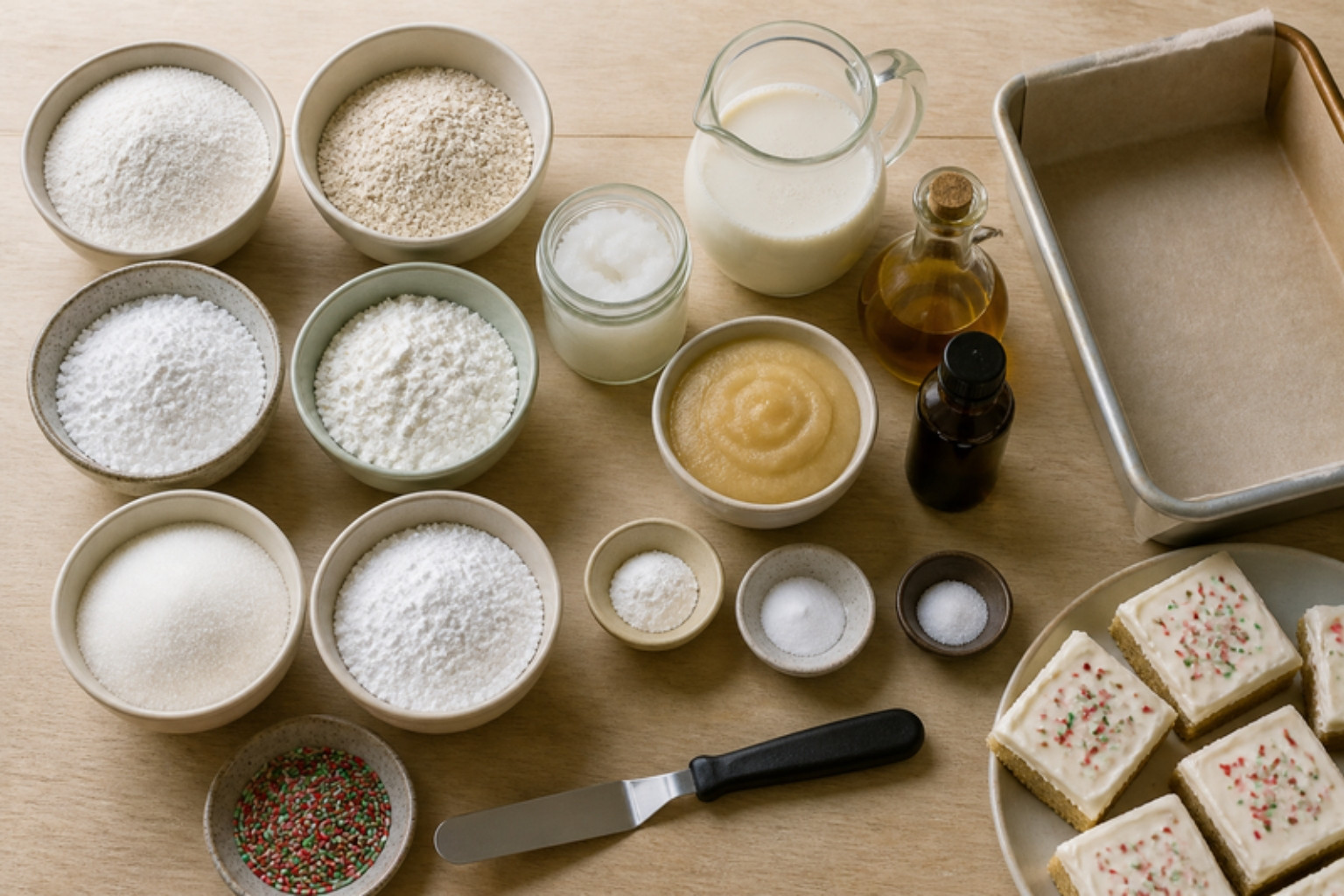
Sugar Cookie Bars with Vanilla Frosting (No Eggs or Butter)
Ingredients
Equipment
Method
- Heat the oven to 350°F (175°C). Grease a 9×13 metal pan lightly with coconut oil and line it with parchment, leaving an overhang on the long sides for lifting.
- Whisk the rice flour, oat flour, tapioca starch, cornstarch, baking powder, baking soda, and salt.
- Beat the soft coconut oil and sugar for 2-3 minutes, until fluffy and pale. Beat in the applesauce, oat milk, vinegar, and vanilla.
- Mix in the dry ingredients on low just until a thick, soft dough forms. Let it rest 10 minutes to hydrate.
- Spread the dough evenly in the pan with a lightly oiled offset spatula, pushing it into the corners and smoothing the top.
- Bake 22-28 minutes, until the edges are light golden and pulling from the sides, the center springs back when touched, and a toothpick comes out clean or with a few moist crumbs. Do not let the top brown.
- Cool completely in the pan on a rack, about 1 1/2 hours. Warm bars will melt the frosting.
- Beat the soft coconut oil until creamy. Add the powdered sugar, 2 tbsp oat milk, vanilla, and salt and beat 3 minutes, until fluffy and spreadable. Add more oat milk a teaspoon at a time if stiff. Tint with gel color if you like.
- Spread the frosting over the cooled bars and scatter with sprinkles. Chill 20 minutes to set, then lift out with the parchment and cut into 24 bars with a sharp knife wiped clean between cuts.
Notes
Troubleshooting
- Gummy center. The bars needed a few more minutes, or the pan was glass. Test with a toothpick in the very center.
- Frosting is greasy or runny. The kitchen or the coconut oil was too warm. Chill the bowl for 10 minutes and beat again.
- Frosting is stiff. Add oat milk a teaspoon at a time.
- Bars crumble when cut. Cut them cold, and let them rest overnight if you can; gluten-free bakes often slice better on day two.
Make-Ahead, Freezing and Gifting
Storage: keep frosted bars airtight in a single layer at cool room temperature for up to two days, or refrigerated for up to five. Coconut oil frosting softens in a warm room, so keep them cool.
Freezing: wrap the unfrosted slab whole and freeze up to three months, then thaw overnight and frost. Frosted bars freeze too: chill them on a tray until the frosting is firm, then layer them with parchment in a container or tin for up to one month, and thaw in the container.
Gift tins and cookie trays: pack frosted bars in a single layer or separate layers with parchment, and keep them on the top of a mixed tray so nothing presses into the frosting. Include a card noting what they’re made without and which sprinkles you used.
For more holiday baking, visit the Christmas recipes page. If you’d like shapes after all, try the soft cut-out sugar cookies, decorated with egg-free royal icing, which also works as a coconut-free topping for these bars.
FAQ
Can I make sugar cookie bars without eggs?
Yes. In this recipe applesauce and oat milk supply moisture, tapioca starch helps bind, and baking powder and baking soda with cider vinegar provide lift, so no egg replacer is needed.
Can I bake sugar cookie bars in a half sheet pan?
A half sheet pan makes a thin bar that bakes faster and dries out easily. That size hasn’t been worked out for this recipe; the 9×13 pan gives the soft, thick texture described here.
Why use coconut oil instead of vegan butter?
Most plant butters are made from seed oils, and many contain soy. Refined coconut oil is firm at room temperature like butter, so it creams and sets well without them.
How do I keep the frosting from melting?
Frost only completely cooled bars, keep them in a cool spot, and refrigerate them in warm weather. Serve them straight from the refrigerator if your kitchen is warm.
A note before you cook: These recipes are ideas and suggestions, not medical or dietary advice. As with any recipe or ingredient, it is each reader’s responsibility to confirm what they can and cannot eat, read every ingredient label, and source quality ingredients that fit their own needs. Ingredient formulations change, so always check the package you’re using.