
Halloween can be a tough week for families managing food allergies. Many packaged candies and party treats are made with milk, nuts, soy, or wheat, and homemade treats from the neighbors usually start with a stick of butter. Popcorn balls are an old-fashioned Halloween tradition worth bringing back, and with a few simple changes they can be made without the top nine allergens.
These popcorn balls start with plain kernels popped on the stove in coconut oil, then get coated in a classic cooked sugar syrup made with refined coconut oil instead of butter. Cooked to the hard-ball stage, the syrup sets into a crisp, chewy shell that holds the popcorn together, and a roll in Halloween sprinkles makes them festive. They are made without peanuts, tree nuts, milk, eggs, wheat, soy, fish, shellfish, and sesame. Wrap them in clear bags with a twist tie for class parties or a Halloween night treat at home on October 31.
Made without: peanuts, tree nuts, milk, eggs, wheat, soy, fish, shellfish, sesame. Uses refined coconut oil (if you avoid coconut, use light-tasting olive oil).
Why You’ll Love This Recipe
- A classic Halloween treat with no butter, nuts, or chocolate.
- Plain popcorn popped on the stove, so you know exactly what’s in it.
- Makes 12 large balls for about the cost of a bag of candy.
- Wraps and keeps for days, so you can make them ahead.
- A marshmallow version for softer, chewier balls.
How Popcorn Balls Hold Together Without Butter
In a traditional popcorn ball, butter mostly adds flavor and richness; it’s the cooked sugar that does the binding. When a sugar and corn syrup mixture boils to 250°F (121°C), the hard-ball stage, enough water has cooked off that the syrup sets firm but slightly chewy as it cools. Corn syrup keeps the sugar from crystallizing into a grainy coating. Refined coconut oil stands in for butter: it adds richness, keeps the syrup from sticking to your hands, and has no coconut flavor. Light-tasting olive oil also works if you avoid coconut.
If you’ve made our dairy-free caramel corn, this is a different treat: a lighter, vanilla-sugar coating instead of a baked brown-sugar caramel, pressed into balls instead of spread out to dry.
Ingredients and Swap Ideas
- Plain popcorn kernels (1/2 cup / 100 g): makes about 14 cups popped. Skip microwave popcorn, which often contains seed oils and butter flavoring that can include milk. An air popper works too.
- Refined coconut oil: for popping, for the syrup, and for your hands. If you avoid coconut, use light-tasting olive oil, which means refined and mild in flavor, not lower in calories.
- Sugar and light corn syrup: both are needed for the right set. Don’t swap in honey or maple syrup; they brown quickly and set softer.
- Vanilla and food coloring: orange gel coloring makes pumpkin-colored balls. Read the labels on both.
- Halloween sprinkles: sprinkles can contain milk, soy lecithin, wheat, or seed-oil glazes, so read every label. Colored sanding sugar is a simpler option.
- Marshmallow option: marshmallows make softer balls. Some contain egg whites, wheat-based starch, or seed oils, so check the label.
Kitchen Equipment
- Large heavy pot with a lid for popping
- Heavy 2-quart saucepan and a candy thermometer
- Large heatproof bowl and a silicone spatula
- Parchment-lined baking sheet and clear treat bags
Step-by-Step Tips
- Remove the unpopped kernels. Hard kernels hiding in a popcorn ball are no fun. Pour the popcorn into the bowl and leave the old maids in the pot.
- Get everything ready first. Once the syrup hits temperature, you have to move quickly. Grease the bowl and spatula, line the baking sheet, and open the sprinkles before you start.
- Stop stirring once the sugar dissolves. Stirring a boiling syrup can make it crystallize. Swirl the pan gently if it’s cooking unevenly.
- Trust the thermometer. At 250°F the bubbles look thick and slow. Pull it a few degrees early if your thermometer runs hot.
- Shape while warm. Wait just until the mixture is comfortably warm, oil your hands, and press firmly. If it cools too much and won’t stick, warm the bowl in a 250°F oven for 2 to 3 minutes.
Hot sugar safety: syrup at 250°F can cause serious burns and sticks to skin. Keep children away from the stove while it cooks and while it’s poured. An adult should shape the first balls to make sure the mixture has cooled to comfortably warm before kids help.
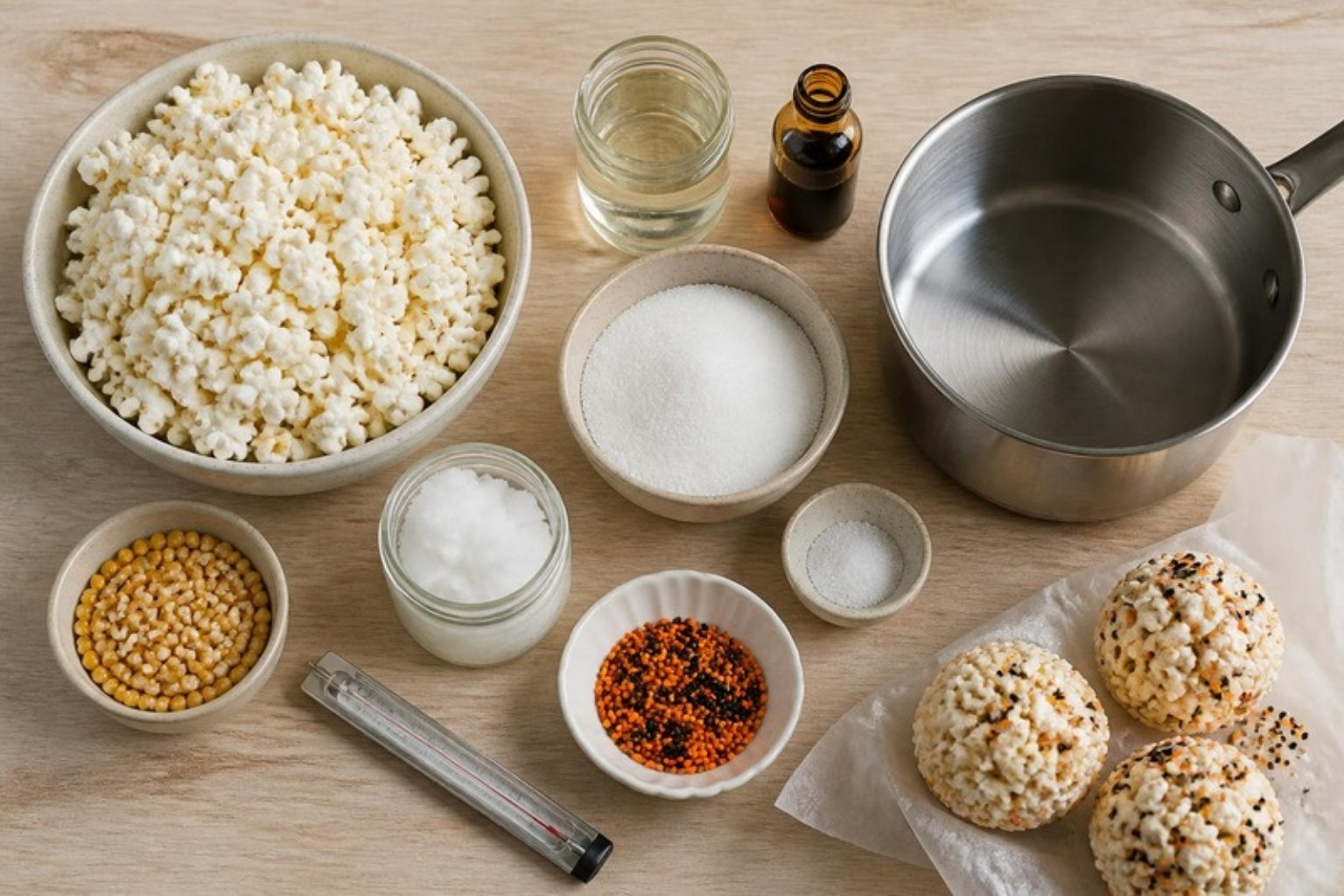
Halloween Popcorn Balls, No Butter
Ingredients
Equipment
Method
- Pop the corn: melt 2 tablespoons coconut oil in a large heavy pot over medium-high heat with 3 kernels. When those pop, add the remaining kernels in an even layer, cover with the lid slightly ajar, and shake the pot every 20 seconds or so. When the popping slows to 2 to 3 seconds between pops, take the pot off the heat.
- Lightly grease a large heatproof bowl with coconut oil. Pour in the popcorn, leaving the unpopped kernels behind in the pot. You should have about 14 cups. Line a baking sheet with parchment and set the sprinkles nearby.
- Make the syrup: in the saucepan, combine the sugar, corn syrup, water, 2 tablespoons coconut oil, and salt. Stir over medium heat until the sugar dissolves and the mixture looks clear. Stop stirring, clip on the candy thermometer, and boil until it reaches 250°F (121°C), the hard-ball stage, 8 to 12 minutes. The bubbles will turn thick and slow.
- Take the pan off the heat and carefully stir in the vanilla and food coloring, if using. The syrup will hiss and sputter, so keep your face and hands back.
- Immediately pour the syrup over the popcorn in a thin stream while folding with a greased silicone spatula until every piece is coated.
- Let the mixture stand 2 to 4 minutes, until it is warm but no longer hot to the touch and still pliable. Rub your hands with a little coconut oil, then press about 1 cup of the mixture firmly into a 3-inch ball. Roll or sprinkle it with sprinkles while it is still tacky and set it on the parchment. Repeat, re-oiling your hands as needed.
- Let the popcorn balls cool and firm up for about 30 minutes, then wrap each one in plastic wrap or a treat bag.
Notes
Troubleshooting and Tips
- Balls fall apart: the syrup didn’t reach 250°F, or the mixture cooled too much before shaping. Press harder and work faster next time.
- Rock-hard balls: the syrup went well past 250°F, or the balls were packed too tightly. Press just firmly enough to hold.
- Grainy syrup: sugar crystals formed. Brush down the sides of the pan with a wet pastry brush while it boils, and don’t stir after it dissolves.
- Sprinkles won’t stick: roll the balls while they’re still tacky, or press sprinkles on by hand.
Storage and Make-Ahead
Wrap each cooled popcorn ball tightly in plastic wrap or a clear treat bag and keep them in an airtight container at room temperature for 4 to 5 days. Humidity is the enemy, so avoid the refrigerator, where they turn sticky. Freezing isn’t recommended. For Halloween, make them a day or two ahead.
More Halloween Treats
Build a Halloween treat table with Halloween crispy rice treats, made without butter, and dairy-free caramel apples. For more ideas, browse our snack recipes.
FAQ
How do you make popcorn balls stick together?
Cook the sugar syrup to the hard-ball stage, 250°F, and shape the popcorn while it’s still warm and tacky, pressing firmly with oiled hands.
Can I make popcorn balls without corn syrup?
The marshmallow version doesn’t need corn syrup. For the cooked syrup, corn syrup is what prevents a grainy texture, so we don’t recommend leaving it out.
How far ahead can I make popcorn balls for Halloween?
Up to 2 days ahead for the best texture, and up to 5 days if they’re wrapped well and kept in a dry place.
Can I add candy or chocolate?
You can, but many chocolates and candies contain milk or soy, which changes the made-without list. Read every label before adding mix-ins.
A note before you cook: These recipes are ideas and suggestions, not medical or dietary advice. As with any recipe or ingredient, it is each reader’s responsibility to confirm what they can and cannot eat, read every ingredient label, and source quality ingredients that fit their own needs. Ingredient formulations change, so always check the package you’re using.