
Eggnog cookies are a funny thing to want when eggs and milk are off the table, since both are right there in the name. But the flavor most of us remember from a cup of holiday nog is really nutmeg, vanilla, and a warm hint of rum. If you’ve skipped eggnog-flavored treats because every recipe starts with real eggnog, butter, and wheat flour, these soft cookies bring that flavor to the cookie tray without them.
They’re thick, puffy drop cookies with a tender, cakey middle and lightly crisp edges. The dough uses white rice flour, certified gluten-free oat flour, and tapioca starch, creamed with refined coconut oil and two sugars, and bound with applesauce and a splash of oat milk. Plenty of nutmeg goes into both the dough and the simple glaze, and rum extract adds the familiar holiday note without alcohol. They’re easy to scoop, need no rolling or chilling, and freeze well for cookie-exchange season.
Made without: peanuts, tree nuts, milk, eggs, wheat, soy, fish, shellfish, sesame. Contains coconut (refined coconut oil); a light-tasting olive oil option is below.
Why You’ll Love These Eggnog Cookies
- Real eggnog flavor. Nutmeg, vanilla, and rum extract carry the taste, no carton of eggnog required.
- Soft and thick. They stay pillowy for days in a tin.
- No rolling or cutters. Scoop, press, bake, and glaze.
- Bake-ahead friendly. Freeze the dough balls or the unglazed cookies weeks before the holidays.
How These Cookies Work Without Eggs, Milk, or Wheat
In a soft drop cookie, eggs bind and add lift, butter adds flavor and richness, and wheat gluten holds the cookie together. This recipe covers those jobs with ordinary pantry ingredients rather than a commercial egg replacer:
- Flour and starch balance. Rice flour gives structure, oat flour gives a soft, wheat-like crumb, and tapioca starch adds a little chew so the cookies don’t crumble.
- Applesauce for binding. It adds moisture and pectin, which hold the dough together and keep the centers soft.
- Baking soda plus acid. Brown sugar and a teaspoon of cider vinegar react with baking soda for a quick, even puff, and a little baking powder keeps the lift going in the oven.
- A short rest. Fifteen minutes lets the rice and oat flours absorb moisture, so the dough firms up and the cookies don’t taste gritty.
Ingredients and Swap Ideas
Exact amounts in cups and grams are in the recipe card below. Have the coconut oil soft and spoonable, like room-temperature butter, not melted.
- Nutmeg: freshly grated whole nutmeg tastes noticeably more like eggnog than pre-ground. Despite its name, nutmeg is a seed spice, not a tree nut.
- Rum extract: optional but recommended for the classic flavor. Use an extra teaspoon of vanilla if you’d rather skip it.
- Fat: refined coconut oil has no coconut taste and creams like butter. If you avoid coconut, use 95 g (about 7 tablespoons) light-tasting olive oil and chill the dough 1 hour before scooping; the cookies spread a little more. “Light” means refined and mild in flavor, not fewer calories. Skip shortening, margarine, and plant butters, which are usually made from seed oils.
- Oat flour and oat milk: choose certified gluten-free; oats are often processed near barley and wheat. Many oat milks contain canola or sunflower oil, so pick one with no added oil.
- Powdered sugar and baking powder: powdered sugar may use corn or tapioca starch, and baking powder should be labeled gluten-free.
Equipment
- Two rimmed baking sheets lined with parchment
- A stand mixer or hand mixer and a 1 1/2-tablespoon cookie scoop
- A wire rack and a small bowl for the glaze
Step-by-Step Tips
- Cream well. Two full minutes of beating the coconut oil and sugars whips in air, which helps the cookies puff without eggs.
- Don’t worry if the wet mix looks curdled. It comes together as soon as the flour goes in.
- Press the dough balls slightly. Rice and oat flour doughs don’t spread as much as wheat doughs, so a gentle press gives an even, round cookie.
- Pull them while the centers are soft. Look for puffed tops that look dry with fine cracks and pale golden bottoms. They firm up on the pan.
- Glaze only cool cookies. On warm cookies the glaze melts and turns see-through.
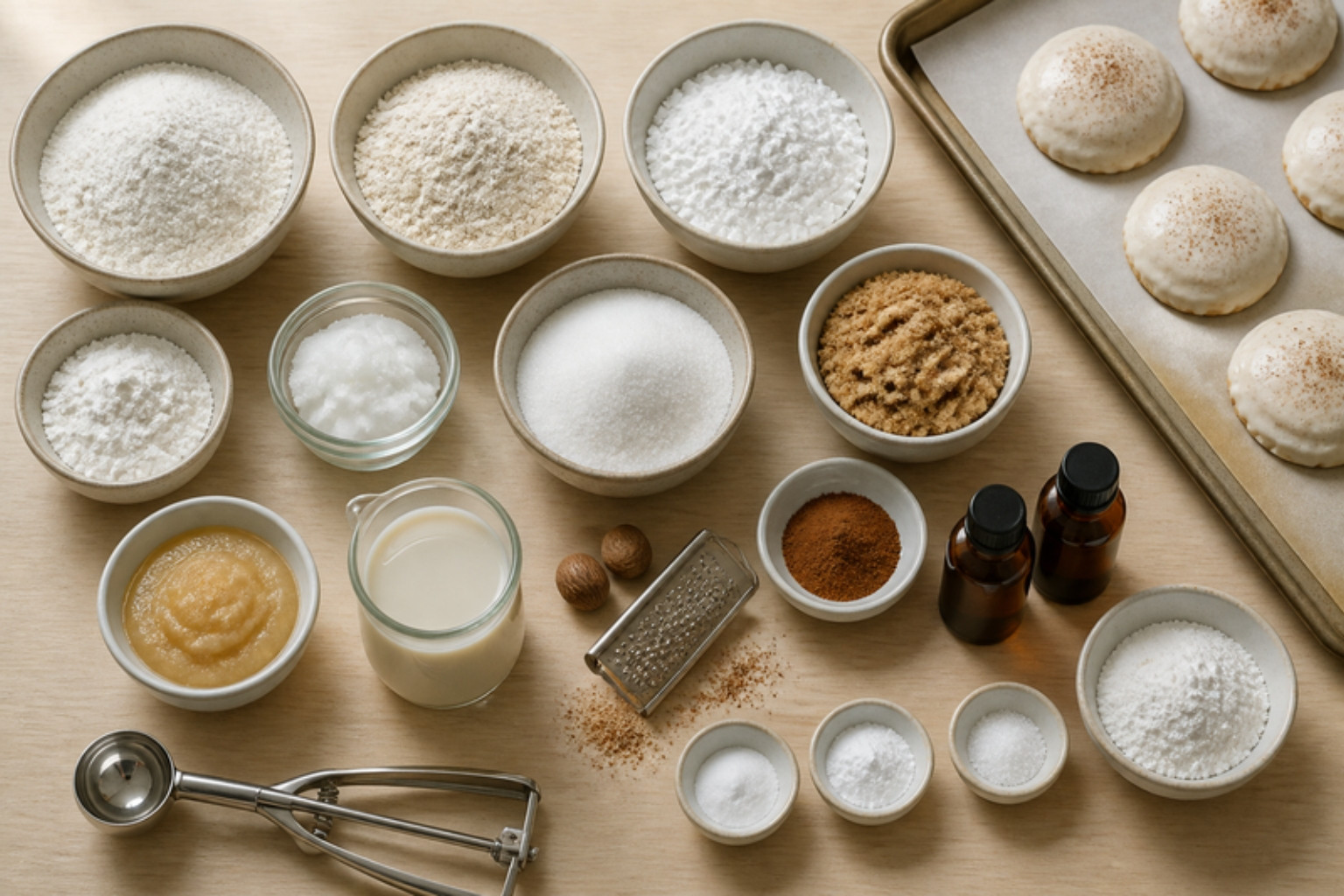
Soft Eggnog Cookies with Nutmeg Glaze (No Eggs, Milk or Wheat)
Ingredients
Equipment
Method
- Whisk the rice flour, oat flour, tapioca starch, cornstarch, baking soda, baking powder, salt, nutmeg, and cinnamon in a bowl.
- In a large bowl, beat the coconut oil, granulated sugar, and brown sugar 2 minutes until fluffy and pale. Beat in the applesauce, oat milk, vanilla, rum extract, and vinegar until smooth (it may look slightly separated; that’s fine).
- Mix in the dry ingredients on low until a soft, thick dough forms. Rest 15 minutes so the flours hydrate; the dough firms up and becomes scoopable. Meanwhile heat the oven to 350°F (175°C).
- Scoop 1 1/2-tablespoon balls, roll them smooth, and place 2 inches (5 cm) apart on the lined sheets. Press each ball down slightly to about 3/4 inch (2 cm) thick.
- Bake one sheet at a time for 10-12 minutes, until the cookies are puffed, the tops look dry with a few fine cracks, and the bottoms are light golden. The centers will still feel soft; they set as they cool.
- Cool 10 minutes on the pan, then move to a rack and cool completely.
- Whisk the powdered sugar, 1 1/2 tablespoons oat milk, rum extract, vanilla, and nutmeg into a thick, smooth glaze, adding more oat milk a few drops at a time if needed. Dip or spoon over each cookie, dust with a little more nutmeg, and let set about 30 minutes.
Notes
Troubleshooting
- Cookies spread flat: the coconut oil was too warm or melted. Chill the dough 20 minutes and try again.
- Cookies stayed in tall domes: the dough was very cold or the balls weren’t pressed. Flatten them a bit more next time.
- Dry or crumbly: they baked too long. Pull them as soon as the tops look set; carryover heat finishes the centers.
- Glaze too thin: whisk in powdered sugar a spoonful at a time until it ribbons off the whisk and holds its shape for a few seconds.
Make-Ahead, Freezing, and Gifting
- Room temperature: store glazed cookies airtight in single layers separated by parchment up to 5 days.
- Freezing baked cookies: freeze unglazed cookies in a rigid container up to 2 months. Thaw in the closed container, then glaze.
- Freezing dough: freeze scooped balls on a tray, then bag them for up to 2 months. Bake from frozen, adding 1 to 2 minutes.
- Cookie tins: let the glaze set fully, about 30 minutes, then pack in a parchment-lined tin. Keep soft cookies like these separate from crisp cookies so the crisp ones don’t soften.
For more cookie-tray ideas, browse the Cookies aisle of our Christmas recipes. Pair these with a mug of our eggnog without eggs or milk, or add a decorated cookie to the plate with the soft cut-out sugar cookies.
FAQ
Do eggnog cookies have eggnog in them?
Many recipes use store-bought eggnog, which contains eggs and milk. This version gets its eggnog flavor from nutmeg, vanilla, and rum extract, with oat milk in the dough and glaze. You could use a dairy-free nog instead of the oat milk, but read the label, since many are made with nuts or soy.
Does rum extract contain alcohol?
Most extracts are made with alcohol, but the amount per cookie is tiny and much of it bakes off. Imitation rum flavorings vary, so check the label, or swap in more vanilla.
Can I make these without the glaze?
Yes. Roll the dough balls in a mix of granulated sugar and a pinch of nutmeg before baking for a sparkly, snickerdoodle-style finish.
Why are my cookies gritty?
Rice flour needs time to absorb moisture. Don’t skip the 15-minute rest, and use a finely milled white rice flour.
A note before you cook: These recipes are ideas and suggestions, not medical or dietary advice. As with any recipe or ingredient, it is each reader’s responsibility to confirm what they can and cannot eat, read every ingredient label, and source quality ingredients that fit their own needs. Ingredient formulations change, so always check the package you’re using.