
Bakery apple fritters are one of those treats allergy families tend to walk past. The batter is usually wheat flour, eggs, milk, and butter, and the fryer oil is often soybean or canola. If you’ve looked for apple fritters without eggs or dairy and found mostly baked “fritter-inspired” muffins, this recipe is the real thing: crisp, craggy, deep golden fritters full of tender apple pieces, finished with a thin apple cider glaze that crackles when you bite in.
The batter is built from white rice flour, oat flour, and a little cornstarch, bound with applesauce and cold apple cider, and lifted with baking powder. They’re fried in lard or beef tallow, two traditional frying fats that hold steady at 350°F and give a clean, crisp crust. Serve them warm for a weekend breakfast, or as an afternoon treat with a mug of cider.
Made without: peanuts, tree nuts, milk, eggs, wheat, soy, fish, shellfish, sesame.
Why You’ll Love This Recipe
- Bakery-style texture: lacy, crunchy edges and a soft, apple-studded middle.
- No eggs, milk, butter, or wheat, and no commercial egg replacer.
- Apple flavor in every layer: diced apples, applesauce and cider in the batter, and cider in the glaze.
- About 55 minutes from chopping to glazed, with no yeast and no rising time.
How Apple Fritters Work Without Eggs or Wheat
In a classic fritter batter, egg binds the apple pieces together and helps the batter puff, while wheat flour’s gluten gives it stretch. Here those jobs are split up. Rice flour gives a crisp, light shell (it absorbs less fat than wheat flour and fries up crunchier). Oat flour adds tenderness and a slightly wholesome, cake-like crumb. Cornstarch keeps the outside crisp. Applesauce stands in for egg as the binder: its natural pectin and body hold the batter around the apple pieces.
Lift comes from baking powder, which reacts twice: once when it meets the cold cider and again in the hot fat. Keeping the cider cold slows that first reaction so more of the lift happens in the pot. Resting the batter for 5 minutes lets the rice and oat flours hydrate, which keeps the fritters from tasting gritty.
Ingredients and Swap Ideas
- Apples (2 medium, about 300 g diced): firm, tart-sweet apples like Honeycrisp, Granny Smith, Jonagold, or Northern Spy hold their shape. Dice them small (1/4 inch) so they soften in the few minutes the fritters fry.
- White rice flour (160 g) and oat flour (50 g): use finely ground rice flour for the smoothest batter. Choose certified gluten-free oat flour; regular oats are often cross-contacted with wheat and barley.
- Cornstarch (32 g): potato starch works the same way.
- Apple cider and applesauce: plain pressed cider or unsweetened apple juice, kept cold. Unsweetened applesauce, store-bought or homemade slow cooker applesauce.
- Light-tasting olive oil (1 tbsp, in the batter): “light” means refined and mild in flavor, not lower in calories. It keeps the crumb tender.
- Frying fat: lard or beef tallow, about 1 1/2 inches deep. Choose pure rendered fat with no added hydrogenated oils. Skip vegetable oil, canola, shortening, and peanut oil.
- Label checks: baking powder (some contain wheat starch), powdered sugar (starch type), vanilla, and oat flour.
Kitchen Equipment
A heavy Dutch oven or deep cast-iron skillet holds the fat temperature steady. A clip-on deep-fry or candy thermometer matters more than anything else here; guessing the temperature is the most common reason fritters turn out greasy or raw in the middle. You’ll also want a spider or slotted spoon, a wire rack set over a baking sheet, and a 1/4-cup scoop.
Step-by-Step Tips
- Get the batter thick. It should mound on a spoon like muffin batter. If it runs, stir in a tablespoon of rice flour; if it’s stiff, add cider a teaspoon at a time.
- Heat the fat to 350°F before you scoop. Fry only 3 or 4 at a time and let the thermometer climb back to 350°F between batches.
- Flatten gently. After the batter hits the fat, nudge each mound into a rough 3-inch round. Thinner fritters cook through before the outside gets too dark, and the rough edges become the crunchy bits.
- Look for deep golden brown. 2 1/2 to 3 minutes per side. Break the first fritter open: the center should look like cooked cake with soft apple, not wet batter.
- Glaze while warm, not hot. After 3 to 5 minutes on the rack, the glaze sets into a thin, shiny shell instead of melting off.
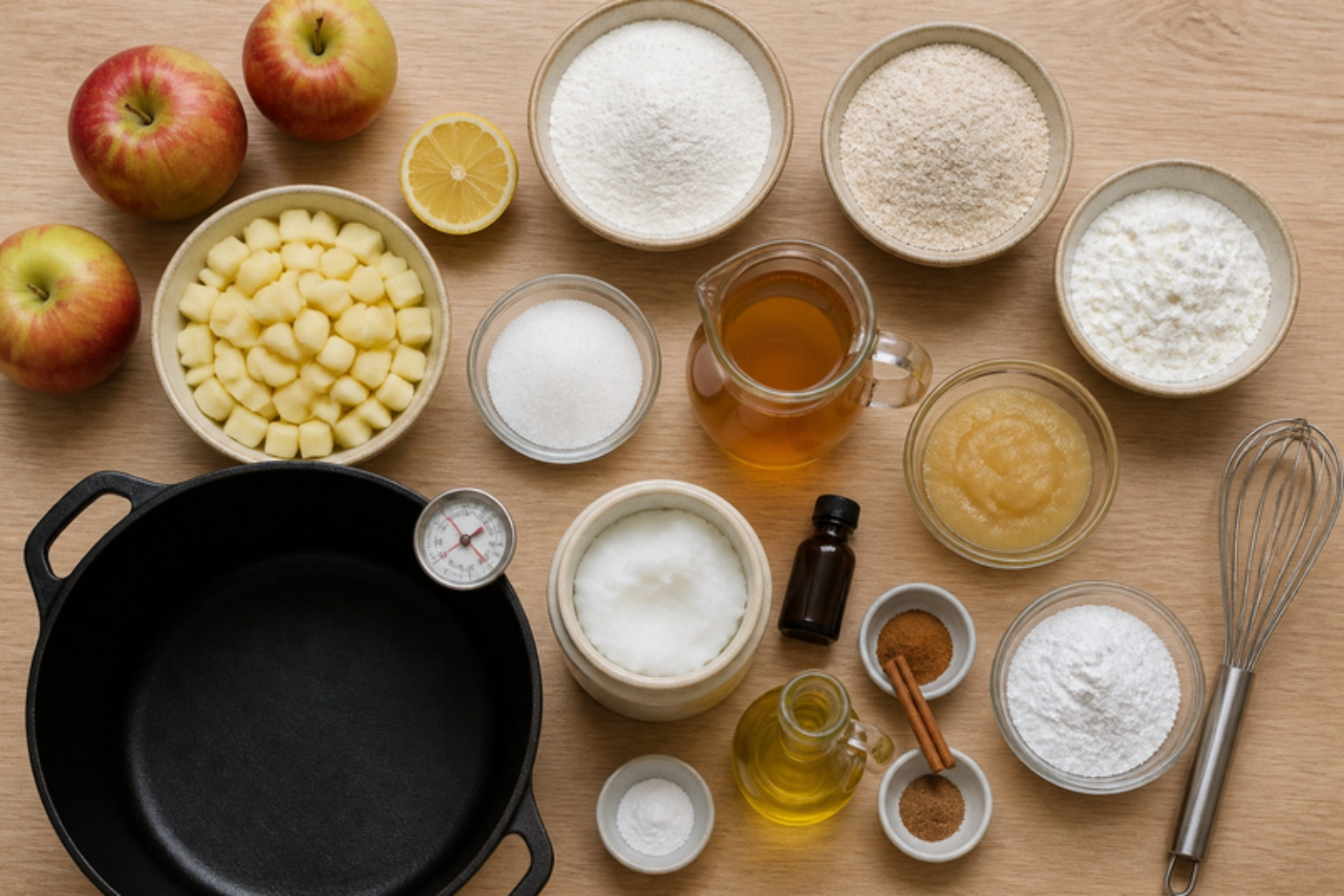
Apple Fritters, No Eggs, Dairy-Free (Top 9 Free)
Ingredients
Equipment
Method
- Peel, core, and cut the apples into 1/4-inch dice. Toss with the lemon juice and set aside.
- In a large bowl, whisk the rice flour, oat flour, cornstarch, sugar, baking powder, cinnamon, nutmeg, and salt until evenly mixed.
- In a second bowl, whisk the cold cider, applesauce, light olive oil, and vanilla. Pour into the dry ingredients and stir to a thick, scoopable batter, about as thick as muffin batter. Fold in the apples. Let it rest 5 minutes while the fat heats; it will thicken slightly.
- Melt the lard or tallow in a heavy pot to a depth of about 1 1/2 inches and heat to 350°F (175°C). Set a wire rack over a baking sheet nearby.
- Scoop 1/4-cup mounds of batter and slide them gently into the fat, then nudge each into a rough 3-inch round with the back of a spoon. Fry 3 or 4 at a time so the temperature stays between 340°F and 360°F.
- Fry 2 1/2 to 3 minutes per side, until deep golden brown, crisp at the craggy edges, and no longer wet in the center when you break one open (the first one is your test). Lift onto the rack and let the fat return to 350°F before the next batch.
- Whisk the powdered sugar, 3 tablespoons cider, and cinnamon into a thick but pourable glaze, adding more cider a teaspoon at a time if needed. Dip the tops of the warm (not hot) fritters or spoon the glaze over them. Let the glaze set about 10 minutes and serve the same day.
Notes
Troubleshooting
- Greasy fritters: the fat was too cool. Keep it between 340°F and 360°F and fry fewer at a time.
- Dark outside, raw inside: the fat was too hot or the fritters too thick. Lower the heat slightly and flatten them more.
- Fritters fall apart in the pot: the batter was too thin or the apples too large. Add a spoonful of rice flour and dice the apples smaller.
- Gritty texture: use finely ground rice flour and give the batter its full 5-minute rest.
Storage, Freezing, and Reheating
Apple fritters are best the day they’re fried. Keep leftovers loosely covered at room temperature for up to 1 day (an airtight container softens the crust). To freeze, cool unglazed fritters completely, freeze on a tray, then bag them for up to 1 month. Reheat from frozen on a baking sheet at 350°F for 10 to 12 minutes, then glaze. Let the frying fat cool completely before straining it for reuse or discarding it.
More Apple Recipes to Try
If you’d rather bake than fry, the baked apple cider donuts carry the same cider-mill flavor. The skillet fried apples with cinnamon make a quick breakfast topping, and the apple oat snack cake is an easy make-ahead treat. Browse all of our breakfast recipes.
Frequently Asked Questions
Can you make apple fritters without eggs?
Yes. In this batter, applesauce binds the apple pieces, baking powder provides lift, and a mix of rice flour, oat flour, and cornstarch builds a crisp shell, so no egg or egg replacer is needed.
Can I bake or air fry these instead?
This batter is designed for frying, and it hasn’t been worked out for the oven or air fryer. Baked versions come out closer to a muffin top than a crisp fritter. For a baked treat, try the cider donuts linked above.
What’s the best fat for frying apple fritters?
Lard and beef tallow both fry cleanly at 350°F and give a crisp, not greasy, crust. Lard has the most neutral flavor for a sweet fritter. Avoid vegetable, canola, and peanut oil if you’re cooking without seed oils.
Which apples are best for fritters?
Firm apples with some tartness, such as Honeycrisp, Granny Smith, Jonagold, or Northern Spy. Softer apples like McIntosh can turn mushy and make the batter wet.
A note before you cook: These recipes are ideas and suggestions, not medical or dietary advice. As with any recipe or ingredient, it is each reader’s responsibility to confirm what they can and cannot eat, read every ingredient label, and source quality ingredients that fit their own needs. Ingredient formulations change, so always check the package you’re using.