
If you’ve ever picked up a bag of dinner rolls for a holiday table and turned it over to find milk, butter, eggs, and soy on the label, you know why a homemade basket of rolls is worth the time. Most soft dinner rolls get their richness from butter and milk and their shine from an egg wash. These soft, fluffy pull-apart rolls don’t use any of them.
The dough is a simple mix of bread flour, yeast, a little sugar, warm water, and light-tasting olive oil. The oil keeps the crumb tender and soft, the sugar helps the tops brown, and a brush of olive oil right out of the oven gives the rolls a soft, glossy crust in place of butter. They bake side by side in a 9×13 pan, so they pull apart into fluffy, tall rolls that are ready for gravy or leftover-turkey sliders. Since they do contain wheat, note the “Contains” line below.
Made without: peanuts, tree nuts, milk, eggs, soy, fish, shellfish, sesame.
Contains: wheat.
Why You’ll Love These Dinner Rolls
- Soft, fluffy, pull-apart rolls made from basic pantry ingredients.
- No butter, no milk, no egg wash, and no egg replacer.
- An overnight-fridge option and a freeze-the-dough option, which help a lot on a busy holiday.
- Works with bread flour or all-purpose flour.
How Dinner Rolls Stay Soft Without Eggs or Milk
In an enriched roll dough, eggs and milk mostly add tenderness, richness, and color. Wheat gluten already gives yeast rolls their structure, so they don’t need egg to hold together. Olive oil coats the gluten strands and keeps the crumb soft and fine, and a few tablespoons of sugar feed the yeast and brown the tops. Brushing with oil after baking softens the crust as the rolls cool, which is what butter usually does.
Ingredients and Swap Ideas
- Bread flour (500 g): Higher protein gives taller, chewier rolls. All-purpose flour makes slightly softer, squatter rolls. Many flours include malted barley flour, so check the label and choose an unmalted flour if you avoid barley. This recipe hasn’t been worked out with a gluten-free flour blend.
- Yeast (7 g): Instant or active dry both work. Check that the yeast isn’t past its date, since old yeast is the most common reason a dough won’t rise.
- Warm water or oat milk (360 ml): Water makes a lighter roll. Oat milk adds a little extra softness and browning, but choose one with no added oil, because many contain canola or sunflower oil.
- Light-tasting olive oil: “Light” means refined and mild-tasting, not fewer calories. Extra-virgin olive oil works if you like a slightly savory roll. Skip vegetable oil, margarine, and plant-based butters, which are made from seed oils.
- Topping: Olive oil and a pinch of flaky salt replace an egg wash or melted butter. Brushing the tops with oat milk (no added oil) before baking is another option for extra browning.
Kitchen Equipment
- Stand mixer with a dough hook, or a large bowl and some elbow grease
- 9×13-inch (23×33 cm) metal pan
- Instant-read thermometer
- Pastry brush and a kitchen scale for even rolls
Step-by-Step Tips
- Check the water temperature. Aim for 105–110°F (40–43°C), warm like a bath. Hotter water can kill the yeast.
- Knead until smooth. The dough is ready when it’s smooth and elastic and a small piece stretches thin without tearing right away.
- Rise by look, not time. The dough should double in size, and a floured fingertip pressed into it should leave a dent that fills back slowly.
- Weigh the pieces. About 75 g each gives 12 even rolls that bake at the same rate.
- Shape tight balls. A taut surface gives tall, round rolls. Pinch the seam closed and place the rolls seam-side down.
- Bake until golden and 190°F. Deep golden tops and a hollow sound when tapped mean they’re done.
- Brush right away. Oil the rolls while they’re hot so the crust stays soft.
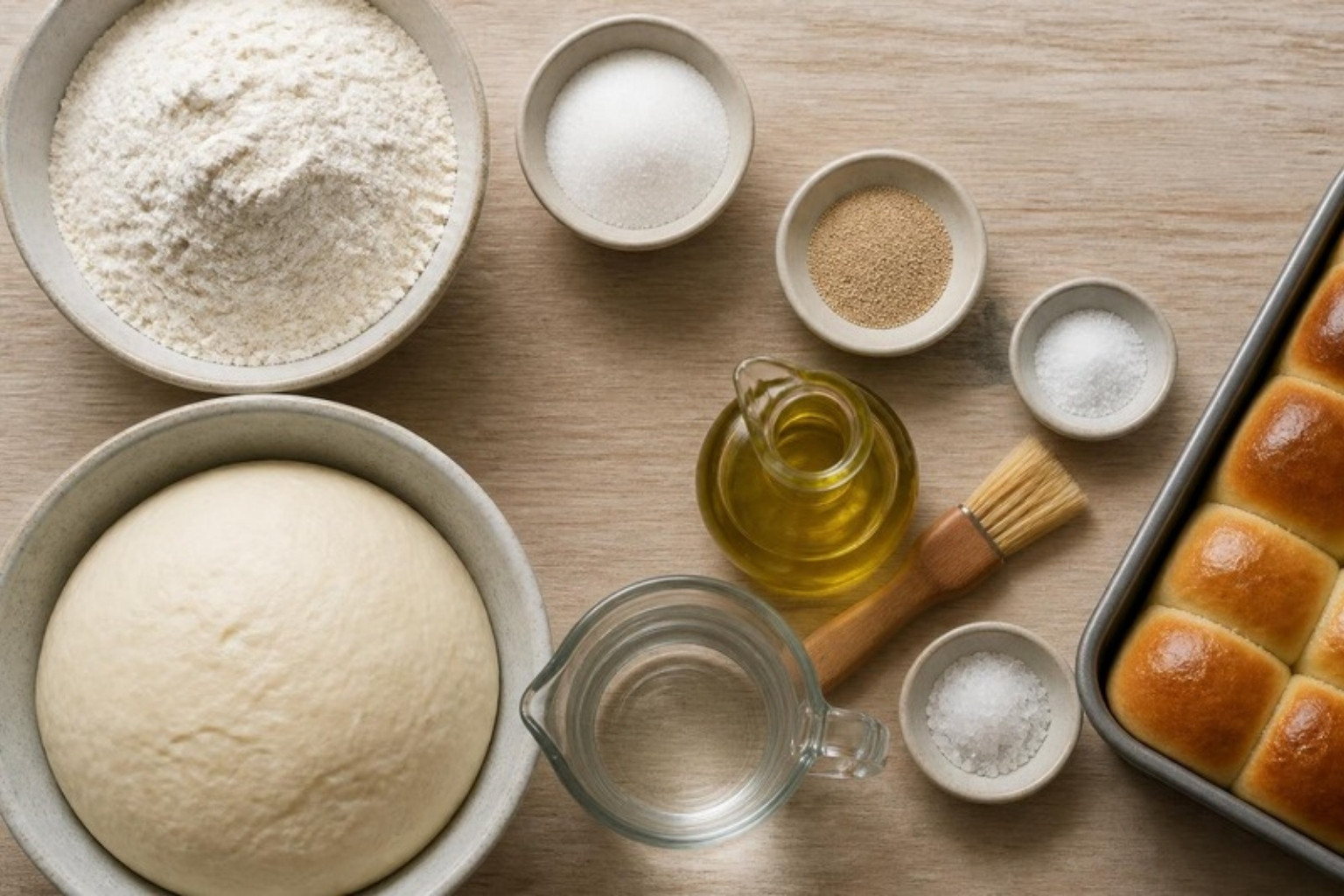
Soft Dinner Rolls (Egg-Free, Dairy-Free)
Ingredients
Equipment
Method
- Stir the warm water (or oat milk) and sugar together in the mixer bowl. Sprinkle in the yeast and let stand 5 minutes, until foamy on top. (Instant yeast can skip the wait.)
- Add the flour, salt, and 1/4 cup (60 ml) olive oil. Mix on low with the dough hook until a shaggy dough forms, then knead on medium-low for 6 to 8 minutes, until smooth, elastic, and slightly tacky. It should pull away from the sides of the bowl and spring back slowly when poked. (By hand, knead 10 to 12 minutes.)
- Lightly oil a large bowl with olive oil, turn the dough in it to coat, and cover. Let rise in a warm spot 60 to 90 minutes, until doubled. A floured finger pressed in should leave a dent that fills back slowly.
- Brush the 9×13-inch pan with olive oil. Turn the dough out, press out the air, and divide into 12 equal pieces (about 75 g each).
- Shape each piece into a smooth ball by pulling the edges underneath and rolling it on the counter under a cupped hand until the top is tight. Arrange in the pan in 3 rows of 4.
- Cover and let rise 45 to 60 minutes, until puffy and touching each other. Meanwhile heat the oven to 375°F (190°C). (Make-ahead option: cover the shaped rolls and refrigerate up to 18 hours; let them sit at room temperature 60 to 90 minutes until puffy before baking.)
- Bake 20 to 24 minutes, until the tops are deep golden brown and the center rolls read 190°F (88°C) on an instant-read thermometer. They should sound hollow when tapped.
- Brush the hot rolls with 2 tablespoons olive oil and sprinkle with flaky salt if using. Cool 10 minutes in the pan before pulling apart.
Notes
Troubleshooting
- Dough didn’t rise: The yeast may be old, or the water was too hot. Proof a pinch of yeast in warm water with sugar; it should foam within 10 minutes.
- Dense rolls: Usually too much flour or a short rise. Spoon and level the flour (or weigh it), and let the shaped rolls get truly puffy before baking.
- Pale tops: Bake a few minutes longer, or brush with oat milk before baking.
- Dry rolls the next day: Store them airtight once cool, and rewarm in foil.
Make-Ahead, Storage, and Freezing
- Overnight rolls: Shape the rolls into the oiled pan, cover tightly, and refrigerate for up to 18 hours. In the morning, let them sit at room temperature for 60 to 90 minutes, until puffy, then bake.
- Freezer dough: Freeze the shaped, unrisen balls on a lined sheet until solid, then bag them for up to 1 month. Arrange them in the oiled pan, thaw covered in the fridge overnight, and let rise 1 1/2 to 3 hours at room temperature until puffy before baking.
- Baked rolls: Keep airtight at room temperature up to 2 days, or freeze up to 3 months. Reheat wrapped in foil at 325°F (165°C) for 10 to 15 minutes.
- Bringing rolls to a dinner: Bake them the morning of the meal, cool them completely, and pack them in a foil-lined basket or a zip-top bag with a note that they contain wheat.
Rolls are made for gravy and sides. Serve them with creamy dairy-free mashed potatoes and a from-scratch green bean casserole, then plan the rest of the meal with the Thanksgiving recipes and Christmas recipes hubs.
Dinner Rolls FAQ
Can you make dinner rolls without eggs?
Yes. Wheat gluten gives yeast rolls their structure, so eggs mainly add richness and color. Oil and a little sugar cover both of those jobs here, and no egg replacer is needed.
What can I brush on rolls instead of butter or egg wash?
Brush them with olive oil right after baking for a soft, shiny crust. For deeper color, brush the tops with oat milk that has no added oil before they go in the oven.
Can I make these dinner rolls the day before?
Yes. Either refrigerate the shaped rolls overnight and bake them fresh, or bake them a day ahead, store them airtight, and rewarm them in foil before serving.
Are these dinner rolls gluten-free?
No. They’re made with wheat flour. A gluten-free blend hasn’t been worked out for this recipe, and gluten-free yeast doughs usually need a different formula rather than a straight swap.
A note before you cook: These recipes are ideas and suggestions, not medical or dietary advice. As with any recipe or ingredient, it is each reader’s responsibility to confirm what they can and cannot eat, read every ingredient label, and source quality ingredients that fit their own needs. Ingredient formulations change, so always check the package you’re using.