
If you’ve gone looking for pumpkin pancakes without eggs, milk, or wheat, you’ve probably found plenty of recipes that swap one allergen and keep the other two. These pancakes start from a different place. Oat flour and rice flour make the base, pumpkin purée brings moisture and color, and a little vinegar and baking soda give them lift. The result is a stack of soft, fluffy, cinnamon-and-ginger pancakes that taste like October.
Pumpkin does a lot of the work eggs normally do. It adds body and holds moisture, so the pancakes stay tender instead of turning gummy or dry. A 10-minute rest lets the rice flour and oat flour soak up the liquid, which is the step that keeps the texture smooth instead of gritty. Light-tasting olive oil in the batter and on the griddle gives crisp, golden edges without butter.
Made without: peanuts, tree nuts, milk, eggs, wheat, soy, fish, shellfish, sesame.
Why You’ll Love These Pumpkin Pancakes
- Real pumpkin flavor: a full 3/4 cup of purée plus cinnamon, ginger, and nutmeg.
- No egg replacer: no flax, chia, aquafaba, or commercial powders. Just flour, starch, pumpkin, and leavening.
- Pantry ingredients: oat flour, rice flour, and cornstarch from the regular grocery store.
- Freezer-friendly: make a double batch and toast them on school mornings.
- No seed oils: light-tasting olive oil in the batter and on the griddle.
How Pumpkin Pancakes Work Without Eggs, Milk, or Wheat
In a classic pancake, egg binds the batter and helps it puff, milk adds tenderness, and wheat gluten gives it stretch. Here each job goes to something else:
- Structure: oat flour brings a soft, slightly hearty crumb, rice flour keeps it light, and cornstarch sets the inside so it isn’t gummy.
- Binding and moisture: pumpkin purée holds the batter together and keeps the center moist.
- Lift: baking powder plus a baking soda and cider vinegar reaction makes the bubbles that would otherwise come partly from whipped egg.
- Richness: oat milk with no added oil and a few tablespoons of light-tasting olive oil stand in for dairy milk and butter.
Ingredients and Swap Ideas
Full amounts in imperial and metric are in the recipe card below. A few notes:
- Oat flour: choose certified gluten-free oat flour, since regular oats can pick up wheat and barley during growing and milling. You can grind certified GF rolled oats in a blender until powdery.
- Rice flour: white rice flour gives the lightest pancakes. Brown rice flour works but tastes nuttier and a little denser.
- Starch: cornstarch or tapioca starch both work.
- Pumpkin: use plain canned pumpkin or homemade purée, not pumpkin pie filling, which is already sweetened and spiced. Mashed roasted butternut squash is a good swap.
- Oat milk: many brands add canola or sunflower oil, so look for one with no added oil. Room temperature milk mixes more smoothly.
- Fat: light-tasting olive oil (refined, mild flavor; “light” doesn’t mean fewer calories). Melted refined coconut oil also works. If you avoid coconut, stay with light-tasting olive oil.
- Spices: 1 1/2 tsp pumpkin pie spice can replace the cinnamon, ginger, and nutmeg. Check blends for added ingredients.
Label check: oat flour, oat milk, baking powder (some contain wheat starch), spices, vanilla, and maple syrup (pure maple, not pancake syrup).
Kitchen Equipment
- Electric griddle (set to about 325°F / 165°C) or a 12-inch nonstick or cast-iron skillet
- Two mixing bowls and a whisk
- 1/4-cup measure for even pancakes
- Thin, wide spatula
Step-by-Step Tips
- Whisk the dry ingredients well. Brown sugar and spices clump; break them up so every pancake is evenly spiced.
- Don’t skip the rest. After 10 minutes the batter thickens and turns smooth. If it’s too stiff to spread, whisk in a spoonful or two of oat milk.
- Keep the heat moderate. Pumpkin and maple brown quickly. Medium-low heat lets the centers cook through before the outsides get too dark.
- Flip by sight, not just time. Wait until bubbles on top stay open and the edges look matte, about 3 to 4 minutes. The second side needs 2 to 3 minutes, until the center springs back when pressed.
Pumpkin Pancakes (Top 9 Free)
Ingredients
Equipment
Method
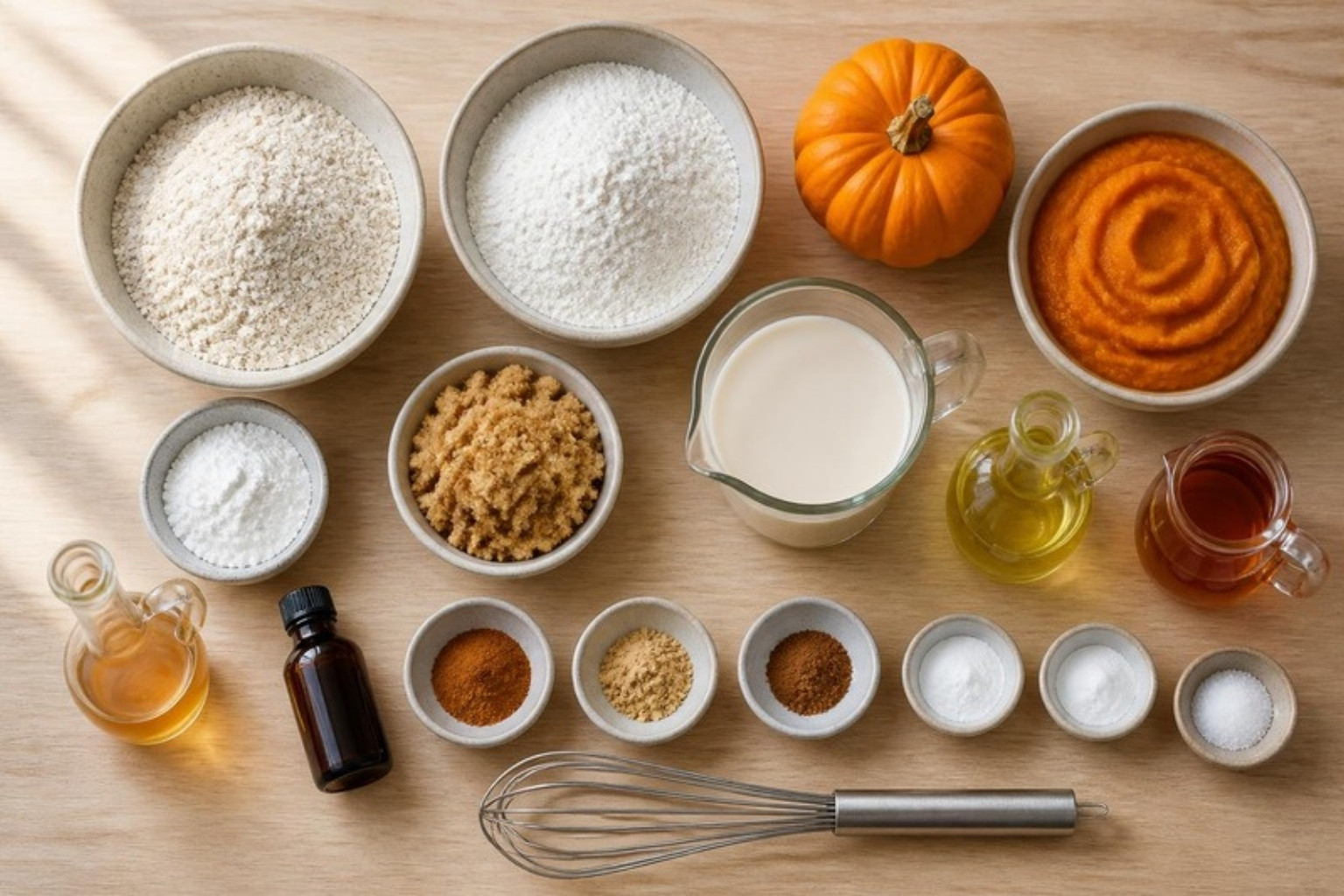
- In a large bowl, whisk the oat flour, rice flour, cornstarch, brown sugar, baking powder, baking soda, salt, cinnamon, ginger, and nutmeg until evenly colored with no streaks of spice.
- In a medium bowl, whisk the pumpkin purée, oat milk, vinegar, olive oil, maple syrup, and vanilla until smooth and uniformly orange.
- Pour the wet ingredients into the dry and stir with a whisk just until no dry pockets remain. Let the batter rest 10 minutes. It will thicken to a soft, scoopable batter that mounds slightly; if it is too stiff to spread, whisk in 1 to 2 tablespoons more oat milk.
- Heat a griddle or skillet over medium-low heat (about 325°F / 165°C on an electric griddle) and brush lightly with olive oil. A drop of water should sizzle gently, not dance and vanish instantly. Pumpkin batter browns fast, so keep the heat moderate.
- Scoop 1/4 cup batter per pancake and nudge it into a 4-inch round. Cook 3 to 4 minutes, until bubbles form and stay open on top and the edges look matte and set.
- Flip and cook 2 to 3 minutes more, until the second side is deep golden and the center springs back when pressed lightly. Brush the griddle with a little more oil between batches.
- Serve warm with maple syrup. Keep finished pancakes in a single layer on a rack in a 200°F (95°C) oven while you cook the rest.
Notes
Troubleshooting
- Gummy centers: the heat was too high, so the outside finished first. Turn the heat down and make the pancakes a little thinner.
- Gritty texture: the batter needed more rest, or the rice flour was coarse. Give it the full 10 minutes, and look for finely ground rice flour.
- Flat pancakes: check that the baking powder is fresh (it should fizz in hot water) and don’t overmix once the wet and dry are together.
- Sticking: brush the griddle with a little more olive oil between batches instead of using cooking spray.
Storage, Freezing, and Reheating
Refrigerate cooled pancakes in an airtight container for up to 3 days. To freeze, lay them in a single layer on a sheet pan until firm, then stack with parchment between layers in a freezer bag for up to 2 months. Reheat straight from frozen in a toaster, or on a sheet pan in a 350°F (175°C) oven for 8 to 10 minutes, until hot with crisp edges.
More Fall Breakfasts
For a make-ahead option, try our maple pear baked oatmeal. For a plain stack, our pancakes without milk use water or oat milk with the same rice and oat flour base. If you still have pumpkin left in the can, our crustless pumpkin pie uses it up. Planning a holiday morning? Browse our Thanksgiving recipes, or see every Top 9 Free recipe.
Pumpkin Pancakes FAQ
Can I make pumpkin pancakes without eggs?
Yes. Pumpkin purée binds and moistens the batter, cornstarch helps it set, and baking soda with cider vinegar adds lift. No egg replacer is needed.
Can I use all-purpose flour instead of oat and rice flour?
You can, but the pancakes would then contain wheat and no longer be Top 9 Free. The liquid amounts would also need adjusting, so we’d treat that as a different recipe.
Can I make the batter the night before?
The leavening is most active right after mixing, so the pancakes are fluffiest when the batter is cooked within about 30 minutes. To save time, whisk the dry ingredients together the night before and keep the wet ingredients mixed in the fridge.
What can I use instead of pumpkin?
Mashed roasted butternut squash or sweet potato are the closest swaps. Unsweetened applesauce works too, but the pancakes will be a little flatter and less orange.
A note before you cook: These recipes are ideas and suggestions, not medical or dietary advice. As with any recipe or ingredient, it is each reader’s responsibility to confirm what they can and cannot eat, read every ingredient label, and source quality ingredients that fit their own needs. Ingredient formulations change, so always check the package you’re using.