
The day after Thanksgiving, the fridge is full of turkey and the easy leftover recipes all seem to call for cream soup, cheese, or egg noodles. If your family skips those, turkey soup with rice is the answer that’s been there all along: the carcass becomes a rich, golden stock, the leftover meat goes back in, and long-grain rice stands in for noodles. It’s clean, brothy and savory, with soft carrots and celery and a squeeze of lemon at the end to brighten everything after a heavy holiday meal. One pot feeds the whole family and leaves a few quarts for the freezer.
The short answer: To make turkey soup with leftover turkey, simmer the carcass with onion, carrot, celery and bay leaves for about 3 hours and strain. Soften fresh onion, carrots and celery in olive oil, add the stock and rice, simmer 15 to 18 minutes, then stir in the turkey and heat to 165°F.
Made without: peanuts, tree nuts, milk, eggs, wheat, soy, fish, shellfish, sesame.
Why You’ll Love This Turkey Soup
- It uses the whole bird: carcass for stock, leftover meat for the soup.
- Rice instead of egg noodles, so there’s no hunt for egg-free gluten-free pasta.
- No cream, butter or flour, just a clear, deeply savory broth.
- It freezes well, so Thanksgiving turns into easy December lunches.
Ingredients and Swap Ideas
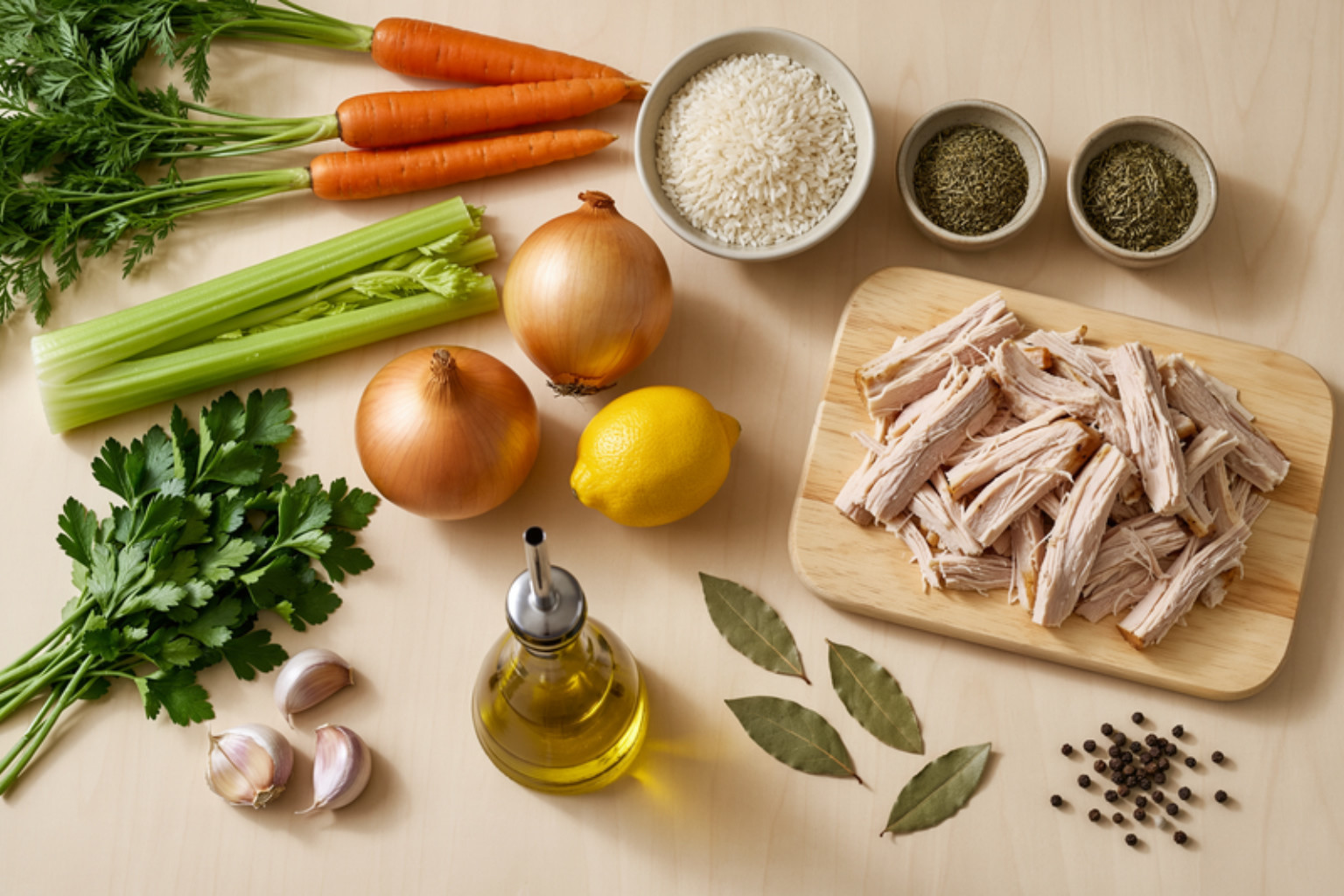
- Turkey carcass: Roasted bones make a darker, richer stock than raw ones. Add the wings or neck if they’re left over. If you don’t want to make stock, use 10 cups (2.4 liters) of store-bought chicken or turkey broth; check the label for added oil, soy and yeast extracts.
- Cider vinegar in the stock: A tablespoon helps pull flavor and body from the bones. You won’t taste it.
- Extra-virgin olive oil, 2 tablespoons: For softening the vegetables. Skimmed turkey fat from the stock or a spoonful of bacon fat adds even more flavor.
- Onion, carrots and celery: Use fresh ones for the soup. The ones from the stockpot have given up their flavor and turn mushy.
- Long-grain white rice, 3/4 cup (140 g): Rinse it so the broth stays clear. Brown rice works too; simmer it 35 to 40 minutes before adding the turkey. A wild rice blend makes it heartier.
- Cooked turkey, 3 to 4 cups (450 to 560 g): A mix of white and dark meat tastes best. Smoked turkey adds a nice smoky note. Skip any turkey that was brined or seasoned with ingredients your family avoids.
- Kale or spinach (optional): Adds color and something green after a week of rich food.
- Lemon juice: The finishing touch. Cider vinegar does the same job.
Kitchen Equipment
- Large stockpot or Dutch oven, 6 quarts or larger
- Fine-mesh strainer and a large bowl
- Ladle and wooden spoon
- Instant-read thermometer for reheating
How to Make Turkey Soup from Leftover Turkey
Make the stock (optional, but worth it)
- Load the pot. Break the carcass into pieces so it fits, then add the quartered onion, carrot and celery chunks, bay leaves, peppercorns and vinegar. Cover with cold water by about an inch.
- Simmer gently. Bring it just to a boil, then turn it down until only a few small bubbles break the surface. A hard boil makes cloudy, greasy stock. Skim off the foam in the first 20 minutes, then simmer uncovered for 3 hours.
- Strain and skim. Pour it through a fine-mesh strainer, pick any meat off the bones for the soup and discard the rest. Skim the fat from the top. You should have about 10 cups of golden stock.
Make the soup
- Soften the vegetables. Warm the olive oil in a large pot over medium heat. Add the diced onion, carrots and celery with a pinch of salt and cook 8 to 10 minutes, until the onion is translucent and the carrots start to soften.
- Add the aromatics. Stir in the garlic, thyme and sage for about 1 minute, just until you can smell the garlic.
- Simmer the rice. Pour in the stock, add a bay leaf and bring to a boil. Stir in the rice, lower the heat and simmer partly covered for 15 to 18 minutes, until a grain of rice is tender all the way through.
- Add the turkey. Stir in the turkey and the greens, if using. Simmer 5 minutes, until the turkey is steaming hot (165°F) and the greens have wilted.
- Finish and season. Fish out the bay leaf, stir in the lemon juice and parsley, then add salt and pepper until the broth tastes full and bright. Homemade stock usually needs more salt than you expect.
Turkey Soup with Rice and Leftover Turkey
Ingredients
Equipment
Method
- Put the carcass pieces, onion, carrots, celery, bay leaves, peppercorns and vinegar in a large stockpot. Add cold water to cover by an inch.
- Bring just to a boil, then lower to a bare simmer, with small bubbles breaking now and then. Skim any foam. Simmer uncovered 3 hours, topping up with water if the bones poke out.
- Strain through a fine-mesh strainer and discard the solids. Pick any meat off the bones for the soup. Skim the fat (save 2 tablespoons for cooking the vegetables if you like). You should have about 10 cups.
- Warm the olive oil in a large pot over medium heat. Add the onion, carrots and celery with a pinch of salt and cook, stirring now and then, 8 to 10 minutes, until the onion is soft and translucent.
- Stir in the garlic, thyme and sage and cook 1 minute, until fragrant.
- Add the stock and bay leaf and bring to a boil. Stir in the rinsed rice, lower the heat and simmer, partly covered, 15 to 18 minutes, until the rice is tender and the carrots are soft.
- Add the turkey (and kale, if using) and simmer 5 minutes, until the turkey is steaming hot all the way through (165°F) and the greens are wilted.
- Remove the bay leaf. Stir in the lemon juice and parsley, then season with salt and pepper. Taste: the broth should be bright and savory. Serve hot.
Notes
Troubleshooting and Tips
- The rice soaked up all the broth: Rice keeps absorbing liquid as it sits. Add more stock or water when you reheat, or cook the rice separately and spoon it into each bowl.
- Flat-tasting soup: It usually needs salt and acid. Add salt a pinch at a time, then another squeeze of lemon.
- Cloudy stock: It boiled too hard. It still tastes fine; next time, keep it at a lazy simmer.
- Dry, stringy turkey: Add the meat at the end and simmer only until hot. Long cooking toughens already-roasted turkey.
Storage, Freezing and Reheating
- Leftover turkey timing: Make the soup with turkey that’s been refrigerated no more than 3 to 4 days.
- Fridge: Keep the soup in sealed containers up to 4 days.
- Freezer: For the best texture, freeze the soup without the rice, or with the rice slightly undercooked, for up to 3 months. Stock alone freezes up to 6 months.
- Reheat: Thaw overnight in the fridge, then bring it to a simmer on the stove until it reaches 165°F. The USDA safe temperature chart lists reheating temperatures for leftovers.
Still have turkey to use up? Try a skillet of crispy turkey hash with potatoes for breakfast. If you’re still planning the big day, our roast turkey without butter gives you the best carcass for stock, and our old-fashioned hamburger soup is another Sunday soup made with rice instead of barley. For the rest of the menu, browse our Thanksgiving recipes.
Turkey Soup FAQ
How long do you boil a turkey carcass for soup?
Simmer it gently for about 3 hours, uncovered, with onion, carrot, celery and bay leaves. Longer (up to 5 hours) makes a richer stock, but keep it at a bare simmer and top it up with water so the bones stay covered.
Should you cook rice before adding it to soup?
Not if you’ll eat the soup right away: raw rice cooks in the broth in 15 to 18 minutes and thickens it a little. If you’re making the soup for leftovers or the freezer, cook the rice separately so it doesn’t swell and soak up the broth.
How long is leftover turkey good for soup?
Use cooked turkey within 3 to 4 days of roasting, as long as it was refrigerated promptly. Turkey you froze can go straight into the simmering soup; heat until it’s 165°F.
Can I use noodles instead of rice?
Yes, but most gluten-free egg noodles contain egg, so read labels. An egg-free gluten-free pasta works: cook it separately, rinse, and add it to each bowl so it doesn’t turn soft in the pot.
A note before you cook: These recipes are ideas and suggestions, not medical or dietary advice. As with any recipe or ingredient, it is each reader’s responsibility to confirm what they can and cannot eat, read every ingredient label, and source quality ingredients that fit their own needs. Ingredient formulations change, so always check the package you’re using.
Leave a Reply