
Caramel apples are pure October: a crisp, tart apple on a stick under a thick layer of soft, chewy caramel. Classic caramel gets its creamy texture from butter and heavy cream, and most store-bought caramel wraps contain milk too. This version swaps both for one can of full-fat coconut milk, cooked down with brown sugar, a little corn syrup, and salt until it turns into a deep amber caramel that clings to the apple and sets soft enough to bite.
The coconut flavor mellows as the caramel cooks, leaving a toasty brown-sugar taste with a hint of vanilla. Dress the apples up for Halloween with sprinkles or crushed crisp rice cereal, or keep them classic. The recipe is made without peanuts, tree nuts, milk, eggs, wheat, soy, fish, shellfish, and sesame. It does contain coconut, which isn’t one of the nine but is avoided by some readers.
Made without: peanuts, tree nuts, milk, eggs, wheat, soy, fish, shellfish, sesame. (Contains coconut.)
Why You’ll Love This Recipe
- Soft, chewy caramel without butter, cream, or sweetened condensed milk.
- Five caramel ingredients: coconut milk, brown sugar, corn syrup, salt, and vanilla.
- Great for parties. Make them a day ahead and keep them in the fridge.
- Easy to customize with sprinkles, crushed cereal, or a sprinkle of flaky salt.
How the Caramel Works Without Butter or Cream
Soft caramel is sugar cooked with fat, milk proteins, and water. Full-fat coconut milk supplies the fat and enough body to make a creamy, chewy caramel, while brown sugar adds molasses flavor and color. Corn syrup interferes with sugar crystals, which keeps the caramel smooth instead of grainy.
The final texture is set by temperature. At 245°F (118°C), the “firm ball” stage, the caramel holds its shape on the apple but stays pleasantly chewy. A few degrees lower and it slides off; a few degrees higher and it gets hard to bite. A candy thermometer takes out the guesswork, and the cold-water test in the recipe card is a good backup. Because the fat comes from the coconut milk, no added butter or oil goes into the caramel.
Ingredients and Swap Ideas
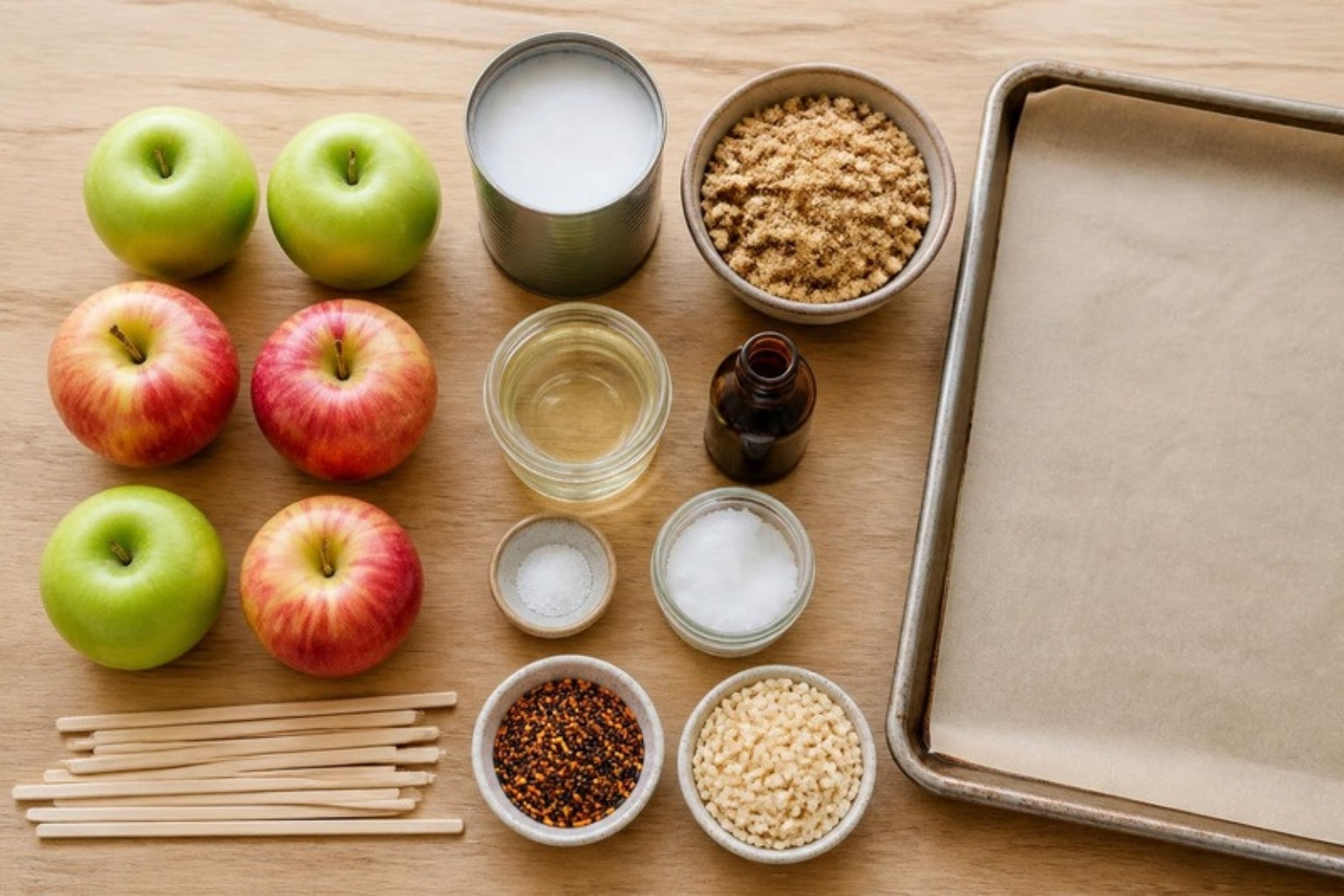
- Apples, 6 small (about 5 oz / 140 g each): tart, crisp apples like Granny Smith balance the sweet caramel; Honeycrisp and McIntosh are sweeter choices. Small apples are easier to eat and coat.
- Full-fat coconut milk, one 13.5-oz (400 ml) can: choose a can with a short ingredient list. “Lite” coconut milk and coconut beverages in cartons don’t have enough fat to set.
- Light brown sugar, 1 cup (200 g): dark brown sugar gives a deeper, more molasses-forward caramel.
- Light corn syrup, 1/2 cup (120 ml): keeps the caramel smooth. Brown rice syrup can work, though it browns faster.
- Vanilla and salt: use pure vanilla extract, and check the label, since some flavorings contain other ingredients.
- Refined coconut oil, 1 teaspoon, for greasing the parchment: if you avoid coconut, use light-tasting olive oil for greasing, though the caramel itself still relies on coconut milk. Skip cooking spray.
- Toppings: sprinkles can contain milk, soy lecithin, wheat, or seed oils, and many rice cereals contain barley malt, so read both labels carefully. Adding chopped nuts or chocolate changes the made-without profile.
Kitchen Equipment
- Heavy 3-quart (3 L) saucepan (the caramel bubbles up as it cooks)
- Candy thermometer or instant-read thermometer
- Heatproof spatula
- Six sturdy wooden sticks
- Parchment-lined sheet pan
Step-by-Step Tips
- De-wax the apples. Most store apples have a thin food-grade wax that makes caramel slide off. A 5-second dip in just-boiled water and a firm rub with a towel removes it. The skin should look matte.
- Keep apples cold and bone dry. Cold apples help the caramel set faster; any moisture causes it to slip.
- Stir and scrape often. Coconut milk caramel can scorch on the bottom of the pan. Lower the heat slightly if it starts to smell sharp.
- Cook to 245°F, then let it cool to 190°F. Hot caramel is too thin to cling; a few minutes of cooling makes it thick and glossy.
- Tilt the pan to dip. Pooling the caramel on one side gives you enough depth to coat each apple in one turn.
- Handle hot sugar carefully. Caramel is much hotter than boiling water, so keep kids at a distance while it cooks and let them help with toppings instead.
Dairy-Free Caramel Apples (No Butter or Cream)
Ingredients
Equipment
Method
- Remove the wax coating so the caramel will stick: dip each apple in just-boiled water for 5 seconds, then rub firmly with a clean towel until the skin feels matte and slightly squeaky. Dry completely, remove the stems, and push a stick about halfway into the stem end. Refrigerate the apples while you make the caramel.
- Line a sheet pan with parchment and lightly grease it with the coconut oil.
- In a heavy 3-quart saucepan, stir together the coconut milk, brown sugar, corn syrup, and salt. Bring to a boil over medium heat, stirring until the sugar dissolves.
- Clip on a candy thermometer and boil, stirring often and scraping the bottom, 25 to 35 minutes, until the caramel reaches 245°F (118°C). It will darken to a deep amber, the bubbles will become small and slow, and a drop in cold water will form a firm but pliable ball.
- Remove from the heat and stir in the vanilla (it will sputter). Let the caramel cool, stirring occasionally, to about 190°F (88°C), 8 to 10 minutes, so it is thick enough to cling.
- Tilt the pan and dip each cold apple, turning to coat all but the top 1/2 inch. Lift and let excess drip off for a few seconds, scraping the bottom against the rim of the pan. Set on the parchment and press on toppings right away, if using.
- Let the apples set at room temperature 30 minutes, or refrigerate 15 minutes, until the caramel is firm to the touch. Slice into wedges to serve.
Notes
Troubleshooting
- Caramel slides off and pools: it wasn’t cooked hot enough, the apples were waxy or damp, or the caramel was dipped too hot. Return the caramel to the heat for a few degrees, and make sure the apples are matte and dry.
- Caramel is too hard to bite: it was cooked past 250°F. Next time pull it at 243 to 245°F.
- Caramel looks oily or separated: it was heated too fast. Take it off the heat and whisk vigorously; a tablespoon of hot water whisked in usually brings it back together.
- Grainy caramel: sugar crystals formed on the sides of the pan. Brush the sides with a wet pastry brush early in cooking, and don’t skip the corn syrup.
Storage and Serving
Refrigerate caramel apples uncovered or loosely wrapped for up to 1 week. Let them sit at room temperature for about 20 minutes before eating so the caramel softens. Once an apple is sliced, eat it within a few hours, since the cut fruit releases juice and the caramel slides. Don’t freeze them; the apples turn mealy when thawed. Leftover caramel keeps in a jar in the fridge for 2 weeks and can be rewarmed gently for dipping apple slices.
Building a Halloween snack table? Add Halloween crispy rice treats made without butter and a bowl of dairy-free caramel corn, and keep a pot of slow cooker mulled apple cider warm on the counter.
FAQ
How do you make caramel without butter or cream?
Full-fat coconut milk supplies both the fat and the creaminess. Cook it with brown sugar and corn syrup to 245°F (118°C) for a soft, chewy caramel.
Does the caramel taste like coconut?
Only faintly. The long cooking and brown sugar turn the flavor toasty and caramel-forward, and vanilla rounds it out.
Why does caramel slide off apples?
Usually because of the wax coating on store-bought apples, moisture on the skin, or caramel that is too hot or undercooked. De-wax, dry, chill the apples, and cool the caramel to about 190°F before dipping.
Can I make these without coconut?
This caramel depends on coconut milk, so it isn’t a fit if you avoid coconut. For a coconut-free sweet treat, try the caramel corn, which uses a brown sugar caramel made with light-tasting olive oil.
A note before you cook: These recipes are ideas and suggestions, not medical or dietary advice. As with any recipe or ingredient, it is each reader’s responsibility to confirm what they can and cannot eat, read every ingredient label, and source quality ingredients that fit their own needs. Ingredient formulations change, so always check the package you’re using.