
If you’ve searched for blueberry scones and found that almost every recipe starts with cold butter, heavy cream, and an egg, you already know the problem. The coffee-shop scone is built on dairy and eggs. These blueberry scones keep what people love about that scone, a crisp, sugared top, golden edges, and a tender, slightly flaky middle with jammy berries, and rebuild the dough without any of it.
The method borrows from biscuit making: very cold refined coconut oil is grated into a rice and oat flour blend, then bound with oat milk soured with a little vinegar. A spoonful of applesauce adds moisture and helps hold the dough together where an egg usually would. The wedges get a short chill before baking so they rise tall instead of spreading. This is an AI-developed recipe that hasn’t been kitchen-tested yet, so treat the times and textures as a starting point.
Made without: peanuts, tree nuts, milk, eggs, wheat, soy, fish, shellfish, sesame. Contains: coconut (refined coconut oil; a lard option is below).
Why You’ll Love These Blueberry Scones
- Crisp, crackly sugar tops and soft, tender centers, the way a bakery scone should be.
- No butter, cream, eggs, or egg replacer, just pantry flours and a cold, firm fat.
- Works with fresh or frozen blueberries, so you can bake them in November.
- One bowl, about an hour start to finish, and the unbaked wedges freeze well for weekday mornings.
How Dairy-Free Scones Work Without Butter, Cream or Eggs
A classic scone gets its flaky layers from cold butter that melts in the oven and releases steam, its richness from cream, and some of its structure from egg. Each job gets a stand-in here:
- Flakiness: refined coconut oil is solid when chilled, so grated shreds stay in pieces through the dough, melt in the oven, and leave small pockets behind. Refined coconut oil has a neutral taste; unrefined tastes of coconut.
- Tenderness and tang: oat milk soured with apple cider vinegar acts like buttermilk. The acid reacts with the baking soda for extra lift and a softer crumb.
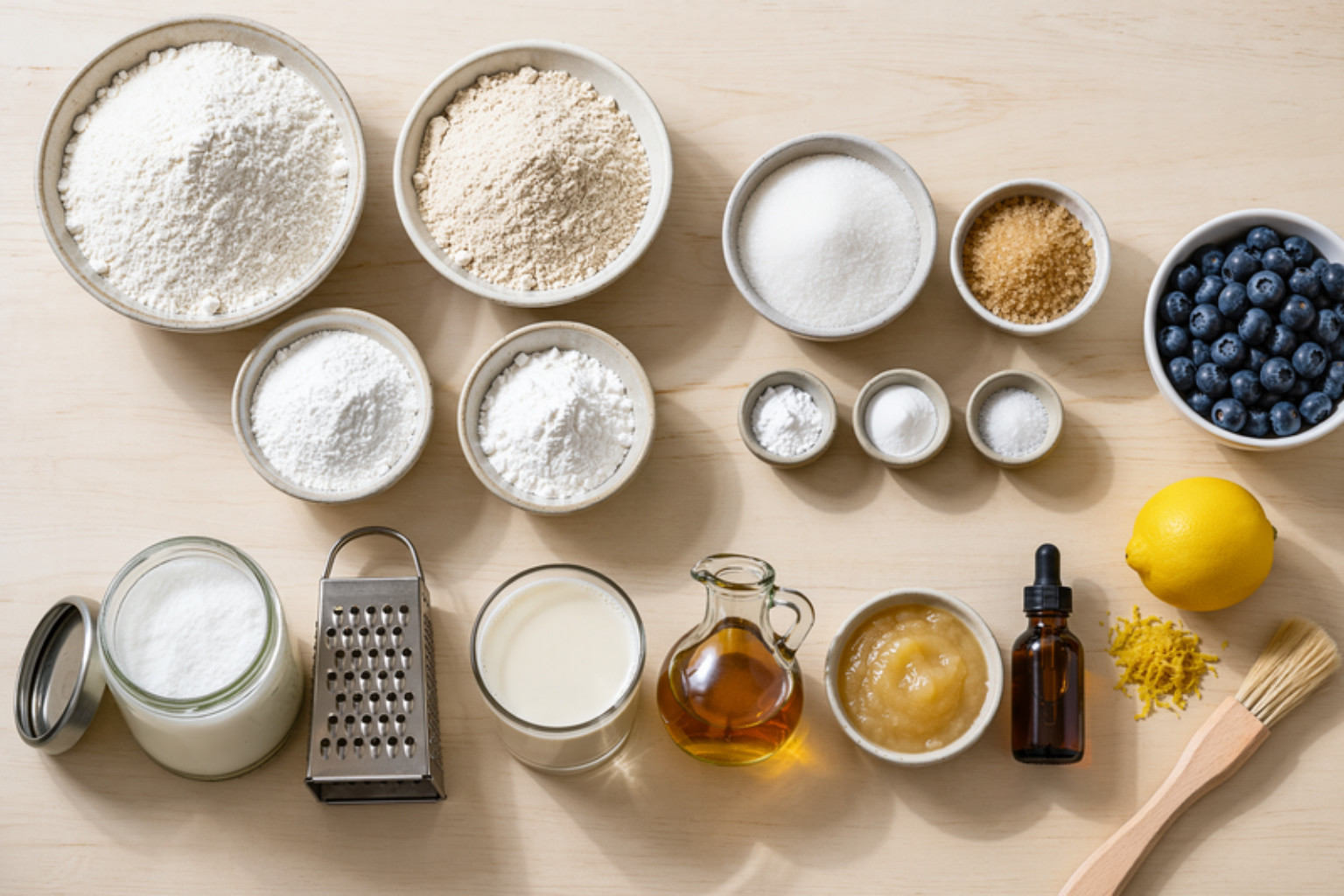
- Structure without wheat or egg: rice flour gives the scone its body, oat flour adds a wheaty flavor and softness, sweet rice flour makes the dough slightly sticky so it holds together, and cornstarch keeps the crumb light. Applesauce adds moisture and a little binding.
If you like the same flour system in a softer format, the Blueberry Muffins (No Eggs, Milk or Wheat) use a similar blend with olive oil.
Ingredients and Swap Ideas
- White rice flour (1 cup / 160 g): finely ground works best; coarse rice flour can feel gritty.
- Oat flour (3/4 cup / 75 g): choose certified gluten-free oats, since regular oats can pick up wheat or barley. You can grind GF rolled oats in a blender.
- Sweet rice flour (1/4 cup / 40 g) and cornstarch (1/2 cup / 60 g): potato starch can replace the cornstarch one for one.
- Refined coconut oil (1/2 cup / 100 g), chilled solid: if you avoid coconut, cold leaf lard grated the same way is the closest swap. Light-tasting olive oil (1/3 cup, stirred into the liquid) also works but makes a softer, more cake-like scone. (“Light” olive oil means refined and mild in flavor, not lower in calories.) Skip plant butters and shortening, which are usually made with seed oils.
- Oat milk (2/3 cup / 160 ml), cold: pick one with no added oil, since many brands contain canola or sunflower oil. Plain water works too; the scones are a little less tender and less golden.
- Blueberries (1 cup / 150 g): fresh, or frozen straight from the freezer. Thawed berries bleed and turn the dough purple.
- Baking powder, vanilla, powdered sugar and coarse sugar: check labels; some baking powders use wheat starch and some powdered sugars use tapioca starch.
Kitchen Equipment
A large mixing bowl, a box grater (or pastry blender), a rimmed baking sheet lined with parchment, a bench scraper or sharp knife for cutting wedges, and a pastry brush. An oven thermometer helps, since scones depend on a hot oven (400°F / 200°C).
Step-by-Step Tips
- Keep everything cold. Chill the coconut oil until firm (at least 30 minutes in the fridge or 10 in the freezer) and use cold oat milk. Warm fat smears into the flour and you lose the flaky texture.
- Grate, don’t melt. Grating the oil straight into the flour is the fastest way to get even, pea-sized pieces without warming it with your hands.
- Fold berries in before the liquid. Coating them in the flour mixture first keeps them from sinking and limits streaking.
- Stop mixing early. The dough should look shaggy and feel a bit sticky. Pat it into a round on the baking sheet itself so you don’t have to move cut wedges.
- Chill, then bake hot. Fifteen minutes in the fridge firms the fat again. Bake until the tops are deep golden and a wedge springs back when pressed in the center.
Dairy-Free Blueberry Scones, No Eggs
Ingredients
Equipment
Method
- Stir the apple cider vinegar into the cold oat milk and set it aside for 5 minutes; it will thicken slightly. Whisk in the applesauce and vanilla, then refrigerate until needed.
- Line a rimmed baking sheet with parchment. In a large bowl, whisk the rice flour, oat flour, sweet rice flour, cornstarch, sugar, baking powder, baking soda, salt and lemon zest until evenly combined.
- Grate the chilled coconut oil on the large holes of a box grater straight into the flour (or cut it in with a pastry blender). Toss with your fingertips until the mixture looks like coarse crumbs with some pea-sized pieces of fat still visible. Work quickly so the fat stays firm.
- Gently fold in the blueberries. Pour in the oat milk mixture and stir with a spatula just until a shaggy, slightly sticky dough forms and no dry flour remains at the bottom of the bowl. Do not knead.
- Turn the dough onto the lined baking sheet and pat it into a 7-inch (18 cm) round about 1 inch (2.5 cm) thick, using lightly floured (rice flour) hands. Cut into 8 wedges with a bench scraper and pull them about 2 inches (5 cm) apart.
- Chill the wedges on the pan for 15 minutes while the oven heats to 400°F (200°C). This firms the coconut oil so the scones rise tall instead of spreading.
- Brush the tops with oat milk and sprinkle with coarse sugar. Bake 20 to 24 minutes, until the tops are deep golden, the edges are browned, and a wedge feels set and springs back when pressed in the center. Some berries will burst at the edges.
- Cool on the pan 10 minutes; the scones firm up as they cool. For the glaze, whisk the powdered sugar with enough lemon juice to make a thick, pourable glaze and drizzle over the cooled scones.
Notes
Troubleshooting
- Scones spread flat: the fat was too warm. Chill the cut wedges longer (up to 30 minutes) and make sure the oven is fully preheated.
- Dough too sticky to shape: rice flours absorb liquid slowly. Let the dough rest 5 minutes, then pat it out with hands dusted in rice flour. If it’s still very wet, add 1 to 2 tablespoons more oat flour.
- Gummy centers: they likely needed a few more minutes. Rice-flour bakes look done before they are; go by the deep golden color and the springy center, and let them cool 10 minutes before cutting.
- Dry or crumbly scones: measure flours by weight if you can. Packed cups of rice flour add up fast.
Storage, Freezing and Reheating
Like most scones, these are best the day they’re baked. Store unglazed scones airtight at room temperature for up to 2 days and refresh them in a 350°F (175°C) oven for about 5 minutes. To freeze, wrap baked, unglazed scones and freeze up to 2 months; reheat from frozen at 350°F for 10 to 12 minutes. You can also freeze the unbaked wedges on a tray, bag them, and bake straight from frozen, adding 4 to 6 minutes. Glaze after reheating.
More Breakfast Baking
For a fall version with the same scone method, try the Pumpkin Scones with Maple Glaze. If you’d rather have something savory, the Biscuits Without Milk use a similar cold-fat technique with lard. Browse more ideas in our breakfast recipes.
FAQ
Can you make scones without butter?
Yes. Any fat that stays solid when cold can create the small pockets that make scones flaky. Here that’s chilled refined coconut oil; cold lard works the same way. Liquid oils make scones too, but the texture is softer and more cake-like.
How do you make scones without eggs?
Scones need very little egg to begin with. Soured oat milk, applesauce, and a little sweet rice flour handle the moisture and binding, and baking powder plus baking soda give the lift. No commercial egg replacer is needed.
Can I use frozen blueberries in scones?
Yes, and they’re often easier to work with. Add them straight from the freezer, fold them in gently, and expect 1 to 3 extra minutes of baking.
Can I make these scones ahead?
Shape and cut the wedges the night before, cover the pan, and refrigerate. Bake in the morning straight from the fridge, or freeze the wedges for longer storage and bake from frozen.
A note before you cook: These recipes are ideas and suggestions, not medical or dietary advice. As with any recipe or ingredient, it is each reader’s responsibility to confirm what they can and cannot eat, read every ingredient label, and source quality ingredients that fit their own needs. Ingredient formulations change, so always check the package you’re using.
Leave a Reply