
If you’ve searched for edible cookie dough without butter and found recipes that swap in a tub of plant butter, or still lean on milk and wheat flour, this one takes a different route. It’s the spoonable, brown-sugary dough people sneak from the mixing bowl, made to be eaten as-is: no eggs, no butter, and no baking.
The base is certified gluten-free oat flour, heat-treated in the oven or microwave until it reaches 165°F, then creamed into refined coconut oil and brown sugar so the dough has that familiar sandy-soft texture and caramel-vanilla flavor. A spoonful or two of oat milk brings it together, and dairy-free mini chocolate chips finish it. It’s a small batch, about 1 1/2 cups, ready in roughly 30 minutes, and it keeps in the fridge for a week of after-school snacks.
Made without: peanuts, tree nuts, milk, eggs, wheat, soy, fish, shellfish, sesame. Contains coconut (light-tasting olive oil option below).
Why You’ll Love This Recipe
- It tastes like the real thing: brown sugar, vanilla, a pinch of salt, and chocolate in every bite.
- No butter, plant butter, eggs, or egg replacer.
- Eight pantry ingredients and one bowl.
- Made without peanuts and tree nuts, so it fits lunchbox and snack rotations at home.
- Scoops and freezes into ready-to-eat bites.
How Edible Cookie Dough Works Without Butter or Eggs
In a baked cookie, eggs bind and lift the dough and butter melts into crisp edges. Edible cookie dough never sees the oven, so neither job matters here. What you need instead is a fat that’s firm at room temperature, so the dough holds a scoop, and enough sugar and liquid to make it soft.
Refined coconut oil does what butter does in no-bake dough: it’s solid at cool room temperature, creams with sugar into a fluffy paste, and tastes neutral (refined, not virgin, so there’s no coconut flavor). Oat flour is soft and naturally a little sweet, so it reads as “cookie” rather than gritty, which rice flour can do when it isn’t baked. Because raw flour isn’t meant to be eaten as-is, the recipe heats the flour to 165°F first and checks it with a thermometer. There’s no baking soda or baking powder, since nothing needs to rise.
Ingredients & Swap Ideas
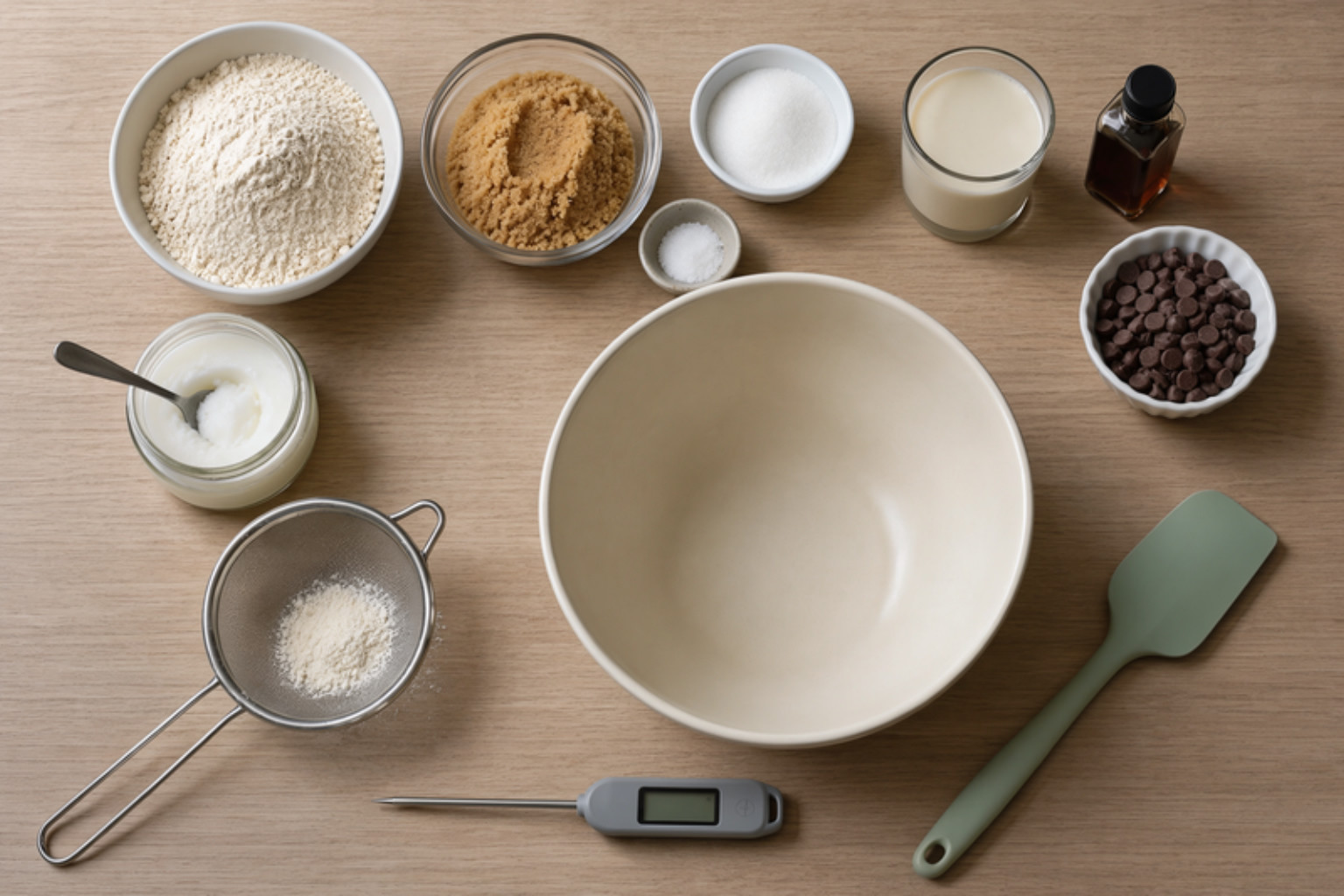
- Certified gluten-free oat flour (1 cup / 100 g): choose certified gluten-free to limit barley and wheat cross-contact. You can grind certified GF rolled oats in a blender until powdery, then measure.
- Refined coconut oil (1/3 cup / 70 g): soft and scoopable, like room-temperature butter. If it’s liquid, chill it 10 to 15 minutes first. If you avoid coconut, use 1/4 cup (55 g) light-tasting olive oil; “light” means refined and mild in flavor, not fewer calories. The dough will be softer and spoonable, so chill it 20 minutes. Skip margarine, plant butters, and shortening, which are usually made with seed oils.
- Light brown sugar (1/2 cup / 100 g) and granulated sugar (2 tbsp / 25 g): dark brown sugar works for a deeper molasses flavor.
- Vanilla extract and fine salt: don’t skip the salt; it’s what makes it taste like cookie dough instead of frosting.
- Oat milk with no added oil, or water (2 to 3 tbsp): many oat milks contain canola or sunflower oil, so check the label. Water works fine.
- Dairy-free mini chocolate chips (1/3 cup / 60 g): label check for milk, soy lecithin, nuts, and added oils. Swaps: raisins, chopped dried cranberries, or a tablespoon of rainbow sprinkles (sprinkles also need a label check).
Kitchen Equipment
- Rimmed baking sheet and parchment, or a microwave-safe bowl
- Instant-read thermometer (for the flour)
- Fine-mesh sieve
- Mixing bowl with a sturdy spatula, or a hand mixer
Step-by-Step Tips
- Heat-treat the flour. Bake it on parchment at 350°F for 5 to 6 minutes, stirring halfway, or microwave it in 30-second bursts. Check several spots: it’s ready at 165°F. It should smell faintly toasty, not brown.
- Cool it all the way. Warm flour melts coconut oil and chocolate. Sift it after cooling; heat-treated flour clumps.
- Cream the fat and sugars. One to two minutes of beating, until it looks like damp, fluffy sand that holds together when pressed.
- Add liquid slowly. One tablespoon at a time. Stop as soon as the dough comes together; too much makes it pasty.
- Fold in the chips and eat with a spoon, or chill 10 minutes for neat scoops.
Edible Cookie Dough Without Butter or Eggs
Ingredients
Equipment
Method
- Heat-treat the flour (oven): heat the oven to 350°F (175°C). Spread the oat flour on a parchment-lined rimmed baking sheet and bake 4 minutes, stir, then bake 1 to 2 minutes more until an instant-read thermometer pushed into the center of the pile reads 165°F (74°C). It should smell lightly toasty but not darken.
- Heat-treat the flour (microwave option): microwave the flour in a microwave-safe bowl in 30-second bursts, stirring well between each, until it reads 165°F (74°C) in several spots, usually 1 1/2 to 2 minutes total.
- Cool the flour completely, about 15 minutes, then press it through a fine-mesh sieve to break up clumps. Warm flour will melt the coconut oil and the chips.
- In a mixing bowl, beat the softened coconut oil, brown sugar, and granulated sugar with a sturdy spatula or hand mixer for 1 to 2 minutes, until the mixture looks like damp, fluffy sand and holds together when pressed.
- Beat in the vanilla and salt. Add the cooled flour and stir until crumbly.
- Add the oat milk or water 1 tablespoon at a time, stirring after each, until the dough comes together into a soft, scoopable dough that looks like classic cookie dough. Stop as soon as it holds together; extra liquid makes it pasty.
- Fold in the mini chocolate chips. Eat right away with a spoon, or chill 10 minutes for a firmer, scoopable dough. This dough is for eating as-is, not for baking.
Notes
Troubleshooting
- Greasy or separated dough: the coconut oil was too warm or the flour wasn’t cool. Chill the bowl 10 minutes and stir again.
- Too crumbly: add oat milk or water 1 teaspoon at a time.
- Rock-hard from the fridge: coconut oil firms up when cold. Let it sit 10 minutes at room temperature.
- Tastes floury: the flour may not have been toasted quite enough, or it needs another pinch of salt and a splash more vanilla.
Storage, Freezing & Serving
Keep the dough in an airtight container in the refrigerator for up to 5 days. To freeze, scoop tablespoon-size balls onto a parchment-lined plate, freeze until firm, then bag them for up to 2 months; they’re good straight from the freezer or after 10 minutes on the counter. Pack a few in a small container with an ice pack for lunches, or roll them in extra mini chips for party bites. This dough is made for eating as-is, so it isn’t meant to be baked into cookies.
Want a baked cookie? Try our chocolate chip cookies made without eggs or butter. For more no-bake snacks, there are no-bake chocolate oatmeal cookies without peanut butter and date oat energy bites with no nut butter, or browse every lunchbox recipe.
FAQ
Can you make edible cookie dough without butter?
Yes. Butter’s job in no-bake dough is to be a soft, creamy fat, and refined coconut oil does the same thing. Light-tasting olive oil also works if you avoid coconut, with a softer, spoonable result.
What can I use instead of butter in edible cookie dough?
This recipe uses 1/3 cup (70 g) refined coconut oil, softened until it’s scoopable like room-temperature butter but not melted. It creams with the brown sugar into the same sandy-soft dough, and because it’s refined, it has no coconut flavor.
Can I make it without coconut oil?
Yes. Use 1/4 cup (55 g) light-tasting olive oil instead. The dough will be softer and spoonable rather than scoopable, so chill it for about 20 minutes before serving.
Why do you heat-treat the flour?
Flour is a raw ingredient that’s normally cooked before eating. Heating it to 165°F, checked with a thermometer, is the standard step for dough that won’t be baked. It also gives the oat flour a light toasty flavor.
Can I bake this cookie dough?
Not as written. There’s no leavening and no binder, so it spreads into a greasy puddle in the oven. Use a recipe built for baking instead.
Can I make it oat-free?
You can heat-treat superfine white rice flour the same way, but the dough will be slightly grainy because rice flour stays coarse unless it’s baked. Add an extra teaspoon of liquid if it seems dry.
A note before you cook: These recipes are ideas and suggestions, not medical or dietary advice. As with any recipe or ingredient, it is each reader’s responsibility to confirm what they can and cannot eat, read every ingredient label, and source quality ingredients that fit their own needs. Ingredient formulations change, so always check the package you’re using.
Leave a Reply