
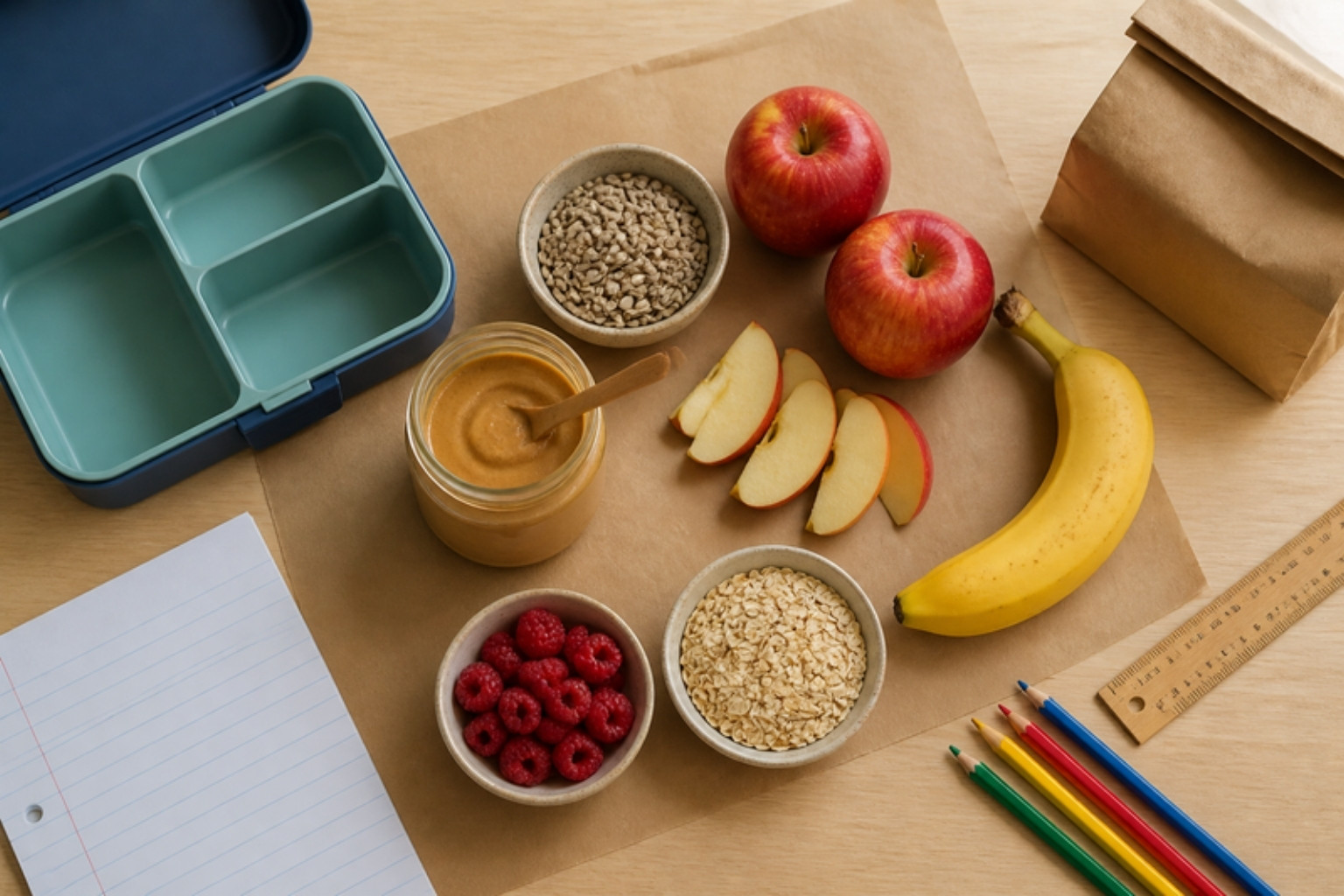
Peanut butter has carried a lot of lunchboxes. So when a school goes nut-free, the hardest part isn’t usually the rule itself. It’s figuring out what goes on the bread on Tuesday morning, what happens to the cookie recipe everyone likes, and why the “easy” swap tastes a little different. Sunflower seed butter is the swap most families reach for first, and with a few small adjustments it works well in sandwiches, snacks and baking.
This guide is part of our nut-free school snacks and lunches hub, where you’ll find more lunchbox ideas, party treats and snack recipes made without peanuts and tree nuts.
Before you pack: every school sets its own policy, and some treat seed butters differently from others. Always follow your own school’s rules and read every ingredient label, every time you buy.
What Sunflower Butter Is (and How It Differs From Peanut Butter)
Sunflower seed butter is roasted sunflower seeds ground into a spread, the same way peanut butter is ground from peanuts. It spreads about the same and fills the same spot in a sandwich, but it isn’t an exact copy:
- Flavor: earthier and a little more savory, with a faint bitter edge in unsweetened jars. Many kids notice the difference for a week or two, then stop noticing.
- Texture: often slightly looser and oilier. Natural jars separate, so stir well (or store the jar upside down for a day before opening).
- Sweetness: many jars have added sugar to round out the flavor. Unsweetened versions work best for baking, where you control the sugar.
- Ingredients vary a lot: some jars are just sunflower seeds and salt; others add sugar, added oils or other ingredients. On this site we pick jars whose ingredient list is simply sunflower seeds (and salt), with no added oil.
Sandwich Swaps: Easy Wins for the Lunchbox
For spreading, sunflower butter swaps 1:1 for peanut butter. A few ideas that keep lunch familiar:
- The classic, swapped: sunflower butter and jam on the bread your family already uses. Spread a thin layer of sunflower butter on both slices, then add the jam in the middle so the bread doesn’t go soggy by lunchtime.
- Cracker stacks: sunflower butter on homemade rosemary and sea salt crackers, packed separately so kids assemble them at the table.
- Apple “sandwiches”: two apple rings with a little sunflower butter between them. A squeeze of lemon juice keeps the apple from browning.
- Roll-ups: sunflower butter and sliced banana rolled in a tortilla, then cut into pinwheels.
- Dip cup: a small container of sunflower butter with apple slices, pear slices or celery sticks.
One practical note: sunflower butter looks a lot like peanut butter. Some schools ask families to label seed-butter sandwiches, and some ask families not to send them at all so staff aren’t left guessing. If your school has a rule about this, it overrides any idea on this page. For a full week of lunch and snack combinations, see what to pack when your school goes nut-free.
Baking With Sunflower Butter Instead of Peanut Butter
In most cookies, bars, muffins and no-bake bites, you can swap sunflower butter for peanut butter cup for cup. Three things are worth knowing before you start.
1. Why your cookies might turn green
Sunflower seeds contain a natural compound called chlorogenic acid. When it meets an alkaline batter (baking soda is the usual cause) and sits in a warm oven or overnight, it can turn green, especially in the center of cookies or muffins. Food scientists have documented this color change in sunflower butter baked goods. It’s a color reaction, not a sign that something went bad, but it can surprise kids at lunch.
To keep the color golden, try one or both of these:
- Reduce the baking soda by about a third to a half (if the recipe also has baking powder, it will still rise).
- Add an acid: about 1 teaspoon of lemon juice or apple cider vinegar per cup of sunflower butter.
2. Watch the sugar and salt
If your sunflower butter is sweetened and your recipe was written for unsweetened peanut butter, cut the recipe’s sugar by a tablespoon or two. Taste the jar first: some are saltier than peanut butter, so you may want to leave out a pinch of the recipe’s salt.
3. Expect a slightly softer dough
Because sunflower butter tends to be looser, cookie dough can spread more. Chill the dough for 20 to 30 minutes before scooping, or add an extra tablespoon of flour or oats.
If you’d rather skip seed butter in baking altogether, plenty of lunchbox bakes never needed peanut butter in the first place: oatmeal raisin cookies, apple cinnamon muffins and date oat energy bites made with no nut butter all pack well. The energy bites are a good place to experiment, too: stir in a spoonful of sunflower butter if you like the flavor.
Other Peanut Butter Substitutes, Compared
Sunflower butter isn’t the only option. Here is how the common alternatives line up, described by what they’re made from:
| Spread | Made from | Good to know |
|---|---|---|
| Sunflower seed butter | Sunflower seeds | Closest swap for sandwiches and baking; can turn green with baking soda. |
| Pumpkin seed butter | Pumpkin seeds (pepitas) | Milder, naturally green-tinted; good on crackers and in no-bake bites. |
| Tahini | Sesame seeds | Sesame is one of the nine major food allergens in the U.S., so it isn’t an option for many families. |
| Soy nut butter | Roasted soybeans | Soy is also one of the nine major food allergens. |
| Coconut butter | Coconut flesh | Very different texture (firm at room temperature); schools differ on coconut, so check your policy. |
Whichever spread you choose, read the full label for what it contains and any statement about how it was made, and if something is unclear, contact the manufacturer. Formulations change, so check each new jar.
Making Sunflower Seed Butter at Home
If you’d like full control over what’s in the jar, homemade sunflower butter needs only seeds and a food processor. Toast 3 cups of raw, hulled sunflower seeds on a sheet pan at 350°F (175°C) for 8 to 10 minutes, until lightly golden and fragrant. Let them cool for a few minutes, then process for 10 to 15 minutes, scraping down the bowl often. The seeds go from crumbs to a thick paste to a smooth, spreadable butter; no added oil is needed if you’re patient. Add a pinch of salt and, if you like, a teaspoon of maple syrup at the end. Store it in a jar in the refrigerator for up to a month.
Frequently Asked Questions
Can I substitute sunflower butter for peanut butter 1:1?
Yes, for spreading and in most recipes. In baking, reduce the baking soda or add a little lemon juice to prevent green spots, and adjust the sugar if your jar is sweetened.
Why did my sunflower butter muffins turn green inside?
Chlorogenic acid in sunflower seeds reacts with alkaline ingredients like baking soda and turns green. It’s a natural color change. Less baking soda or a splash of acid keeps the color golden.
Is sunflower butter allowed at nut-free schools?
It depends on the school. Many nut-free policies focus on peanuts and tree nuts, but some schools ask families to label seed-butter sandwiches or leave them at home because they look like peanut butter. Check your own school’s written policy or ask the office.
How do I get my kids to like sunflower butter?
Start with a sweetened jar or pair it with jam, banana or apple, which smooth out the earthier flavor. Mixing a spoonful into oatmeal or energy bites is another gentle introduction.
The Bottom Line
Losing peanut butter feels like a big change, but most of what it did in your kitchen, sunflower seed butter can do too, with a lighter hand on the baking soda and a little patience while taste buds adjust. When you’re ready for more lunchbox and snack ideas, head back to the nut-free school snacks and lunches hub. And as always, follow your school’s policy and read every ingredient label.
A note before you cook: These recipes are ideas and suggestions, not medical or dietary advice. As with any recipe or ingredient, it is each reader’s responsibility to confirm what they can and cannot eat, read every ingredient label, and source quality ingredients that fit their own needs. Ingredient formulations change, so always check the package you’re using.
Leave a Reply