
No Italian-American Christmas cookie tray is complete without a pile of soft lemon cookies glazed in white icing and showered with rainbow nonpareils. They go by many names: anginetti, lemon drop cookies, or just “the Italian Christmas cookies.” Traditional recipes lean on several eggs plus butter or milk and all-purpose flour, which leaves allergy families looking at the tray from a distance. This version keeps the soft, cakey dome, the bright lemon glaze, and the sprinkles, and builds the dough without eggs, dairy, or wheat.
White rice flour, oat flour, and cornstarch replace the wheat. Applesauce and light-tasting olive oil bring the moisture and tenderness that eggs and butter usually provide, and baking powder with a little baking soda and lemon juice gives the cookies their puffy lift. They’re made without peanuts, tree nuts, milk, eggs, wheat, soy, fish, shellfish, and sesame.
Made without: peanuts, tree nuts, milk, eggs, wheat, soy, fish, shellfish, sesame.
Why You’ll Love These Italian Christmas Cookies
- Soft and cakey, with a bright lemon flavor in both the cookie and the glaze.
- Festive with almost no effort: a quick dip and a pinch of sprinkles.
- Olive oil dough with no butter to soften and no mixer needed.
- Freezer-friendly for cookie exchanges and holiday trays.
How It Works Without Eggs, Butter, or Wheat
In the classic recipe, eggs do three things: they bind the dough, add moisture, and help the cookies puff into soft domes. Here those jobs are split up. Applesauce adds moisture and some binding from its natural pectin. A 20-minute rest lets the rice flour absorb liquid so the dough firms up and rolls into smooth balls instead of spreading. For lift, baking powder starts working as soon as it’s wet and again in the oven, while a quarter teaspoon of baking soda reacts with the lemon juice and applesauce for extra puff and a tender crumb.
Olive oil is a natural fit, since many Italian cookies have always been made with it. Light-tasting olive oil keeps the flavor clean so the lemon stands out. Rubbing the lemon zest into the sugar first releases its oils, so the cookie tastes like lemon even before the glaze goes on.
Ingredients & Swap Ideas
- Light-tasting olive oil: “light” means refined and mild in flavor, not fewer calories. Melted refined coconut oil works too (contains coconut).
- Anise: many Italian families flavor these with anise instead of, or along with, lemon. Anise comes from a seed, so it’s optional here.
- Orange version: swap the lemon zest and juice for orange in both the dough and the glaze.
- Sprinkles: nonpareils can contain milk, soy lecithin, or seed oils, so check the label. Colored sanding sugar is an easy alternative.
- Oat flour and oat milk: choose certified gluten-free oat flour and oat milk with no added oil.
Kitchen Equipment
Two baking sheets lined with parchment, two mixing bowls, a whisk, a microplane, a 1-tablespoon cookie scoop if you have one, and a wire rack for glazing. Bake at 350°F (175°C).
Step-by-Step Tips
- Don’t skip the rest. The dough is soft at first and firms up as the flour hydrates.
- Roll smooth balls. Cracks on the dough show up as cracks on the baked cookie. Lightly oiled palms help.
- Bake until pale and springy. These should stay white on top, with just-golden bottoms.
- Glaze completely cooled cookies, or the glaze will melt and run off.
- Sprinkle immediately after dipping; the glaze crusts within a few minutes.
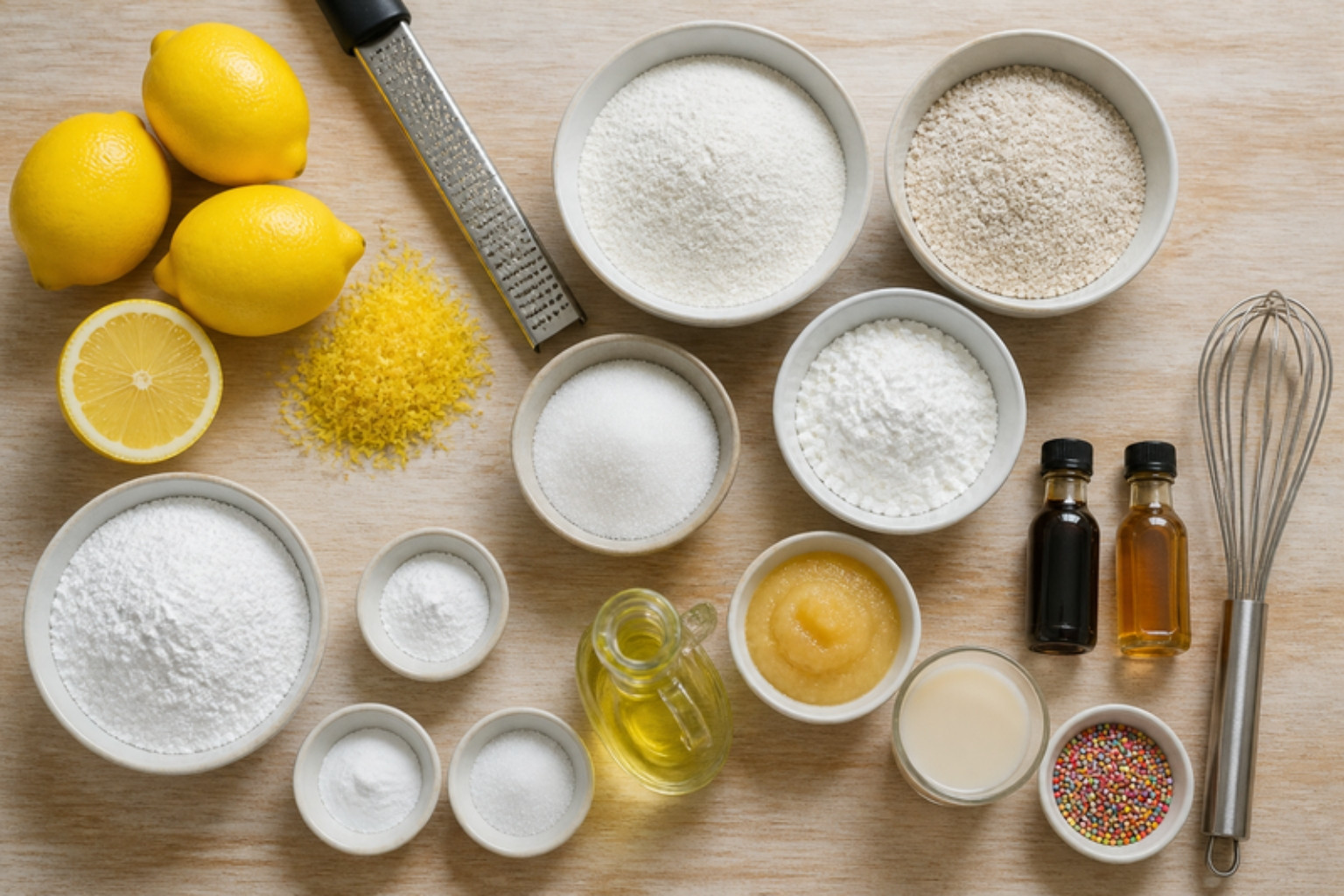
Italian Christmas Cookies (Lemon Anginetti), No Eggs, Dairy-Free
Ingredients
Equipment
Method
- Whisk the rice flour, oat flour, cornstarch, baking powder, baking soda, and salt in a medium bowl.
- In a large bowl, rub the sugar and lemon zest together with your fingertips until fragrant and damp. Whisk in the olive oil, applesauce, oat milk, lemon juice, vanilla, and anise (if using) until smooth.
- Stir the dry ingredients into the wet until a soft, smooth dough forms with no dry streaks. Cover and let it rest 20 minutes so the rice flour hydrates. It should firm up enough to roll into balls without sticking; if it is still tacky, chill 10 minutes.
- Heat the oven to 350°F (175°C) and line two baking sheets with parchment.
- Scoop level tablespoons of dough (about 20 g each), roll into smooth balls between lightly oiled palms, and place 2 inches apart.
- Bake one sheet at a time for 11 to 13 minutes, until the cookies are puffed and dome-shaped, the tops are pale and spring back when touched, and the bottoms are light golden. Don’t let the tops brown.
- Cool 5 minutes on the sheet, then move to a rack and cool completely.
- Whisk the powdered sugar, 2 tablespoons lemon juice, and vanilla until smooth and thick like honey. Add more lemon juice a few drops at a time if needed.
- Dip the top of each cookie in the glaze, let the excess drip off, and set it back on the rack. Sprinkle with nonpareils right away, before the glaze sets.
- Let the glaze set until dry to the touch, about 30 minutes, before stacking.
Notes
Troubleshooting
- Cookies spread flat: the dough was too soft. Chill it 10 to 15 minutes and check that your baking powder is fresh.
- Cookies are dry or crumbly: they baked too long. Pull them as soon as the tops spring back.
- Glaze is see-through: it’s too thin. Whisk in more powdered sugar a spoonful at a time.
- Sprinkle colors bled: nonpareils bleed in damp glaze over time. Add them right before the glaze sets and store the cookies uncovered until dry.
Make-Ahead, Freezing & Gifting
Glazed cookies keep in an airtight tin at room temperature for up to 5 days. Stack them with parchment between layers once the glaze is fully dry. For the best texture, freeze the cookies unglazed for up to 2 months, then thaw at room temperature and glaze the day you serve or gift them. They’re sturdy enough for cookie-exchange boxes; pack them on top of crisp cookies so the glaze doesn’t scuff, and keep them away from strongly spiced cookies, which can flavor the lemon.
More Christmas Cookies
Browse the whole cookie aisle on our Christmas recipes page. For more citrus on the tray, try the lemon crinkle cookies, and for another old-world classic, bake the folded jam kolaczki or anise-scented biscochitos.
FAQ
What are anginetti?
Anginetti are soft Italian cookies, usually flavored with lemon or anise, topped with a sugar glaze and sprinkles. They’re served at Christmas, weddings, and Easter, and are sometimes shaped into knots.
Can I shape them into knots?
This dough is softer than a wheat dough and tends to crack when tied, so smooth balls work best. For a twist, roll 4-inch ropes and coil them into small spirals instead.
Do Italian Christmas cookies usually have eggs?
Most traditional versions use several eggs, plus butter or milk. Many Italian cookies, like pizzelle and amaretti, also depend on eggs or almonds, so it’s worth asking about ingredients on a shared tray.
How do I keep the glaze white?
Use clear vanilla or leave the vanilla out of the glaze, and strain the lemon juice so no pulp tints it.
A note before you cook: These recipes are ideas and suggestions, not medical or dietary advice. As with any recipe or ingredient, it is each reader’s responsibility to confirm what they can and cannot eat, read every ingredient label, and source quality ingredients that fit their own needs. Ingredient formulations change, so always check the package you’re using.
Leave a Reply