
If you’ve searched for a pie crust without butter and found recipes that swap in shortening, margarine, or a “vegan butter” stick, you already know the problem: most of those fats are made from seed oils, and many store-bought crusts add milk, egg wash, or soy on top of the wheat. This is the crust to keep in your back pocket for Thanksgiving and Christmas. It uses cold lard, the fat bakers relied on long before butter crusts became the default, and a mix of rice flour, oat flour, sweet rice flour, and cornstarch in place of wheat.
The result is a crust with crisp, flaky layers and a mild, savory-sweet flavor that works under pumpkin, apple, cherry, or a cream filling. One batch makes a double crust or two single crusts for 9-inch pies, and the blind-baking steps are written out so you can use it for any pie on the table. It’s made without peanuts, tree nuts, milk, eggs, wheat, soy, fish, shellfish, and sesame.
Made without: peanuts, tree nuts, milk, eggs, wheat, soy, fish, shellfish, sesame.
Why You’ll Love This Pie Crust
- Flaky without butter: cold lard creates the same pockets of steam that make a butter crust flake.
- No egg wash or egg in the dough, and no commercial egg replacer.
- Rolls between parchment, so there’s no sticky counter and no extra flour to dry it out.
- Make-ahead and freezer-friendly: freeze the discs or shaped crusts weeks before the holidays.
- One crust for every pie, from double-crust apple to a blind-baked shell for chocolate or coconut cream.
How It Works Without Butter, Eggs, or Wheat
Flakiness comes from solid fat, not from butter itself. When small, flat pieces of cold fat are rolled into the dough, they separate thin sheets of flour. In the hot oven, the water in the dough turns to steam and pushes those sheets apart, leaving layers. Lard is especially good at this because it stays solid over a wide temperature range and has larger fat crystals, which is why old-fashioned lard crusts have a reputation for being both flaky and tender. Liquid oils, olive oil included, coat the flour instead of forming layers, so they make a crumbly, press-in style crust rather than a rolled one.
Without wheat, there’s no gluten to hold the dough together, so the flour blend divides the work. White rice flour gives structure and crispness. Oat flour adds flavor and a little tenderness. Sweet rice flour (made from glutinous rice, which contains no gluten despite the name) turns slightly sticky when wet, which helps the dough bend instead of crack. Cornstarch keeps the texture light. A spoonful of vinegar keeps the dough tender and easy to roll. Eggs are never needed: the water and fat bind the dough on their own.
Ingredients & Swap Ideas
- Lard: choose pure rendered lard, kept cold. Leaf lard is the mildest. Some shelf-stable lard is hydrogenated or blended, so check the ingredient list.
- Coconut oil option: cold, solid refined coconut oil works in place of lard (contains coconut). The crust bakes up crisper and slightly less flaky. Light-tasting olive oil won’t work here because it stays liquid.
- Oat flour: use certified gluten-free oat flour to avoid wheat and barley cross-contact. For an oat-free crust, replace it with 3/4 cup (120 g) more white rice flour and expect a crisper, more delicate dough.
- Sugar: leave it out for pot pies, quiche-style fillings, or meat pies.
- Skip: shortening, margarine, plant butters, and cooking spray, which are usually made with seed oils.
Kitchen Equipment
A large bowl, a pastry cutter or fork, a rolling pin, parchment paper, and a 9-inch glass or metal pie plate. For blind baking, you’ll need pie weights or a couple of cups of dried rice and an oven heated to 425°F (220°C).
Step-by-Step Tips
- Keep everything cold. Cut the lard into pieces and chill it for 10 minutes before you start. If the kitchen is warm, chill the flour too.
- Leave some big pieces. Pea-sized bits and a few flat flakes of fat are what make layers. Don’t rub it in until it looks like sand.
- Add water slowly. Stop as soon as a squeezed handful holds together. Too much water makes a tough, shrinking crust.
- Roll between parchment. Turn the parchment a quarter turn after each few rolls to keep the circle even. Small edge cracks press right back together.
- Freeze before blind baking. Fifteen minutes in the freezer helps the sides hold their shape.
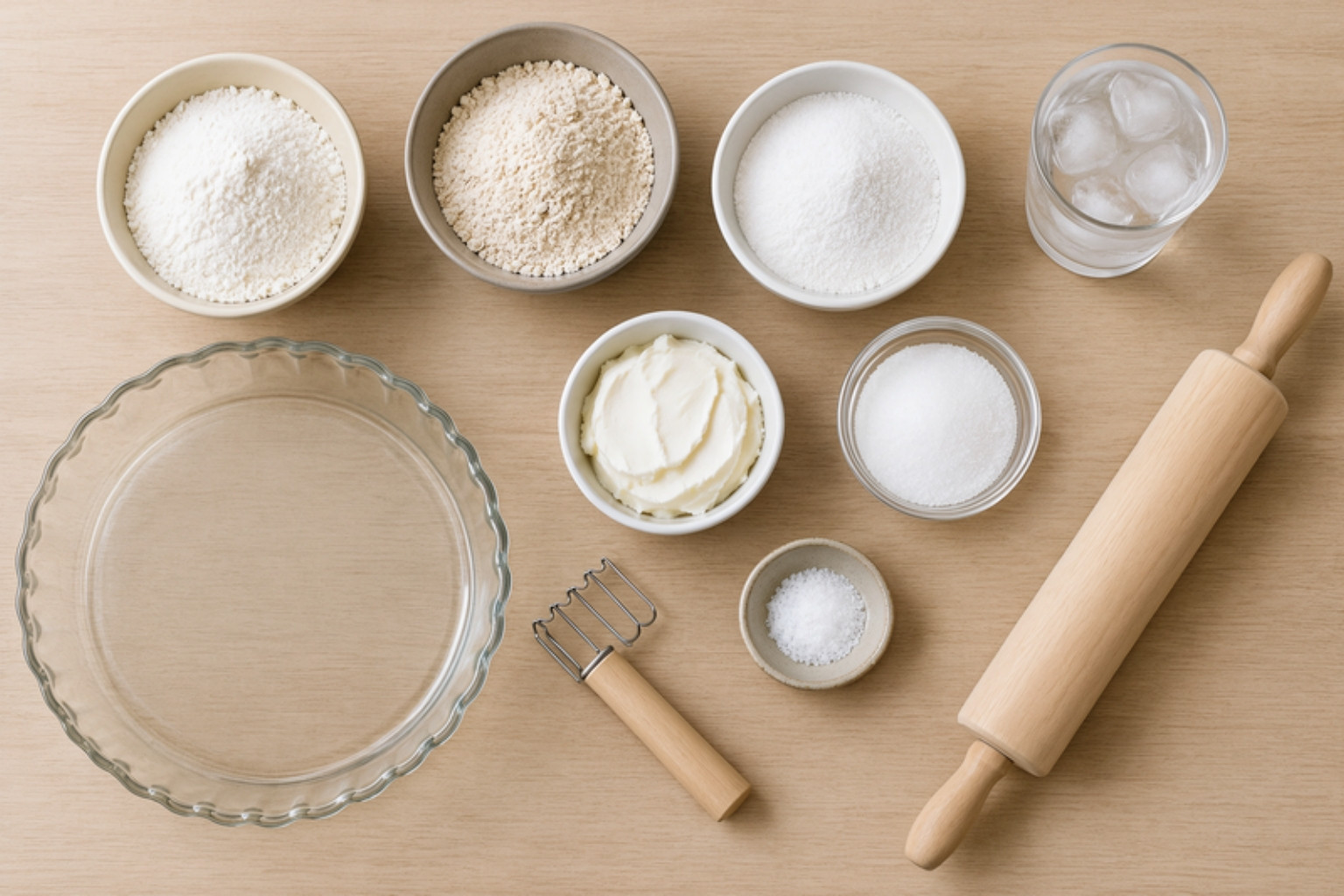
Pie Crust Without Butter (Flaky Lard Crust), No Eggs or Wheat
Ingredients
Equipment
Method
- Whisk the rice flour, oat flour, sweet rice flour, cornstarch, sugar, and salt in a large bowl.
- Scatter the cold lard over the flour. Cut it in with a pastry cutter or fork until most pieces are the size of small peas, with a few flat, cornflake-sized flakes. Work quickly so the fat stays cold.
- Stir the vinegar into 6 tablespoons of the ice water. Drizzle it over the flour mixture and toss with a fork. Add more ice water a teaspoon at a time just until a handful holds together when squeezed. The dough should feel like soft play dough: smooth, not sticky, and not crumbly at the edges.
- Divide the dough in half (make one piece slightly larger for a double-crust pie). Flatten each into a 1-inch-thick disc, wrap, and chill 30 minutes, or up to 2 days.
- Let a chilled disc sit 5 minutes if it is very firm. Roll it between two sheets of parchment into an 11-inch circle about 1/8 inch thick, turning the parchment as you go.
- Peel off the top sheet, flip the dough into the pie plate, and peel off the second sheet. Ease the dough into the corners without stretching it. Press any cracks together with your fingertips.
- Trim the overhang to 1/2 inch, fold it under, and crimp. For a double-crust pie, fill the bottom crust, roll the second disc the same way, lay it over the filling or cut strips for a lattice, then trim, seal, and crimp. Bake as your pie recipe directs.
- Freeze the shaped crust 15 minutes. Heat the oven to 425°F (220°C) with a rack in the lower third.
- Line the crust with parchment and fill it to the rim with pie weights or dried rice. Bake 15 minutes, until the edges look dry and are just starting to color.
- Lift out the parchment and weights. For a partly baked crust (custard, pumpkin, or oatmeal pies), bake 5 minutes more, until the bottom looks dry and matte. For a fully baked crust (cream pies), bake 10 to 14 minutes more, until the whole crust is evenly golden and the bottom no longer looks pale or shiny. Cool on a rack.
Notes
Troubleshooting
- Dough cracks when you lift it: it’s too cold or a little dry. Let it rest 5 minutes, or knead in a teaspoon of ice water. Flipping it from parchment straight into the plate avoids lifting altogether.
- Dough is sticky: the fat got warm. Chill the rolled dough on its parchment for 10 minutes and try again.
- Soggy bottom: bake the pie in the lower third of the oven on a preheated baking sheet, and partly blind bake the crust for wet fillings like pumpkin.
- Edges brown too fast: cover them with a foil ring or pie shield for the last part of baking.
Make-Ahead, Storage & Freezing
Holiday bakers can do almost all of this ahead. Refrigerate wrapped dough discs for up to 2 days, or freeze them for up to 3 months and thaw overnight in the fridge. You can also roll and shape the crusts in their pie plates, wrap them well, and freeze them for up to 2 months; blind bake straight from the freezer, adding 3 to 5 minutes. A blind-baked shell keeps at room temperature, covered, for 1 day before filling.
Pies to Make With This Crust
Find every pie and dessert for the holiday on our Thanksgiving recipes page. This crust fits right under the pumpkin pie without eggs or milk, the double-crust classic apple pie, and the old-fashioned maple syrup pie.
FAQ
Can you make pie crust without butter?
Yes. Any fat that stays solid when cold can make a flaky rolled crust. Lard is the traditional choice, and cold refined coconut oil also works. Liquid oils make a crumbly press-in crust instead.
Does pie crust usually have eggs?
Many crusts don’t have egg in the dough, but some recipes add an egg yolk for richness, and many pies get an egg wash on top. For a shiny top without egg, brush the crust with oat milk with no added oil and sprinkle with sugar.
Does a lard crust taste like pork?
Pure rendered leaf lard tastes very mild. Lard sold as a cooking fat can have a slightly savory flavor, which most people don’t notice under a sweet filling.
Can I use this crust for savory pies?
Yes. Leave out the sugar and use it for pot pie, meat pies, or hand pies.
A note before you cook: These recipes are ideas and suggestions, not medical or dietary advice. As with any recipe or ingredient, it is each reader’s responsibility to confirm what they can and cannot eat, read every ingredient label, and source quality ingredients that fit their own needs. Ingredient formulations change, so always check the package you’re using.
Leave a Reply