
Porcupine meatballs were a staple of mid-century family dinners: ground beef mixed with raw rice, baked in tomato sauce until the grains swell and poke out of the meatballs like little quills. Kids loved the name, and cooks loved that the rice stretched a pound of beef. Most recipes still call for an egg and sometimes breadcrumbs, but if you’ve been looking for meatballs without eggs, this one turns out to be an easy fit. The rice does most of the binding on its own.
The meatballs bake covered in a sweet-savory tomato sauce, so they stay tender and soak up flavor while the rice cooks right inside them. It’s one baking dish, about 20 minutes of hands-on time, and a forgotten family dinner worth bringing back.
Made without: peanuts, tree nuts, milk, eggs, wheat, soy, fish, shellfish, sesame.
Why You’ll Love This Recipe
- No eggs, no breadcrumbs, and no Worcestershire sauce.
- Rice cooks inside the meatballs, so there’s no separate side to make.
- One dish and mostly hands-off oven time.
- Freezes well in the sauce for easy future dinners.
How These Meatballs Hold Together Without Eggs
In most meatballs, egg and breadcrumbs keep the mixture moist and stop it from crumbling. Porcupine meatballs get help from three other places. First, mixing the beef with salt for a full minute draws out sticky proteins that bind the meat together, the same way sausage is made. Second, grated onion and a little cold water keep the meatballs juicy. Third, the raw rice absorbs liquid from the sauce as it cooks and swells inside the meatball, locking everything in place.
Baking them covered matters. The foil traps steam so the rice cooks through evenly, and the sauce keeps the outsides from drying out. A short uncovered finish thickens the sauce and gives the tops a little color.
Ingredients and Swap Ideas
- Ground beef (1 1/2 lb / 680 g): 85% lean keeps the meatballs tender. Leaner beef works but can be drier. Half ground pork is a nice variation.
- Rice: regular uncooked long-grain white rice, rinsed. Don’t use instant or parboiled rice (it won’t form quills), or brown rice (it needs much longer to cook).
- Onion: grated on a box grater so it melts into the meat. Include the juice.
- Tomato sauce: plain canned tomato sauce. Check labels; some include added oils or seasoning blends. Many older recipes use condensed tomato soup, which can contain wheat and seed oils, so this version builds the sauce from scratch.
- Broth: water works fine. Beef broth adds depth; check the label for added oils, soy, wheat, or yeast extract.
- Fat: just a teaspoon of extra-virgin olive oil for the dish. Skip cooking spray.
Kitchen Equipment
A 9×13-inch baking dish, aluminum foil, a large mixing bowl, a box grater for the onion, and an instant-read thermometer to check the meatballs. For the stovetop method, use a wide Dutch oven with a lid.
Step-by-Step Tips
- Rinse the rice. It washes off surface starch so the quills stay distinct instead of gluey.
- Mix until tacky. Knead the mixture by hand for about a minute; it should stick to itself when squeezed.
- Keep sizes even. A 2-tablespoon scoop makes meatballs that cook at the same rate.
- Cover them with sauce. Any rice that sits above the sauce stays crunchy. Spoon sauce over the tops before baking.
- Seal the foil tightly. Steam cooks the rice.
- Check both the rice and the temperature. Bite a quill to make sure it’s tender, and check that the centers reach 160°F per the USDA safe temperature chart.
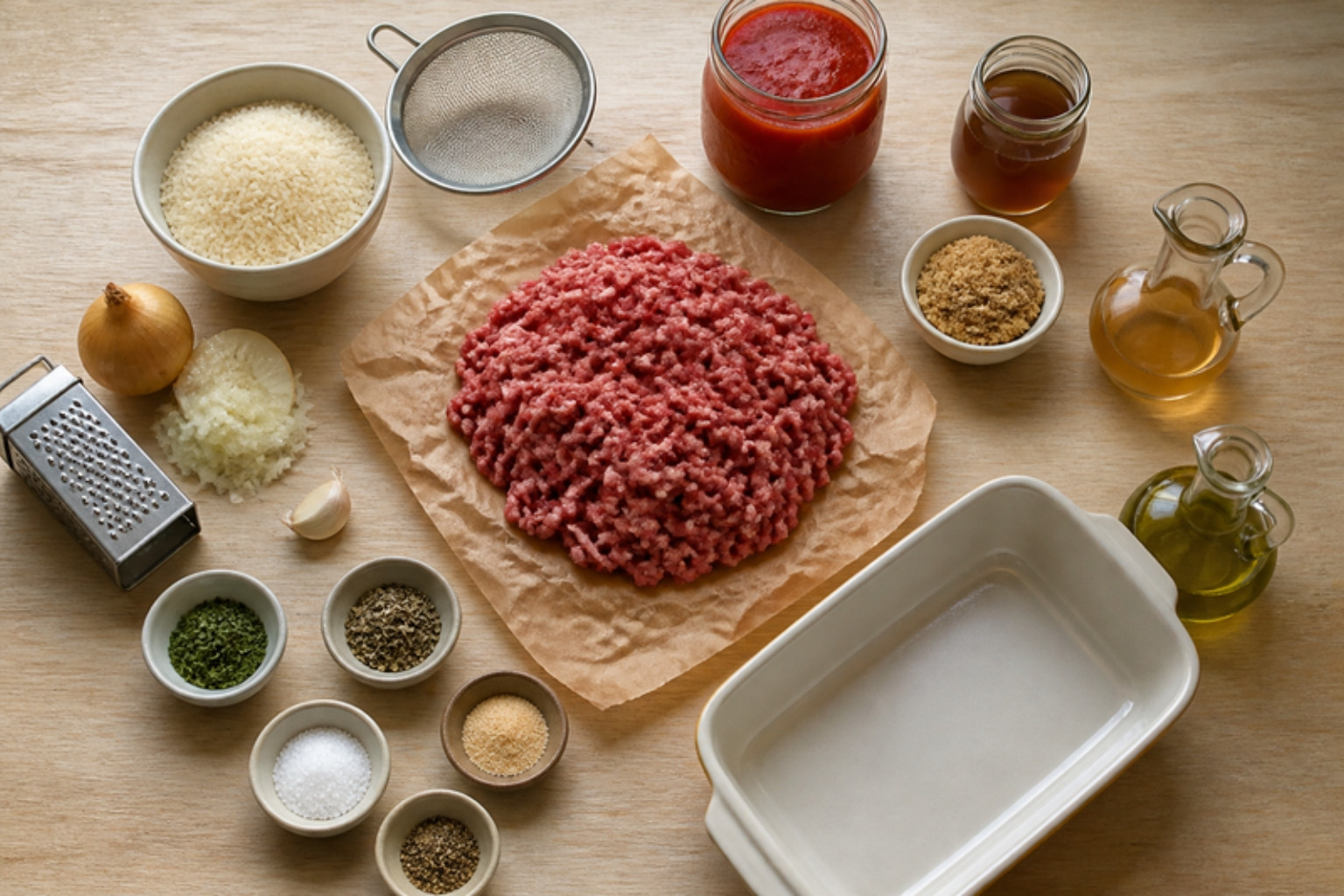
Porcupine Meatballs, No Eggs or Breadcrumbs
Ingredients
Equipment
Method
- Heat the oven to 350°F (175°C). Rub the baking dish with the olive oil.
- In a large bowl, combine the beef, rinsed rice, grated onion with its juice, garlic, salt, pepper, parsley, and cold water. Mix with your hands for about 1 minute, until the mixture turns slightly sticky and holds together when squeezed.
- Roll into 1 1/2-inch meatballs (about 2 tablespoons each) and arrange them in the dish in a single layer, almost touching.
- Whisk the tomato sauce, water or broth, brown sugar, vinegar, garlic powder, basil, and salt. Pour it over the meatballs so they’re mostly covered.
- Cover tightly with foil and bake for 60 minutes. Uncover, spoon sauce over the tops, and bake 10 to 15 minutes more, until the rice is fully tender (bite a quill to check), the sauce has thickened slightly, and the meatballs read 160°F in the center.
- Rest 5 minutes, then serve with plenty of sauce spooned over.
Notes
Troubleshooting
- Crunchy rice: the meatballs weren’t covered by sauce, or the foil wasn’t tight. Add 1/4 cup water, re-cover, and bake 10 to 15 minutes more.
- Meatballs fell apart: the mixture wasn’t kneaded long enough. Next time mix until tacky, and handle them gently when spooning sauce.
- Sauce too thick: stir in a splash of water or broth at the end.
- Sauce too tangy: add another teaspoon of brown sugar.
Storage, Freezing, and Reheating
Refrigerate the meatballs in their sauce in a covered container for up to 4 days. They’re even better the next day. To freeze, cool completely and freeze in the sauce for up to 3 months. Thaw overnight in the refrigerator and reheat covered in a 350°F oven or in a saucepan over medium-low heat, adding a splash of water, until they reach 165°F.
What to Serve With Porcupine Meatballs
Spoon the meatballs and sauce over creamy dairy-free mashed potatoes, with green beans with bacon on the side. If you like ground beef and rice dinners, try the stuffed cabbage rolls in tomato sauce or the stuffed peppers. See all of our dinner recipes.
Frequently Asked Questions
Why are they called porcupine meatballs?
As the raw rice cooks inside the meatballs, the grains swell and stick out from the surface, which looks a bit like porcupine quills.
Do porcupine meatballs need egg?
No. Kneading the salted beef, adding grated onion, and the swelling rice hold them together without egg or breadcrumbs.
Can I use cooked rice?
You can use about 1 cup of cooked rice and shorten the covered bake to about 35 minutes, but you won’t get the quills, and the meatballs will be softer.
Can I make them in a slow cooker?
Likely, on low for 6 to 7 hours with the meatballs fully covered in sauce. That method hasn’t been worked out in detail, so check that the rice is tender and the meatballs reach 160°F.
A note before you cook: These recipes are ideas and suggestions, not medical or dietary advice. As with any recipe or ingredient, it is each reader’s responsibility to confirm what they can and cannot eat, read every ingredient label, and source quality ingredients that fit their own needs. Ingredient formulations change, so always check the package you’re using.
Leave a Reply