
Boxed rice pilaf mixes and many restaurant versions share two ingredients that allergy families need to watch: orzo or vermicelli, which are wheat pasta, and butter. Seasoning packets can also carry soy, milk powder, or wheat-based flavorings. Homemade rice pilaf is easy, though, and tastes better than the box. Long-grain rice is toasted in extra-virgin olive oil with finely diced onion, carrot, and celery until it smells nutty, then simmered in broth with thyme and a bay leaf until every grain is fluffy and separate.
It’s a one-pot side that goes with nearly any dinner, and it reheats well, so it’s handy for weeknight meal prep.
Made without: peanuts, tree nuts, milk, eggs, wheat, soy, fish, shellfish, sesame.
Why You’ll Love This Recipe
- Fluffy, separate grains every time, with no sticky clumps.
- No orzo, no butter, no seasoning packet.
- One pot and about 45 minutes, most of it hands-off.
- Easy to change up with herbs, mushrooms, or dried cranberries.
How Pilaf Gets Its Flavor Without Butter or Orzo
In many American rice pilafs, browned orzo or vermicelli adds a toasty flavor and little golden flecks. You can get much of that by toasting the rice itself. Stirring the rinsed, well-drained grains in hot olive oil for a few minutes browns some of the starch on the surface and coats each grain in fat. That coating is also why pilaf stays fluffy: the oil keeps the grains from gluing together as they absorb the broth.
Rinsing matters too. It washes off loose surface starch, which would otherwise turn the pot gummy. Then the rest is about leaving it alone: a tight lid, low heat, no stirring, and a 10-minute rest so the steam finishes the job.
Ingredients and Swap Ideas
- Long-grain white rice (285 g): regular long-grain, jasmine, or basmati all work. Jasmine is slightly softer; basmati is the fluffiest. Brown rice needs about 3 cups broth and 40 to 45 minutes.
- Extra-virgin olive oil (2 tablespoons): for the vegetables and toasting. Skip butter, butter substitutes, and vegetable oil.
- Onion, carrot, and celery: diced fine so they melt into the rice. Mushrooms are a nice addition; sauté them with the vegetables.
- Broth (600 ml): chicken or vegetable. Label check for added oil, soy, wheat, and yeast extract. If your broth is salty, reduce the added salt.
- Finishers: parsley and lemon zest. For a fall version, fold in 1/3 cup dried cranberries (label check: some are coated in sunflower oil).
Kitchen Equipment
A 3-quart heavy-bottomed saucepan with a tight-fitting lid is the key piece; a thin pot can scorch on the bottom. You’ll also need a fine-mesh strainer for rinsing and a fork for fluffing.
Step-by-Step Tips
- Rinse and drain well. Swish the rice under cold water until it runs mostly clear, then shake the strainer to get rid of excess water so the rice can toast instead of steam.
- Toast until it smells nutty. The grains go from translucent to opaque white and a few turn golden. That takes 3 to 4 minutes over medium heat.
- Stir once after adding broth, then leave it alone. Stirring during cooking releases starch and makes it sticky.
- Look for steam holes. After 18 minutes, small holes across the surface mean the liquid is absorbed.
- Rest, then fluff. Ten minutes off the heat with the lid on finishes the cooking evenly.
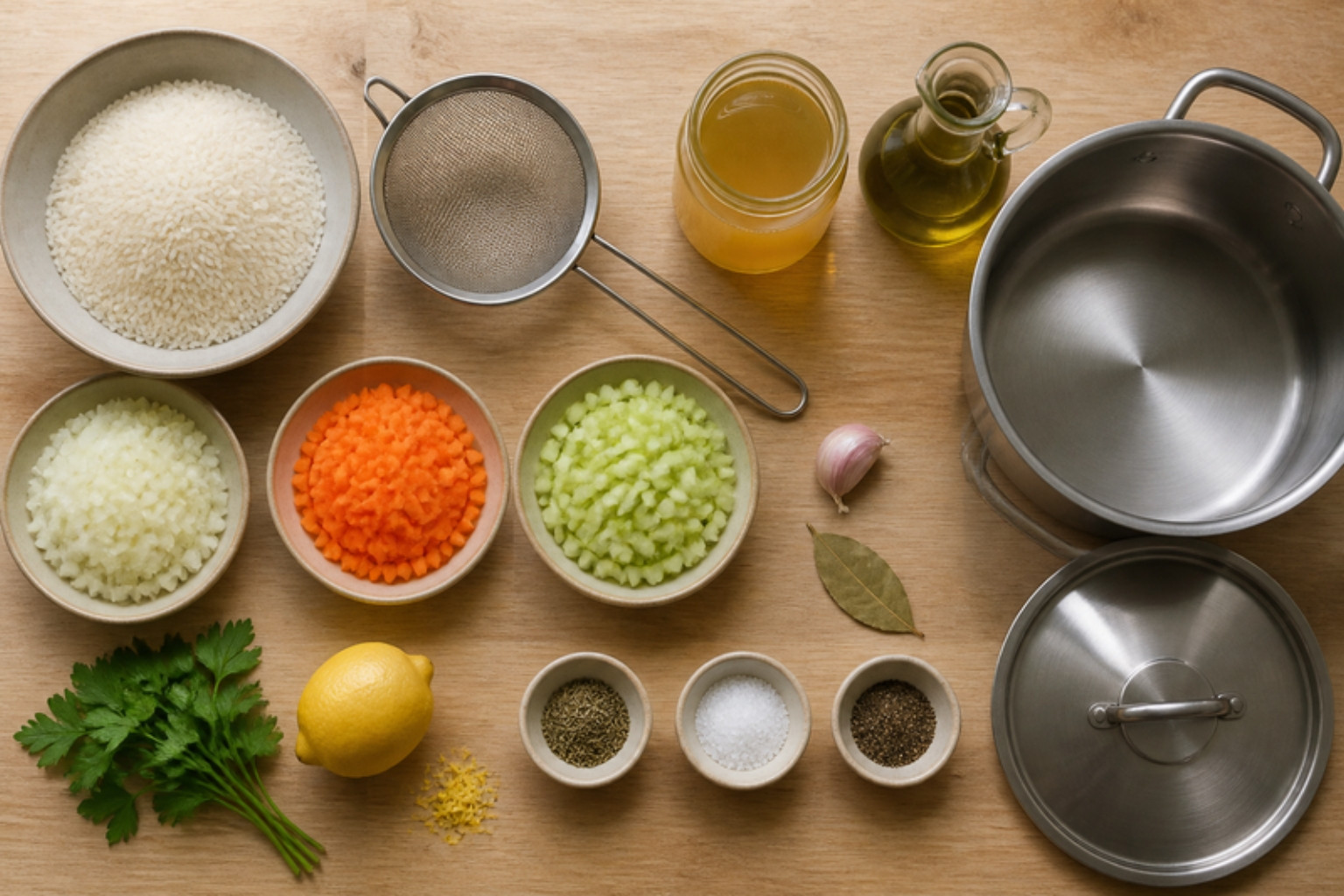
Rice Pilaf, No Butter or Orzo (Top 9 Free)
Ingredients
Equipment
Method
- Rinse the rice in a fine-mesh strainer under cold water, swishing it with your hand, until the water runs mostly clear. Drain well and shake off as much water as you can.
- Heat the olive oil in a heavy saucepan over medium heat. Add the onion, carrot, and celery and cook, stirring, 4 to 5 minutes, until soft and the onion is translucent.
- Add the rice and stir to coat every grain. Toast, stirring often, 3 to 4 minutes, until the grains turn opaque and chalky at the edges, a few turn light golden, and the pan smells nutty. Stir in the garlic for 30 seconds.
- Pour in the broth (it will sputter), then add the salt, thyme, bay leaf, and pepper. Bring to a boil and stir once to free any grains on the bottom.
- Cover tightly, turn the heat to low, and cook 18 minutes without lifting the lid. The liquid should be absorbed and small steam holes should dot the surface.
- Take the pan off the heat and let it stand, still covered, 10 minutes. Remove the bay leaf, fluff with a fork, and fold in the parsley and lemon zest.
Notes
Troubleshooting
- Gummy rice: it wasn’t rinsed enough, or it was stirred while cooking.
- Crunchy rice: steam escaped. Add 2 to 3 tablespoons hot broth, cover tightly, and cook on low 5 more minutes.
- Scorched bottom: the heat was too high or the pot is thin. Use the lowest setting or a heavier pot.
- Bland: season to taste after fluffing; broths vary a lot in salt.
Storage, Freezing, and Reheating
Cooked rice should be cooled quickly and refrigerated within an hour. Store it covered for up to 4 days. Reheat with a tablespoon or two of broth, covered, in a saucepan or the microwave until steaming hot (165°F). Rice pilaf freezes well for up to 2 months in flat freezer bags; reheat straight from frozen with a splash of broth.
What to Serve With Rice Pilaf
Rice pilaf is a natural match for smothered pork chops with onion gravy or herb-roasted whole chicken. For a heartier, holiday-style pilaf, see the Minnesota wild rice pilaf with mushrooms and cranberries. Find more in our side dishes.
Frequently Asked Questions
What’s the difference between rice pilaf and plain rice?
Pilaf rice is toasted in fat with aromatics before it’s simmered in broth, which gives it a nuttier flavor and fluffier, separate grains. Plain rice is simply boiled or steamed in water.
Is rice pilaf gluten-free?
Not always. Many recipes and boxed mixes include orzo or vermicelli, which are usually wheat pasta. This version uses only rice. Check your broth label as well.
Can I make rice pilaf in the oven?
Yes. Toast the rice on the stove in an oven-safe pot, add the boiling broth, cover, and bake at 350°F for 20 to 25 minutes, then rest 10 minutes. That method hasn’t been worked out in detail for this recipe, so check the rice at 20 minutes.
How do I double it?
Use a wider pot so the rice stays in a shallow layer, double everything, and add about 2 to 3 minutes to the simmer time.
A note before you cook: These recipes are ideas and suggestions, not medical or dietary advice. As with any recipe or ingredient, it is each reader’s responsibility to confirm what they can and cannot eat, read every ingredient label, and source quality ingredients that fit their own needs. Ingredient formulations change, so always check the package you’re using.