
Chicken pot pie might be the ultimate cold-weather comfort food, and it’s also one of the hardest to find without the big allergens. Frozen pot pies and most homemade recipes use a wheat and butter crust, a filling built on cream soup or milk and butter, and often an egg wash on top. If you’ve given up on pot pie or settled for a crustless stew, this recipe brings the whole thing back: a creamy, savory chicken and vegetable filling under a flaky, golden crust, made without eggs, milk, butter, or wheat.
The filling is thickened with sweet rice flour and made creamy with oat milk and chicken broth. The top crust is a lard pastry made with rice flour, oat flour, and sweet rice flour, rolled between parchment so it’s easy to handle. Use leftover roast chicken or a rotisserie bird and dinner comes together quickly.
Made without: peanuts, tree nuts, milk, eggs, wheat, soy, fish, shellfish, sesame.
Why You’ll Love This Recipe
- A real flaky crust without wheat or butter.
- Creamy filling with no cream soup, milk, or butter.
- Top crust only, so there’s no soggy bottom and less rolling.
- Make-ahead and freezer-friendly, assembled and baked straight from frozen.
How Pot Pie Works Without Butter, Milk, or Wheat
A traditional filling starts with a roux of butter and wheat flour, then milk or cream. Here, extra-virgin olive oil softens the vegetables and sweet rice flour does the thickening. Sweet rice flour (also called glutinous rice flour; it contains no gluten) has a sticky starch that makes a smooth, creamy sauce that doesn’t break when it’s reheated, which is why it’s a favorite for gravies. Oat milk with no added oil adds a mild richness that tastes close to a classic cream sauce.
For the crust, cold lard does the work butter normally does. As the little pieces of fat melt in the oven, they leave thin layers that make the pastry flaky. Rice flour gives crispness, oat flour adds tenderness and a golden color, and sweet rice flour makes the dough pliable enough to roll and drape over the filling without cracking apart. Rolling it between parchment keeps it from sticking.
Ingredients and Swap Ideas
- Cooked chicken (about 420 g): leftover roast chicken, poached thighs, or rotisserie chicken. Rotisserie birds can be injected with broth or seasoning blends, so read the label.
- Vegetables: onion, carrots, celery, a diced potato, and corn. Classic pot pie uses peas; they’re a legume, so they’re left out here, but you can add 3/4 cup frozen peas if they fit your needs.
- Sweet rice flour: look for glutinous or sweet rice flour; it’s different from regular white rice flour. Cornstarch can thicken the filling in a pinch (use 2 tablespoons whisked into the cold oat milk), though the sauce is a bit less silky.
- Oat milk with no added oil: many brands contain canola or sunflower oil. Choose certified gluten-free.
- Lard: pure rendered lard, very cold. Cold refined coconut oil also works for the crust; if you avoid coconut, stay with lard. Skip shortening, margarine, and plant butters.
- Chicken broth: label check for added oil, soy, wheat, and yeast extract.
Kitchen Equipment
A 9-inch deep-dish pie plate or 2-quart baking dish, a large skillet or Dutch oven, a pastry cutter or fork, a rolling pin, two sheets of parchment, and a rimmed baking sheet under the dish to catch any bubbling filling.
Step-by-Step Tips
- Keep the crust cold. Cold lard and ice water make flaky pastry. If the dough softens while you roll, slide it on its parchment into the freezer for 5 minutes.
- Add water slowly. Stop as soon as a squeezed handful holds together. Too much water makes a tough crust.
- Thicken the filling fully on the stove. It should coat a spoon before it goes into the dish; it won’t thicken much more in the oven.
- Flip, don’t lift. Peel off the top parchment, invert the crust over the dish, then peel off the second sheet. Patch any cracks by pressing them together.
- Bake until it bubbles. The crust should be golden brown and the filling bubbling through the vents. The center should reach 165°F (see the USDA safe temperature chart). Let it rest 15 minutes before serving.
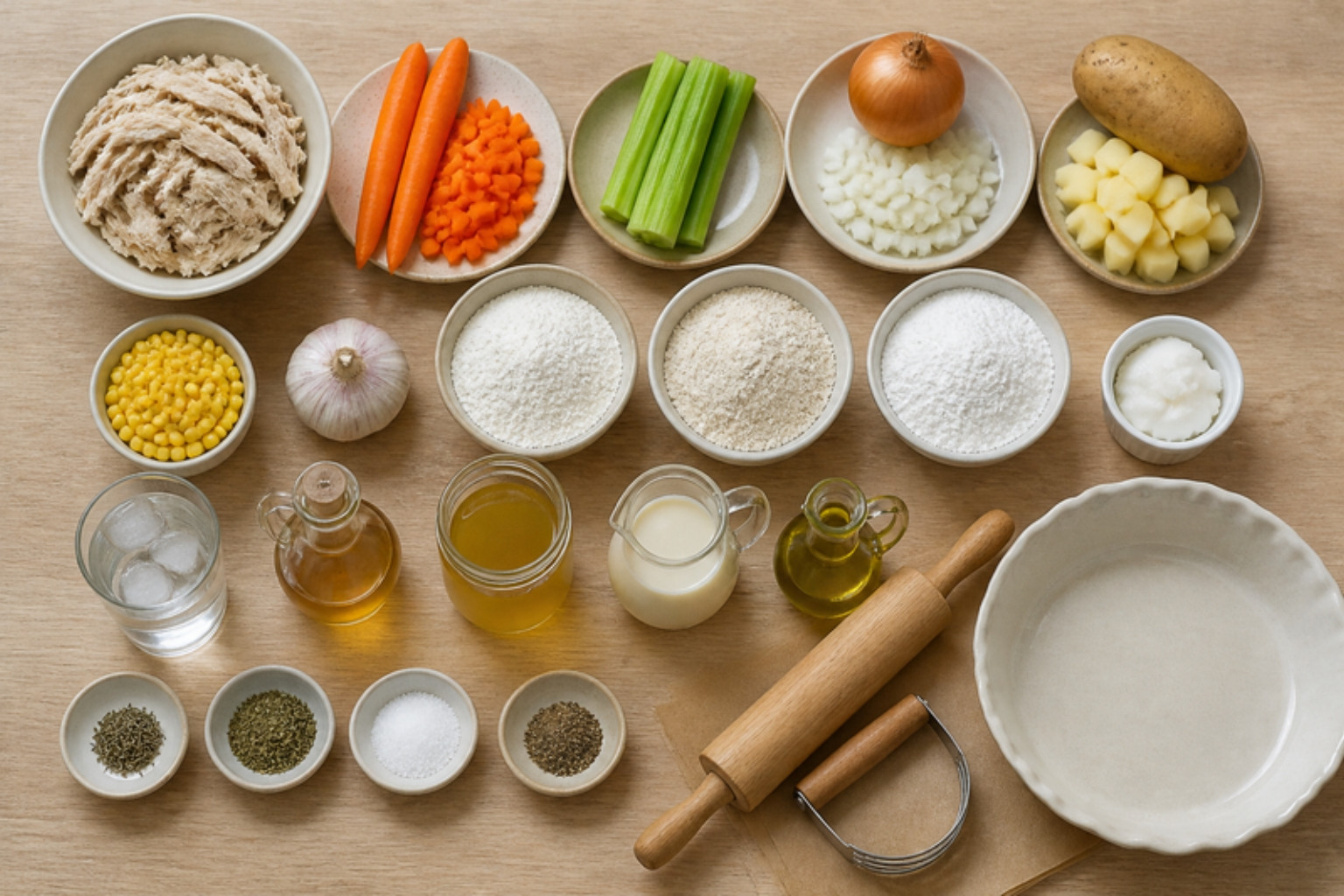
Chicken Pot Pie, No Eggs, Dairy-Free, No Wheat (Top 9 Free)
Ingredients
Equipment
Method
- Make the crust: whisk the rice flour, oat flour, sweet rice flour, salt, and sugar. Cut in the cold lard with a pastry cutter until the pieces are pea-sized. Sprinkle in the vinegar and 4 tablespoons ice water, tossing with a fork, and add more water a teaspoon at a time just until the dough holds together when squeezed. Flatten into a disk, wrap, and chill 30 minutes.
- Heat the oven to 400°F (200°C) with a rack in the lower third and a rimmed baking sheet on the rack below it.
- Make the filling: heat the olive oil in a large skillet over medium heat. Add the onion, carrots, celery, and potato and cook, stirring, 8 to 10 minutes, until the onion is soft and the carrots are starting to turn tender. Stir in the garlic for 30 seconds.
- Sprinkle the sweet rice flour over the vegetables and stir for 1 minute so it coats everything. Slowly whisk in the broth, then the oat milk, scraping the bottom of the pan. Simmer, stirring, 3 to 4 minutes, until the sauce is thick enough to coat a spoon.
- Stir in the chicken, corn, thyme, sage, salt, and pepper. Taste and adjust. Pour into the pie plate or baking dish; it should be very hot and thick.
- Roll the dough between two sheets of lightly floured parchment into a round about 1 inch wider than the dish, roughly 1/8 inch thick. Peel off the top sheet, flip the dough over the filling, and peel off the second sheet. Press any cracks together, fold the overhang under, and crimp. Cut 4 or 5 vents and brush with oat milk.
- Bake 35 to 40 minutes, until the crust is golden brown and the filling is bubbling up through the vents (165°F in the center). If the edges darken too fast, cover them with foil for the last 10 minutes.
- Rest 15 minutes so the filling thickens before serving.
Notes
Troubleshooting
- Crust cracked while rolling: it’s a little dry or too cold. Let it sit 5 minutes, or knead in a teaspoon of ice water.
- Runny filling: it needed a longer simmer before baking, or the pie was cut too soon. Rest it the full 15 minutes.
- Pale crust: bake on the lower rack and brush with oat milk, which helps browning. A sprinkle of sugar on the crust also helps it color.
- Edges too dark: cover them with a ring of foil for the last 10 minutes.
Make Ahead, Storage, and Freezing
Make the dough and filling up to a day ahead and refrigerate them separately; assemble and add 10 minutes to the bake if the filling is cold. Refrigerate leftovers, covered, for up to 4 days and reheat covered at 350°F for 20 to 25 minutes until hot in the center (165°F). To freeze, assemble the pie in a freezer-safe dish, skip the oat milk brush, wrap well, and freeze up to 2 months. Bake from frozen at 375°F for 60 to 75 minutes, brushing the crust partway through.
More Chicken Comfort Food
For another cozy chicken dinner, try dairy-free chicken and dumplings with no eggs or the chicken and rice casserole with no cream soup. If you like this crust, the same lard pastry style shows up in the classic apple pie. Browse all of our dinner recipes.
Frequently Asked Questions
How do you make chicken pot pie without milk or cream?
Thicken chicken broth with sweet rice flour and finish it with oat milk that has no added oil. The sauce turns smooth and creamy without any milk, cream, or butter.
Can I use a bottom crust too?
You can double the crust and line the dish, but wheat-free bottom crusts tend to stay soft under a wet filling. That version hasn’t been worked out, so a top crust is the more dependable choice.
Can I use biscuits instead of a crust?
Yes. Drop biscuit dough from the biscuits and gravy recipe over the hot filling and bake until the biscuits are golden and cooked through. Timing will vary, so check the biscuits’ centers.
What vegetables can I add?
Diced green beans, mushrooms, or parsnips all work. Keep the total vegetables about the same so the filling-to-sauce balance stays right.
A note before you cook: These recipes are ideas and suggestions, not medical or dietary advice. As with any recipe or ingredient, it is each reader’s responsibility to confirm what they can and cannot eat, read every ingredient label, and source quality ingredients that fit their own needs. Ingredient formulations change, so always check the package you’re using.