
If you’ve tried to bake oatmeal raisin cookies without eggs or butter, you may know the two common results: flat, greasy puddles, or dry, crumbly mounds that taste more like granola than a cookie. Oatmeal cookies lean on eggs for chew and butter for that rich, caramel flavor, and taking both out at once takes a few adjustments. This recipe makes the soft, chewy kind, with golden edges, a tender middle, plenty of cinnamon, and raisins in every bite.
The dough is made with oat and rice flour, rolled oats, plenty of brown sugar, a little applesauce, and light-tasting olive oil. A short chill keeps the cookies thick, and soaking the raisins first keeps them plump and juicy instead of hard and chewy. They’re a classic for lunchboxes, after-school snacks, and the cookie jar.
Made without: peanuts, tree nuts, milk, eggs, wheat, soy, fish, shellfish, sesame.
Why You’ll Love This Recipe
- Soft and chewy with lightly crisp edges.
- No egg replacer, flax, or butter substitute: just pantry ingredients.
- One bowl for wet, one for dry, no mixer needed.
- Freezer-friendly as baked cookies or ready-to-bake dough balls.
How These Cookies Work Without Eggs or Butter
In a regular oatmeal cookie, eggs bind the dough, add moisture, and give that bendy chew. Here, those jobs are split up. Brown sugar is the biggest helper: it holds moisture and melts into a chewy, caramel-like texture as the cookies bake. A third of a cup of applesauce adds moisture and a little binding, and whisking it with the sugar and oil until thick and glossy helps the dough hold together like an emulsion. Cornstarch softens the crumb, and baking soda reacts with the brown sugar and applesauce to give a little lift and help the edges brown.
Oil-based doughs spread more than butter doughs because there’s no solid fat to hold their shape. A 30-minute chill lets the oats and flour soak up liquid so the dough firms and the cookies bake thick instead of flat.
Ingredients and Swap Ideas
Imperial and metric amounts are in the recipe card below. Weighing the flours gives the most consistent results.
- Oats and oat flour: old-fashioned rolled oats give the best chew; quick oats make a softer, more uniform cookie. Choose oats and oat flour labeled gluten-free, since regular oats are often processed alongside wheat and barley. You can make oat flour by blending rolled oats until fine.
- Rice flour: white rice flour keeps the cookies from being gummy. Brown rice flour works with a slightly nuttier taste.
- Fat: light-tasting olive oil. “Light” means refined and mild in flavor, not fewer calories, so you won’t taste olive oil. Refined coconut oil, melted and cooled, makes a slightly firmer cookie; if you avoid coconut, use the light-tasting olive oil. Please skip butter substitutes, shortening, and vegetable oil.
- Raisins: read the package, since some brands coat raisins in sunflower or other seed oil to keep them from sticking. Dried cranberries, chopped dried tart cherries, or chopped dates are good swaps.
- Add-ins: for an oatmeal chocolate chip version, use dairy-free chocolate chips in place of half the raisins. Check the label for milk, soy lecithin, and nut or sesame warnings.
Kitchen Equipment
You’ll need two mixing bowls, a whisk, a sturdy spatula, two rimmed baking sheets lined with parchment, a 1 1/2-tablespoon cookie scoop for even sizing, and a wire cooling rack. Light-colored baking sheets help keep the bottoms from over-browning.
Step-by-Step Tips
- Soak and dry the raisins. Ten minutes in hot water plumps them; drying them keeps the dough from getting wet.
- Whisk the wet ingredients well. A full minute, until the sugar, oil, and applesauce look thick and blended, helps the cookies hold together.
- Don’t skip the chill. Warm dough spreads. If your kitchen is warm, chill up to an hour.
- Press the dough balls slightly. These cookies don’t spread much once chilled, so flattening them a little helps them bake evenly.
- Pull them while the centers look soft. Golden edges and puffed, just-set centers mean they’re done. Overbaked cookies turn crunchy as they cool.
- Let them rest on the pan. Egg-free cookies are fragile while hot and set as they cool.
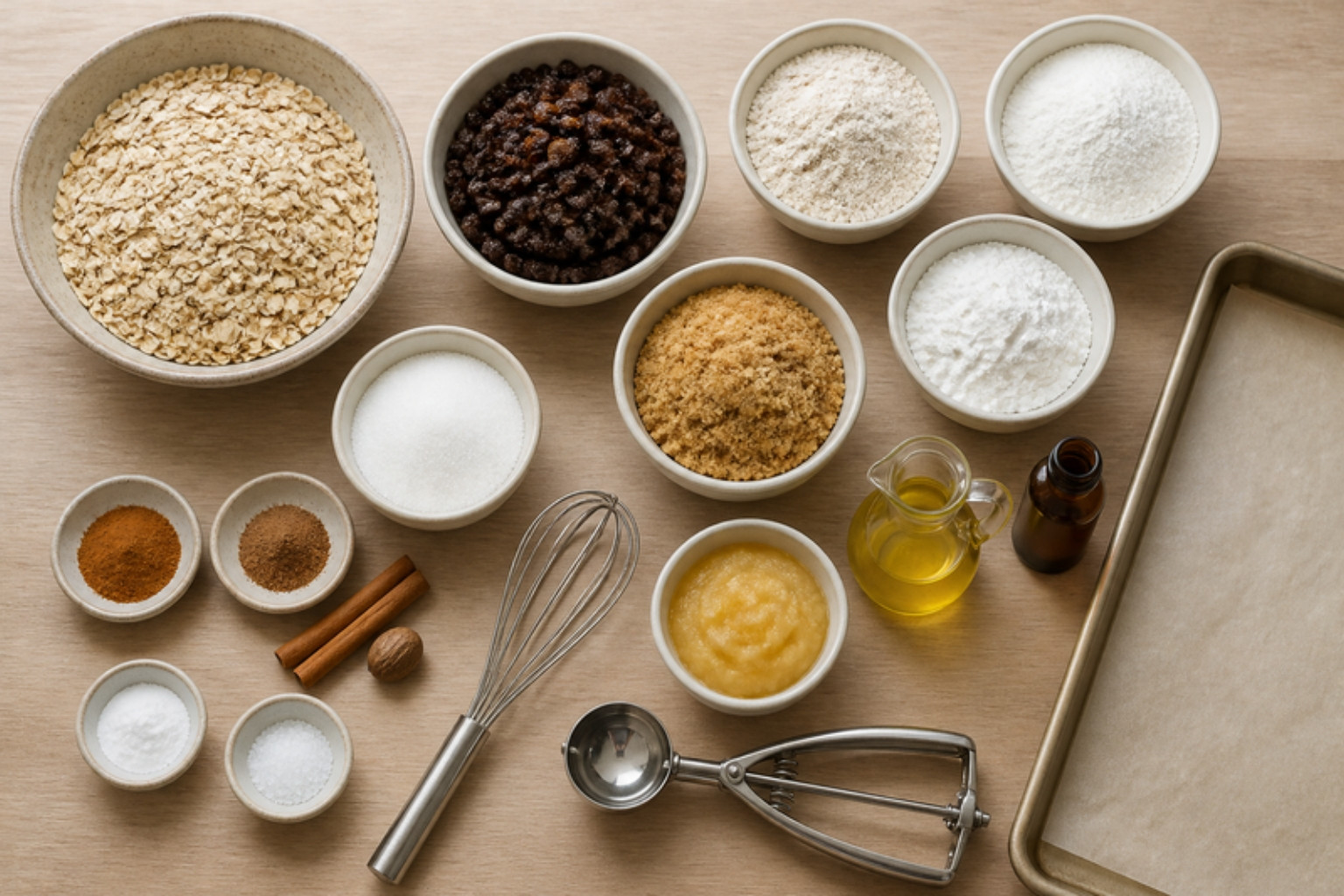
Oatmeal Raisin Cookies, No Eggs, Dairy-Free (Top 9 Free)
Ingredients
Equipment
Method
- Put the raisins in a small bowl, cover with hot water, and soak 10 minutes. Drain well and pat dry with a towel.
- Whisk the oat flour, rice flour, cornstarch, baking soda, salt, cinnamon, and nutmeg in a bowl.
- In a large bowl, whisk the brown sugar, granulated sugar, olive oil, applesauce, and vanilla for about 1 minute, until thick, glossy, and no longer separated.
- Stir the flour mixture into the sugar mixture until no dry streaks remain, then fold in the oats and raisins. The dough will be soft and a little sticky. Cover and refrigerate 30 minutes, until it firms enough to scoop.
- Heat the oven to 350°F (175°C) and line two baking sheets with parchment. Scoop 1 1/2-tablespoon balls of dough 2 inches apart and press each one down slightly.
- Bake one sheet at a time for 11 to 13 minutes, until the edges are golden brown and the centers look puffed and just set but still soft. They firm up as they cool.
- Cool on the baking sheet 10 minutes (they are fragile while hot), then move to a wire rack to cool completely.
Notes
Troubleshooting
- Cookies spread flat: the dough was too warm or the flour was under-measured. Chill longer and spoon and level the flour, or weigh it.
- Cookies are crumbly: the wet ingredients weren’t whisked enough, or the cookies were moved too soon. Let them cool fully on the pan before handling.
- Dry or hard: they baked too long. Start checking at 11 minutes.
- Gummy centers: underbaked, or the oven runs cool. An oven thermometer helps; bake a minute or two longer.
Storage and Freezing
Store cooled cookies in an airtight container at room temperature for up to 4 days; the brown sugar keeps them soft. To freeze, layer baked cookies with parchment in a freezer container for up to 3 months and thaw at room temperature. You can also freeze scooped dough balls on a tray, bag them, and bake straight from frozen, adding 1 to 2 minutes to the baking time. That’s handy for fresh cookies in lunchboxes all week.
More Oat Treats
If you love oats in dessert, try the stovetop no-bake chocolate oatmeal cookies without peanut butter or the old-fashioned oatmeal cake with broiled coconut topping. For a classic cookie-jar companion, the chocolate chip cookies use a similar flour mix. Browse all of our cookie recipes.
Frequently Asked Questions
How do you make oatmeal cookies without eggs?
Use plenty of brown sugar for chew and moisture, a little applesauce for binding, and a short chill so the oats soak up liquid. Baking soda and the natural acidity in brown sugar and applesauce help the cookies rise and brown.
Why soak the raisins?
Dry raisins pull moisture from the dough while baking and can turn hard. A short soak keeps them plump and the cookies soft.
Can I make them crispy instead of chewy?
Yes. Flatten the dough balls more, bake 14 to 16 minutes until golden all over, and let them cool completely on the pan. Swapping 2 tablespoons of the brown sugar for granulated sugar also makes them crisper.
Can I use quick oats?
Yes. Quick oats absorb liquid faster, so the dough may need only 15 minutes of chilling. The cookies will be softer and more cake-like, with less of the classic oat chew.
A note before you cook: These recipes are ideas and suggestions, not medical or dietary advice. As with any recipe or ingredient, it is each reader’s responsibility to confirm what they can and cannot eat, read every ingredient label, and source quality ingredients that fit their own needs. Ingredient formulations change, so always check the package you’re using.