
Chocolate covered cherry cookies show up on a lot of Christmas cookie trays: a soft chocolate cookie, a bright red maraschino cherry pressed into the middle, and a fudgy chocolate frosting that bakes right over the top. The classic recipe uses butter and an egg in the dough and sweetened condensed milk in the frosting, so if your family avoids eggs or dairy, it’s one of the harder cookies to recreate. This version gets the same look and the same chocolate-and-cherry flavor with a cocoa dough built on rice flour, oat flour, applesauce, and refined coconut oil, and a frosting made from dairy-free chocolate chips, coconut milk, and a splash of the cherry juice.
The cookies bake in about 10 minutes, and the frosting goes on before baking, so there’s no separate decorating step. They’re a good choice for cookie exchanges because they hold their shape and look festive without sprinkles.
Made without: peanuts, tree nuts, milk, eggs, wheat, soy, fish, shellfish, sesame. Contains coconut.
Why You’ll Love This Recipe
- Looks like the classic: a glossy chocolate cap over a red cherry on a dark cocoa cookie.
- No egg replacer needed: applesauce and a balanced flour and starch mix hold the cookie together.
- One-step decorating: the frosting bakes on with the cookie.
- Freezer-friendly: bake in November and pull them out for the cookie tray in December.
How It Works Without Eggs or Butter
In a regular chocolate cookie, the egg binds the dough and adds moisture, and butter adds richness and a soft crumb. Here, applesauce brings the moisture and a little binding, while the mix of rice flour, oat flour, and cornstarch gives structure. Oat flour absorbs liquid and holds the cookie together, rice flour keeps it from turning gummy, and cornstarch keeps it tender. Natural cocoa powder is slightly acidic, so it reacts with the baking soda to give the cookies a little lift and a soft, fudgy middle. Refined coconut oil is solid at room temperature, so it creams with sugar the way butter does and keeps the cookies from spreading. For the frosting, coconut milk does what sweetened condensed milk does in the original: it melts the chocolate into a smooth, thick spread that sets soft rather than hard.
Ingredients & Swap Ideas
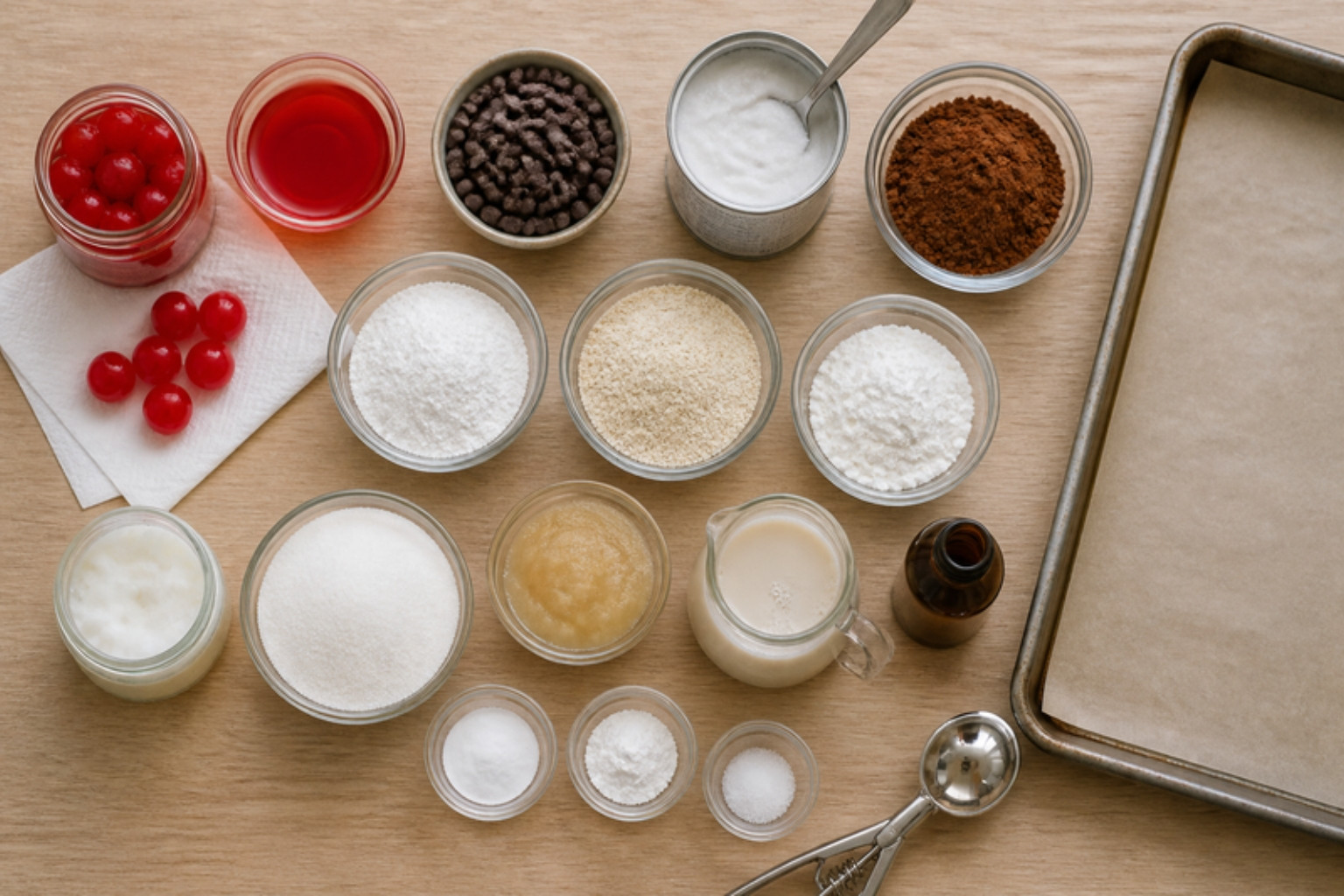
- Flours: 1 cup (160 g) finely ground white rice flour, 3/4 cup (75 g) certified gluten-free oat flour, and 1/4 cup (32 g) cornstarch. Certified gluten-free oats matter for anyone avoiding barley, since regular oats can pick it up.
- Cocoa: 1/2 cup (45 g) natural unsweetened cocoa. Dutch-process cocoa is less acidic and won’t react the same way with the baking soda, so stick with natural.
- Fat: 1/2 cup (100 g) refined coconut oil, soft but not melted. If you avoid coconut, use 1/2 cup (108 g) light-tasting olive oil (light means refined and mild, not fewer calories) and chill the dough 1 hour. That swap hasn’t been tested, and the cookies may spread a little more. Skip butter substitutes and shortening.
- Moisture: 1/4 cup (60 g) unsweetened applesauce and 2 tablespoons oat milk with no added oil (many brands contain canola or sunflower oil).
- Maraschino cherries: one 10-ounce (283 g) jar, about 30 cherries. Some maraschino cherries are flavored with almond extract or bitter almond oil, so read the label. Save the juice for the frosting.
- Frosting: 1 cup (170 g) dairy-free semisweet chocolate chips, 1/3 cup (80 ml) full-fat canned coconut milk, and 4 to 5 teaspoons cherry juice. Many chocolate chips contain milk or soy lecithin, so check the label. For a coconut-free frosting, use oat milk instead of coconut milk.
Kitchen Equipment
- 2 rimmed baking sheets lined with parchment
- 1-tablespoon cookie scoop
- Small saucepan or microwave-safe bowl for the frosting
- Wire rack
Step-by-Step Tips
- Dry the cherries. Pat them well with paper towels. Wet cherries make the frosting slide off and leave pink streaks.
- Cream the coconut oil and sugar. Beat about 2 minutes, until creamy and slightly fluffy. This adds air for a softer cookie.
- Let a sticky dough rest. If it sticks to your hands, wait 10 minutes. The flours absorb moisture and the dough firms up.
- Make deep wells. Press each ball with your thumb so the cherry sits low. Then spoon about a teaspoon of frosting over the cherry to cover it.
- Pull them early. Bake 9 to 11 minutes, just until the edges look dry and set and fine cracks appear around the cherry. The centers firm up as they cool.
Chocolate Covered Cherry Cookies
Ingredients
Equipment
Method
- Heat the oven to 350°F (175°C) and line the baking sheets with parchment. Pat the drained cherries dry on paper towels.
- Whisk the rice flour, oat flour, cornstarch, cocoa, baking soda, baking powder, and salt.
- In a large bowl, beat the coconut oil and sugar until creamy and slightly fluffy, about 2 minutes. Beat in the applesauce, oat milk, and vanilla. Add the dry ingredients and mix until a thick, smooth, fudgy dough forms that holds a ball without sticking to your hands. If it’s sticky, rest it 10 minutes so the flours hydrate.
- Make the frosting: warm the chocolate chips and coconut milk over low heat (or in 20-second microwave bursts), stirring until smooth. Stir in 4 teaspoons cherry juice; it should be thick but spoonable. Add the last teaspoon only if it is stiff.
- Roll the dough into 1-inch (2.5 cm) balls (a level tablespoon) and set 2 inches apart. Press a deep well into each with your thumb and set a cherry in the well. Spoon about 1 teaspoon frosting over each cherry so it covers the top.
- Bake one sheet at a time for 9 to 11 minutes, until the cookie edges look dry and set and the surface around the cherry shows fine cracks; the centers will still be soft. Don’t wait for them to firm up in the oven.
- Cool on the pan 10 minutes, then move to a rack. The frosting sets to a soft, fudgy layer as the cookies cool.
Notes
Troubleshooting
- Cookies spread flat: the coconut oil was too soft or melted, or the kitchen is warm. Chill the shaped dough balls 15 minutes before adding the cherries and frosting.
- Cookies are dry or crumbly: they baked too long, or the flour was packed into the cup. Weigh the flours if you can and take the cookies out while the centers still look soft.
- Frosting too stiff to spoon: add cherry juice a half teaspoon at a time, or warm it gently.
- Frosting runs off: it’s too thin or the cherries were wet. Let the frosting cool for a few minutes to thicken before spooning.
Make-Ahead, Freezing & Gifting
Store the cookies in an airtight container at room temperature up to 4 days, with parchment between layers so the frosting doesn’t stick. To freeze, set the cooled cookies on a tray in a single layer until firm, about an hour, then pack them in a cookie tin or freezer container with parchment between the layers. They keep up to 3 months. Thaw at room temperature with the lid on so condensation forms on the container, not the cookies. For gifting, pack them in a tin lined with parchment or in small paper candy cups so the frosted tops stay neat. They travel well for cookie exchanges.
More Christmas Cookies
Find the full cookie tray in our Christmas recipes collection. For more cherry flavor, try the cherry chip cookies with maraschino cherries, and for another chocolate cookie, the cocoa crinkle cookies are a cookie-tray staple.
FAQ
Do I need sweetened condensed milk for the frosting?
No. The classic frosting uses it, but canned coconut milk melted with dairy-free chocolate chips gives a similar thick, fudgy topping. Oat milk works too, with a slightly thinner result.
Can I use fresh or frozen cherries?
Maraschino cherries are firm and sweet enough to hold up in the oven. Fresh or thawed frozen cherries release juice and make the frosting soggy, so they aren’t a good fit here.
Why are my cookies not as dark as the photos I’ve seen?
Natural cocoa gives a medium-brown cookie. For a darker color, replace 1 tablespoon of the cocoa with black cocoa; keep the rest natural so the baking soda still has acid to react with.
Can I make the dough ahead?
Yes. Wrap the dough and refrigerate up to 2 days. Let it sit at room temperature 20 to 30 minutes until it’s soft enough to roll without cracking.
A note before you cook: These recipes are ideas and suggestions, not medical or dietary advice. As with any recipe or ingredient, it is each reader’s responsibility to confirm what they can and cannot eat, read every ingredient label, and source quality ingredients that fit their own needs. Ingredient formulations change, so always check the package you’re using.