
Fried apples are one of those country-kitchen sides that show up next to pork chops, biscuits, and breakfast sausage, and most recipes start the same way: a big pat of butter in a cast-iron skillet. If butter is off the table in your house, it can feel like the whole dish is too. It isn’t. The best part of fried apples is the apples themselves: thick wedges that turn tender and glossy, edges lightly caramelized, all sitting in a cinnamon-brown sugar syrup that tastes like the inside of an apple pie. This version gets there with a couple of tablespoons of light-tasting olive oil, a splash of apple cider, and a little cornstarch to turn the pan juices into a silky glaze.
It takes about 35 minutes from cutting board to table, uses one skillet, and works as a side dish, a breakfast topping, or a quick dessert.
Made without: peanuts, tree nuts, milk, eggs, wheat, soy, fish, shellfish, sesame.
Why You’ll Love This Recipe
- Tender wedges that hold their shape instead of collapsing into applesauce.
- A glossy cinnamon syrup without butter, thanks to cider and a cornstarch slurry.
- One skillet, ten ingredients, most of them pantry staples.
- Works three ways: a side for pork, a topping for pancakes or oatmeal, or a warm dessert.
How Fried Apples Work Without Butter
Butter does two things in classic fried apples: it browns the fruit, and its milk solids help the sugar and juices thicken into a rich sauce. Light-tasting olive oil handles the first job well. It has a mild flavor and a high smoke point, so the apples can sizzle and pick up golden edges without any olive taste. The second job falls to the cider and cornstarch. As the covered apples steam, they release juice that mixes with the brown sugar and cider. A small cornstarch slurry stirred in at the end turns that thin, cloudy liquid into a clear, glossy syrup in about a minute, and a little vanilla rounds out the buttery note people expect.
Ingredients and Swap Ideas
Full amounts, with metric weights, are in the recipe card below.
- Apples: choose firm apples that keep their shape when cooked: Granny Smith for tart, Honeycrisp, Jonagold, or Braeburn for sweet-tart. A mix of two kinds gives the best flavor. Softer apples like McIntosh break down into chunky sauce, which is tasty but different.
- Peel or not: unpeeled wedges hold together better and add color. Peel them if you want a softer, pie-filling texture.
- Fat: light-tasting olive oil (“light” means refined and mild, not lower in calories) keeps the flavor sweet. Bacon fat makes a savory-sweet version that is classic next to pork. Refined coconut oil also works; if you avoid coconut, stick with olive oil. Please skip butter substitutes, margarine, and cooking spray.
- Sweetener: maple syrup can replace the brown sugar one for one; reduce the cider by a tablespoon.
- Thickener: arrowroot works in place of cornstarch. Add it off the heat and stir until glossy, since arrowroot can thin if boiled hard.
Kitchen Equipment
A 12-inch skillet with a lid, cast iron or stainless steel. A smaller pan piles the apples up and they stew rather than brown; if yours is 10 inches, cook in two batches or use 4 apples. You’ll also need a sharp knife, a wooden spoon or heatproof spatula, and a small bowl for the slurry.
Step-by-Step Tips
- Cut even wedges. Half-inch wedges cook in the same time. Thin slices turn mushy; big chunks stay crunchy in the middle.
- Brown before you sweeten. Cooking the apples in oil for 5 minutes first gives them golden edges. Sugar added too early makes them release juice and steam.
- Cover to soften. The lid traps steam so the centers cook through. Check after 6 minutes: a knife should slide in with a little resistance.
- Thicken at the end. When the slurry goes in, the juice will look milky, then turn clear and glossy as it simmers. That change means the cornstarch is fully cooked.
- Rest 5 minutes. The syrup keeps thickening off the heat.
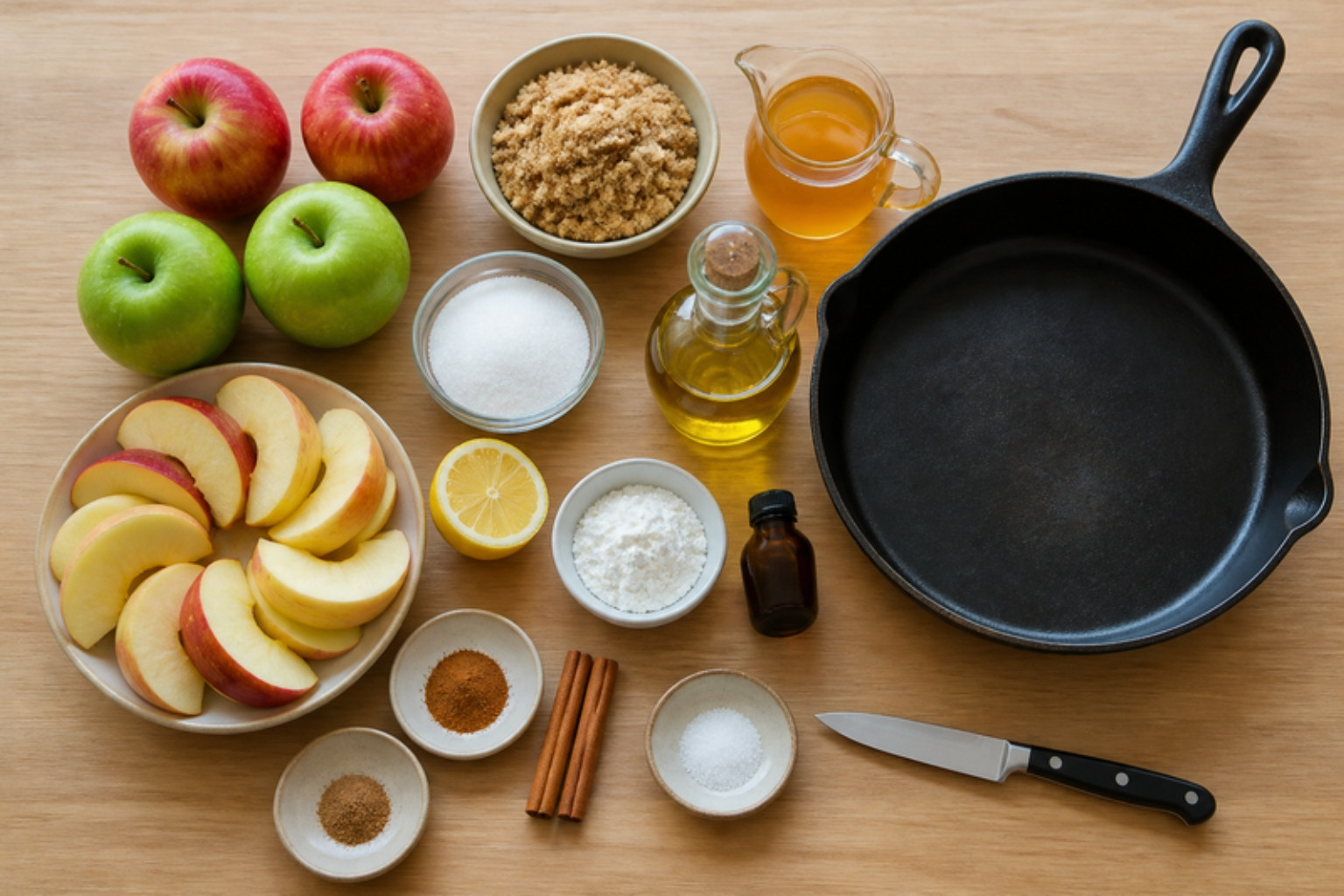
Skillet Fried Apples with Cinnamon, No Butter (Top 9 Free)
Ingredients
Equipment
Method
- Toss the apple wedges with the lemon juice in a large bowl. In a small bowl, stir together the brown sugar, granulated sugar, cinnamon, nutmeg, and salt.
- Heat the olive oil in a 12-inch skillet over medium heat until it shimmers. Add the apples in a mostly even layer and cook, stirring every minute or two, for about 5 minutes, until the edges start to soften and a few pieces turn golden.
- Sprinkle the sugar-spice mixture over the apples, add 1/4 cup of the cider, and stir gently. Cover and cook for 6 to 10 minutes, stirring once or twice, until a knife slides into the thickest wedges with little resistance but they still hold their shape.
- Uncover. Stir the cornstarch into the remaining cider (about 1 tablespoon plus 1 teaspoon) with a fork until smooth, then stir it into the skillet. Simmer 1 to 2 minutes, stirring gently, until the juices turn from cloudy to clear, glossy, and thick enough to coat a spoon.
- Turn off the heat and stir in the vanilla. Let stand 5 minutes so the syrup thickens a little more, then serve warm.
Notes
Troubleshooting
- Apples turned to mush: the variety was too soft, the slices too thin, or they were covered too long. Firm apples and a knife test at 6 minutes help.
- Syrup is thin: simmer another minute after adding the slurry; it needs a full bubble to thicken. A second teaspoon of cornstarch in a little cider fixes very juicy apples.
- Sugar is scorching: lower the heat to medium-low and add a splash of cider or water to loosen the pan.
- Too sweet: use all Granny Smith apples and cut the brown sugar to 1/4 cup, or add a squeeze more lemon at the end.
Storage, Freezing, and Reheating
Let leftovers cool, then refrigerate in a covered container for up to 5 days. Reheat in a skillet over medium-low heat with a splash of water, or in the microwave in 30-second bursts. They are also good cold, spooned over oatmeal. Fried apples can be frozen for up to 3 months, but they soften when thawed, so frozen batches are best used as a pancake or waffle topping or as a quick filling for a crisp.
What to Serve with Fried Apples
They are a natural match for the grilled cider-brined pork chops or the homemade maple sage breakfast sausage patties. For a weekend breakfast, spoon them over our pumpkin pancakes. If you have more apples to use up, the Michigan apple crisp is a good next bake.
Frequently Asked Questions
What are the best apples for fried apples?
Firm, crisp apples that hold their shape: Granny Smith, Honeycrisp, Jonagold, Braeburn, or Pink Lady. Mixing a tart and a sweet variety gives the most balanced flavor.
Can I make fried apples without butter?
Yes. Light-tasting olive oil browns the apples without adding flavor, and the brown sugar, cider, vanilla, and a little cornstarch create the rich, glossy sauce butter usually helps with.
Can I make them ahead for a holiday breakfast?
Yes. Cook them up to 3 days ahead, refrigerate, and rewarm gently in a skillet with a splash of water. Stop the first cook a minute or two early so they don’t overcook when reheated.
What’s the difference between fried apples and applesauce?
Fried apples are wedges cooked quickly in a skillet so they stay in pieces with caramelized edges. Applesauce cooks longer until the fruit breaks down completely; try our slow cooker cinnamon applesauce for that.
A note before you cook: These recipes are ideas and suggestions, not medical or dietary advice. As with any recipe or ingredient, it is each reader’s responsibility to confirm what they can and cannot eat, read every ingredient label, and source quality ingredients that fit their own needs. Ingredient formulations change, so always check the package you’re using.