
Swiss steak was a weeknight staple in a lot of Midwestern kitchens: an inexpensive round steak, pounded with flour, browned hard, and braised in tomatoes until it falls apart under a fork. The catch for allergy families is that classic flour dredge, plus the canned soups and Worcestershire sauce some versions lean on. This version keeps everything that made the original so good and leaves those out.
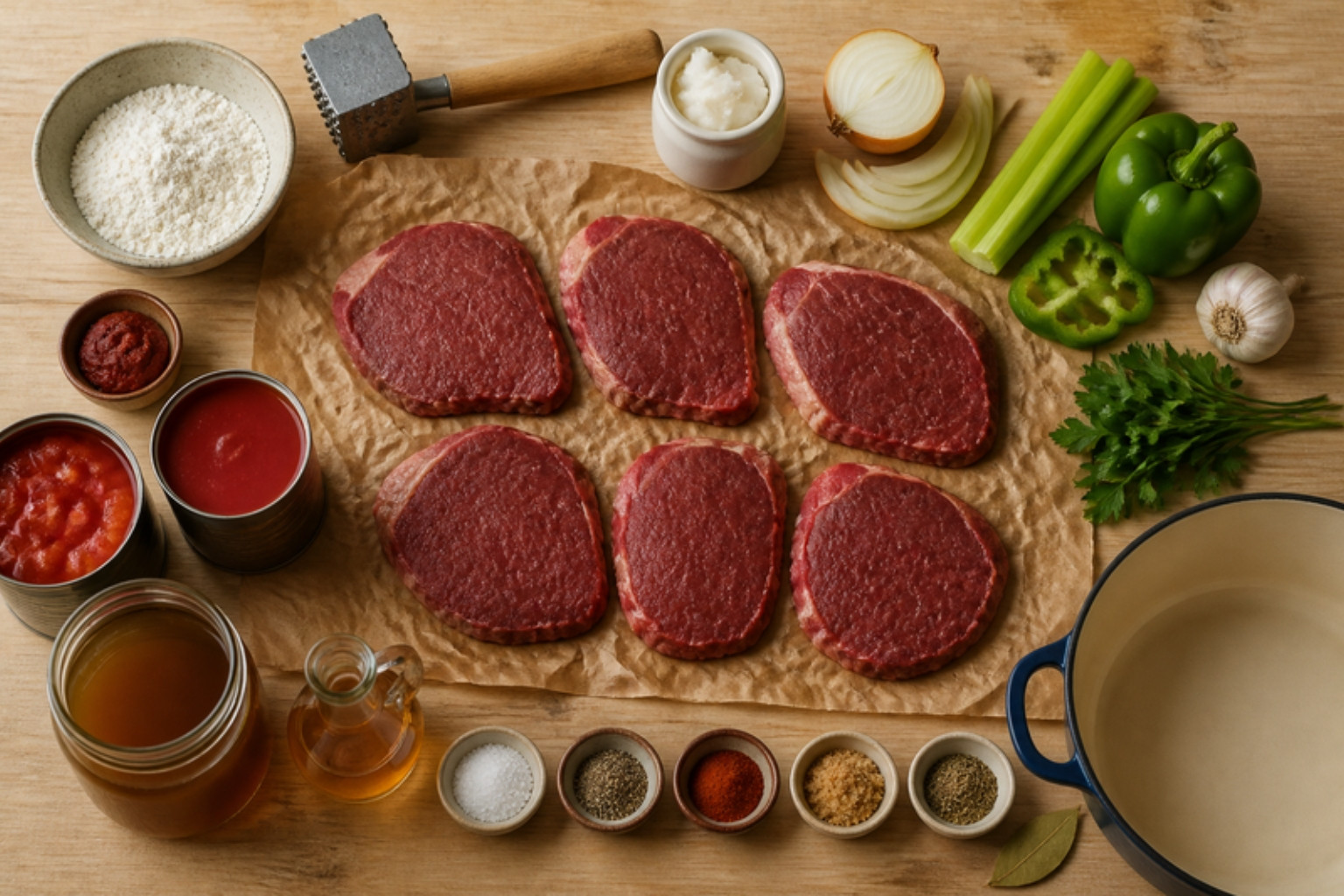
White rice flour gets pounded right into the beef with a meat mallet, so it tenderizes the steak and builds a crust that thickens the sauce later. Beef tallow gives the sear a deep, beefy flavor, and a slow oven braise with onion, celery, green pepper, and tomatoes turns a lean, chewy cut into something rich and tender. It’s made without wheat, milk, eggs, peanuts, tree nuts, soy, fish, shellfish, and sesame.
Made without: peanuts, tree nuts, milk, eggs, wheat, soy, fish, shellfish, sesame.
Why You’ll Love This Recipe
- Budget-friendly: round steak is one of the most affordable beef cuts, and the braise makes it tender.
- One pot: sear, sauté, and braise in the same Dutch oven.
- Built-in gravy: the rice flour crust and tomatoes cook down into a thick, savory tomato gravy.
- Better the next day: it reheats beautifully and freezes well.
- No Worcestershire or soy sauce: tomato paste, a browned crust, and a splash of cider vinegar bring the savory depth.
How Swiss Steak Works Without Wheat Flour
The “Swiss” in Swiss steak likely refers to “swissing,” an old term for pounding or rolling meat to tenderize it, not to Switzerland. In the classic method, flour is pounded into the steak. That flour does two jobs: it helps the meat brown, and it thickens the braising liquid into gravy.
White rice flour does both jobs well. It browns nicely in hot fat and, as it simmers, releases starch into the tomato sauce for a glossy, clingy gravy. It also tends to stay smooth rather than turning gummy. Saving a couple of tablespoons of the seasoned flour to cook with the tomato paste gives the gravy a little extra body, the same way a roux would.
Round steak is lean and full of connective tissue, so it needs low, moist heat for a long time. Braising at 325°F for 1 1/2 to 2 hours lets that tissue break down until the meat is fork-tender.
Ingredients & Swap Ideas
- Beef round steak (2 lb / 900 g): top round or bottom round, about 3/4 inch thick. Chuck steak works too and turns even more tender. Choose plain beef, not pre-marinated or injected.
- White rice flour (1/2 cup / 80 g): sweet rice flour or cornstarch can stand in for the dredge, though cornstarch gives a thinner crust.
- Beef tallow (3 tbsp): lard or extra-virgin olive oil also work. Choose pure tallow, not one blended with seed oils, and skip vegetable oil.
- Onion, celery, green pepper, garlic: the classic trio. Use a red bell pepper if you want it a little sweeter.
- Tomatoes: one can of diced tomatoes, one small can of tomato sauce, and 2 tablespoons of tomato paste. Check labels for simple ingredients.
- Beef broth (1 cup): label check, since some broths contain wheat, soy, yeast extract, or added oil. Water with an extra pinch of salt works in a pinch.
- Apple cider vinegar and brown sugar: a little tang and a little sweetness to balance the tomatoes. Avoid malt vinegar, which is made from barley.
Kitchen Equipment
- A 5- to 6-quart oven-safe Dutch oven or deep skillet with a lid.
- A meat mallet (or the bottom of a heavy skillet).
- A shallow dish for the flour and an instant-read thermometer.
Step-by-Step Tips
- Pound with purpose. Work the flour in on both sides until the steak is about 1/2 inch thick. You’ll see the surface turn pale and matte as the flour sticks.
- Sear in batches. Crowding the pan steams the meat. Wait for a deep brown crust before flipping, 3 to 4 minutes per side.
- Scrape the fond. The browned bits left behind are the backbone of the gravy. The onions’ moisture helps lift them.
- Toast the tomato paste. Cook it with the reserved flour until it darkens to brick red for deeper flavor.
- Test with a fork, not a clock. The steak is ready when a fork slides in with almost no resistance. If it still pulls back, give it another 20 to 30 minutes.
Swiss Steak with Tomato Gravy
Ingredients
Equipment
Method
- Heat the oven to 325°F (165°C). Pat the steaks dry. Mix the rice flour, salt, pepper, and paprika in a shallow dish.
- Lay a steak in the flour mixture, sprinkle more flour over the top, and pound it with the textured side of a meat mallet to about 1/2 inch thick, working the flour into the surface. Flip and repeat. Set on a plate and repeat with the remaining steaks. Save 2 tablespoons of the leftover seasoned flour.
- Heat the beef tallow in the Dutch oven over medium-high heat until it shimmers. Sear the steaks in batches, without crowding, 3 to 4 minutes per side, until deep brown and crusty. Move to a plate.
- Lower the heat to medium. Add the onion, celery, and green pepper to the drippings and cook 5 to 6 minutes, scraping up the browned bits, until the onion is soft and golden at the edges. Add the garlic and cook 30 seconds until fragrant.
- Stir in the tomato paste and the reserved 2 tablespoons of seasoned flour and cook 1 minute, until the paste darkens to brick red. Stir in the diced tomatoes, tomato sauce, broth, cider vinegar, brown sugar, thyme, and bay leaf. Bring to a simmer.
- Nestle the steaks into the sauce, spooning some over the top. Cover and braise in the oven for 1 1/2 to 2 hours, until a fork slides into the beef with almost no resistance and the sauce has thickened into a rich tomato gravy.
- Remove the bay leaf. If the gravy is thin, simmer it uncovered on the stovetop for a few minutes. Taste for salt and pepper, sprinkle with parsley, and serve over mashed potatoes or rice.
Notes
Troubleshooting & Tips
- Tough meat: it needs more time, not less. Round steak goes through a tough stage before it turns tender. Keep it covered and keep braising.
- Thin gravy: simmer uncovered on the stovetop for 5 minutes, or stir in 1 teaspoon of cornstarch mixed with 1 tablespoon of cold water and simmer until glossy.
- Too acidic: add another pinch of brown sugar and a splash of broth.
- Flour falling off when searing: pat the steak dry before dredging and let the floured steaks sit 5 minutes so the coating hydrates and grips.
Food safety: whole cuts of beef are safe at 145°F with a 3-minute rest, and this braise goes well beyond that for tenderness. Reheat leftovers to 165°F. See the USDA safe temperature chart.
Storage, Freezing & Reheating
Refrigerate Swiss steak in its gravy for up to 4 days; the flavor deepens overnight. To freeze, pack steaks and gravy together in freezer containers for up to 3 months. Thaw overnight in the refrigerator, then reheat covered over low heat, or in a 325°F oven, until steaming and 165°F in the center. Add a splash of broth if the gravy has thickened.
What to Serve With Swiss Steak
Spoon it over Creamy Dairy-Free Mashed Potatoes so nothing goes to waste. If you like saucy, old-fashioned dinners, try the Smothered Pork Chops with Onion Gravy or the Slow Cooker Pot Roast, and browse more dinner recipes.
FAQ
What cut of meat is best for Swiss steak?
Top round or bottom round steak is traditional. Chuck steak has more marbling and becomes even more tender, though it can be a bit fattier. Cube steak works but cooks faster, so check it after about an hour.
Can I make Swiss steak in a slow cooker?
Many people do: sear the steaks and build the sauce on the stovetop, then cook on LOW for about 6 to 8 hours. We haven’t worked out exact timing for this version, so check for fork-tenderness and thicken the gravy at the end if needed.
Why no Worcestershire sauce?
Worcestershire sauce typically contains anchovies (fish), and some brands contain wheat or soy. Tomato paste, browned beef, and a little cider vinegar give similar savory depth.
Is Swiss steak the same as Salisbury steak?
No. Swiss steak is a whole steak braised in tomatoes. Salisbury steak is made from shaped ground beef patties, usually in a brown mushroom gravy.
A note before you cook: These recipes are ideas and suggestions, not medical or dietary advice. As with any recipe or ingredient, it is each reader’s responsibility to confirm what they can and cannot eat, read every ingredient label, and source quality ingredients that fit their own needs. Ingredient formulations change, so always check the package you’re using.