
If you’ve searched for blueberry muffins without eggs or milk and ended up with flat, gummy, or crumbly results, this recipe takes a different route. Instead of an egg replacer, it builds structure from a balanced mix of oat flour, rice flour, and cornstarch, gets lift from baking powder and baking soda reacting with soured oat milk, and keeps the crumb moist with applesauce and light-tasting olive oil. A short rest lets the flours hydrate so the batter scoops thick and the muffins dome in a hot oven.
The result is a classic bakery-style blueberry muffin: golden edges, a crackly sugar top, and a soft, tender center full of bursting berries. It is a freezer-friendly breakfast and an easy lunchbox treat, and it follows the same flour system as our cranberry orange muffins, so if you have made those, this will feel familiar.
Made without: peanuts, tree nuts, milk, eggs, wheat, soy, fish, shellfish, sesame.
Why You’ll Love This Recipe
- Tall, domed tops with a crunchy sugar crust, like a bakery muffin.
- No eggs, no egg replacer, no flax, and no butter.
- Fresh or frozen blueberries both work, so you can bake these year-round.
- One-bowl-plus-one-cup method with familiar grocery-store ingredients.
- They freeze well, so a batch on the weekend covers breakfasts all week.
How These Muffins Work Without Eggs, Milk, or Wheat
In a standard muffin, eggs bind the batter, help it rise, and set the crumb, while wheat flour supplies gluten for structure. Here those jobs are split up. Rice flour gives a fine, light crumb, oat flour adds tenderness and a slightly wheaty flavor, and cornstarch helps the muffins set rather than crumble. Applesauce adds moisture and some binding. Oat milk soured with a spoonful of cider vinegar reacts with the baking soda for extra lift, and baking powder does the rest.
The 10-minute batter rest matters. Oat and rice flours absorb liquid more slowly than wheat flour, so a freshly mixed batter looks thin. After resting, it thickens enough to mound in the cups and hold the berries in place instead of letting them sink. Starting the oven at 400°F for five minutes gives a quick burst of rise for a taller dome before the temperature drops to finish baking through.
Ingredients and Swap Ideas
- Oat flour, 1 1/4 cups (125 g): choose one labeled certified gluten-free, since regular oats are often processed alongside barley and wheat. You can grind certified gluten-free rolled oats in a blender until powdery.
- White rice flour, 1 cup (160 g): use finely ground white rice flour, not sweet (glutinous) rice flour, which would make the muffins gummy.
- Cornstarch, 1/3 cup (40 g): arrowroot works if you avoid corn, though the crumb may be a little softer.
- Oat milk, 1 cup (240 ml): unsweetened and with no added oil. Many oat milks contain canola or sunflower oil, so check the ingredient list. Room temperature mixes best.
- Applesauce, 1/2 cup (120 g): unsweetened. Pumpkin purée also works and gives a deeper color.
- Light-tasting olive oil, 1/3 cup (75 ml): “light” means refined and mild in flavor, not fewer calories. Melted refined coconut oil also works; if you avoid coconut, stay with the olive oil. Skip vegetable oil and plant butters, which are usually made with seed oils.
- Blueberries, 1 1/2 cups (225 g): fresh or frozen. Don’t thaw frozen berries; add them straight from the freezer to limit purple streaking.
- Lemon zest: optional, but it brightens the berry flavor. Orange zest is another option.
Kitchen Equipment
- 12-cup standard muffin tin with paper liners (or brush the cups with olive oil instead of cooking spray)
- Large and medium mixing bowls, a whisk, and a silicone spatula
- Large cookie scoop or a 1/3-cup measure for even portions
- Wire cooling rack
Step-by-Step Tips
- Sour the oat milk first. Stir in the vinegar and let it stand while you measure the dry ingredients. It won’t curdle like dairy milk, but it will thicken slightly.
- Whisk the dry ingredients well. Even distribution of baking powder and soda is what gives an even rise with no bitter pockets.
- Fold gently, then rest. Stop folding as soon as you see no dry flour. Set a timer for 10 minutes and let the batter thicken.
- Coat the berries. A tablespoon of rice flour on the berries helps them stay suspended in the batter.
- Fill the cups high. Nearly full cups give the tall muffin-top look. Sprinkle generously with coarse sugar for the crunchy crust.
- Watch for doneness cues. The tops should be golden at the edges and spring back when pressed. A toothpick should come out free of wet batter; a streak of berry juice is fine.
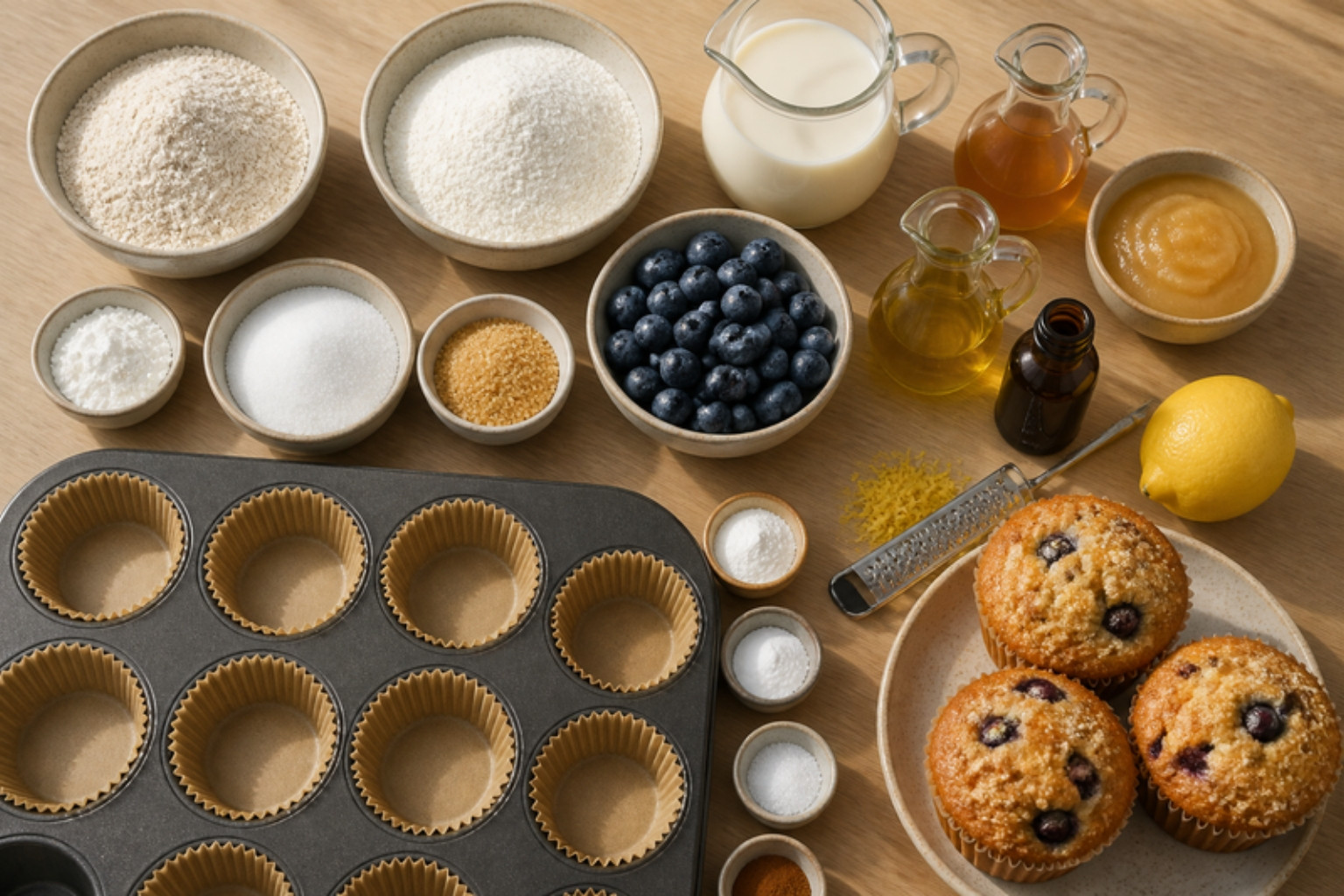
Blueberry Muffins, No Eggs, Milk or Wheat
Ingredients
Equipment
Method
- Heat the oven to 400°F (200°C). Line a 12-cup muffin tin with paper liners or brush the cups with light-tasting olive oil.
- Stir the oat milk and vinegar together in a measuring cup and let it stand 5 minutes; it will look slightly thickened.
- In a large bowl, whisk the oat flour, rice flour, cornstarch, sugar, baking powder, baking soda, salt, and cinnamon until evenly colored with no streaks of baking powder.
- In a medium bowl, whisk the soured oat milk, applesauce, olive oil, vanilla, and lemon zest until smooth and slightly glossy.
- Pour the wet ingredients into the dry and fold with a spatula just until no dry flour shows. The batter will be loose at first. Let it rest 10 minutes; it thickens to a soft, scoopable batter as the oat and rice flours absorb the liquid.
- Toss the blueberries with 1 tablespoon rice flour and fold them in with a few gentle strokes. If using frozen berries, add them straight from the freezer.
- Divide the batter among the cups, filling them nearly to the top (a heaping 1/3 cup each). Sprinkle with the coarse sugar.
- Bake 5 minutes at 400°F, then lower the oven to 375°F (190°C) without opening the door and bake 16 to 19 minutes more (frozen berries need the longer time), until the tops are domed and golden at the edges, spring back when pressed, and a toothpick in the center comes out without wet batter (purple berry juice is fine).
- Cool in the pan 10 minutes, then move to a rack. The crumb finishes setting as the muffins cool, so let them sit at least 15 minutes before splitting one open.
Notes
Troubleshooting
- Gummy centers: the muffins likely needed a few more minutes, or they were cut while hot. Gluten-free crumbs finish setting as they cool, so give them at least 15 minutes.
- Flat tops: check that your baking powder is fresh, don’t skip the 400°F start, and fill the cups nearly to the top.
- Berries sank: the batter may not have rested long enough to thicken. Toss the berries in rice flour and fold them in after the rest.
- Gritty texture: some rice flours are coarse. Look for a finely ground white rice flour, and don’t shorten the rest time.
Storage, Freezing, and Reheating
Keep the muffins in an airtight container at room temperature for up to 2 days or in the refrigerator for up to 5 days. To freeze, cool completely, wrap individually or store in a freezer bag, and freeze for up to 3 months. Warm a frozen muffin in the microwave for 20 to 30 seconds or in a 300°F (150°C) oven for about 10 minutes. The sugar top softens a little in the fridge; a few minutes in the oven brings back some crunch.
More Recipes to Try
For another berry recipe made without the top nine, try the blueberry cobbler with a tender biscuit topping. On a slower morning, the pumpkin pancakes with no eggs, milk, or wheat use a similar oat and rice flour blend. You can browse more ideas in our breakfast recipes.
FAQ
How do you make blueberry muffins without eggs?
This recipe replaces what eggs do through formulation: a mix of rice flour, oat flour, and cornstarch for structure, applesauce for moisture and binding, and baking powder plus baking soda with soured oat milk for lift. No commercial egg replacer or flax is used.
Can I use frozen blueberries?
Yes. Add them straight from the freezer and expect the longer end of the bake time. Thawed berries bleed into the batter and turn it purple-gray.
Can I use all-purpose flour instead?
This recipe was written for oat and rice flour, and swapping in wheat flour would change the liquid balance. It would also change what the muffins are made without, since wheat is one of the top nine allergens.
Can I bake this as a loaf?
A loaf version hasn’t been worked out for this recipe. Muffins bake through more evenly with these flours, so the muffin tin is the way to go here.
A note before you cook: These recipes are ideas and suggestions, not medical or dietary advice. As with any recipe or ingredient, it is each reader’s responsibility to confirm what they can and cannot eat, read every ingredient label, and source quality ingredients that fit their own needs. Ingredient formulations change, so always check the package you’re using.