
If pumpkin pie crusts and egg-set custards have been a struggle at your Thanksgiving table, there’s an older dessert worth knowing. Indian pudding is one of the oldest American desserts, a New England staple from colonial kitchens, named for “Indian meal,” the old term for cornmeal. It’s cornmeal slowly cooked in milk with molasses and warm spices, then baked for hours until it turns dark, soft, and spoonable, somewhere between gingerbread and a rich porridge. Served warm, it tastes like the holidays.
Classic recipes use whole milk, eggs, and butter. This version uses oat milk with no added oil, a cornmeal base boosted with a little cornstarch to do the setting that eggs usually do, and a spoonful of light-tasting olive oil for richness. The long, low bake does the rest. There’s no crust to roll and no mixer to wash, and it bakes on its own while you work on the rest of the meal.
Made without: peanuts, tree nuts, milk, eggs, wheat, soy, fish, shellfish, sesame.
Why You’ll Love This Recipe
- A historic Thanksgiving dessert with deep molasses and ginger flavor.
- No crust, no mixer, about 15 minutes of hands-on work.
- Set with cornmeal and cornstarch, no eggs or egg replacer.
- Bakes at a low 300°F, so it can share the oven with sides.
- A warm, spoonable change of pace from pie.
How Indian Pudding Sets Without Eggs
In the traditional recipe, eggs help firm up the pudding, but the cornmeal does most of the work. As cornmeal simmers in liquid, its starch swells and thickens, then keeps thickening during the long bake. This version uses ½ cup of cornmeal for 4 cups of oat milk plus 2 tablespoons of cornstarch, which gives the pudding the soft, spoonable set eggs would otherwise provide. Whisking the cornmeal and cornstarch into cold oat milk first, before adding it to the hot milk, keeps it from clumping.
The final step is the old-fashioned trick: pouring cold milk over the top without stirring. It forms a soft, custardy layer on top as the pudding bakes, and it’s part of what makes Indian pudding different from plain cornmeal mush.
Ingredients & Swap Ideas
- Oat milk with no added oil, 4 cups (960 ml): unsweetened and certified gluten-free. Many oat milks contain canola or sunflower oil, so read the label. Soy, almond, or cashew milk would change the made-without profile.
- Yellow cornmeal, ½ cup (70 g): fine or medium grind. Choose one labeled gluten-free, and avoid self-rising cornmeal or cornbread mix, which contain leavening and often wheat.
- Cornstarch, 2 tablespoons (16 g): the extra setting power in place of eggs.
- Unsulphured molasses, ½ cup (170 g): the defining flavor. Avoid blackstrap, which is bitter here. Pure maple syrup can replace up to half for a lighter flavor.
- Light brown sugar, ¼ cup (50 g).
- Light-tasting olive oil, 2 tablespoons (30 ml): replaces butter. “Light” means refined and mild in flavor, not lower in calories. Melted refined coconut oil also works; skip butter substitutes, which are usually made with seed oils.
- Ginger, cinnamon, nutmeg, salt, and vanilla: use single spices rather than blends.
- Raisins (optional), ½ cup (75 g): many are coated with sunflower oil to keep them from sticking, so look for raisins with no added oil.
Kitchen Equipment
- Heavy 3-quart saucepan (a thin pan scorches cornmeal)
- Whisk
- 1½- to 2-quart baking dish, brushed with light-tasting olive oil (no cooking spray)
Step-by-Step Tips
- Heat gently. Warm 3 cups of oat milk until it steams with small bubbles at the edges. Oat milk can catch on the bottom, so stay at medium heat.
- Make a slurry. Whisk the cornmeal and cornstarch into ½ cup of cold oat milk until smooth, then whisk it into the hot milk.
- Cook until it coats a spoon. Whisk constantly over medium-low for 10 to 15 minutes, scraping the corners, until it looks like loose porridge and a line drawn through it on the back of a spoon holds for a second.
- Season off the heat. Whisk in the molasses, sugar, oil, spices, salt, and vanilla, then the raisins.
- Pour, then float the milk. Pour into the dish and slowly pour the last ½ cup of cold oat milk over the top. Don’t stir.
- Bake low and slow. 2 to 2½ hours at 300°F, until the top is dark brown and slightly puffed, the edges pull away from the dish, and the center still jiggles like soft pudding.
- Rest. It thickens as it stands. Give it 30 minutes before serving warm.
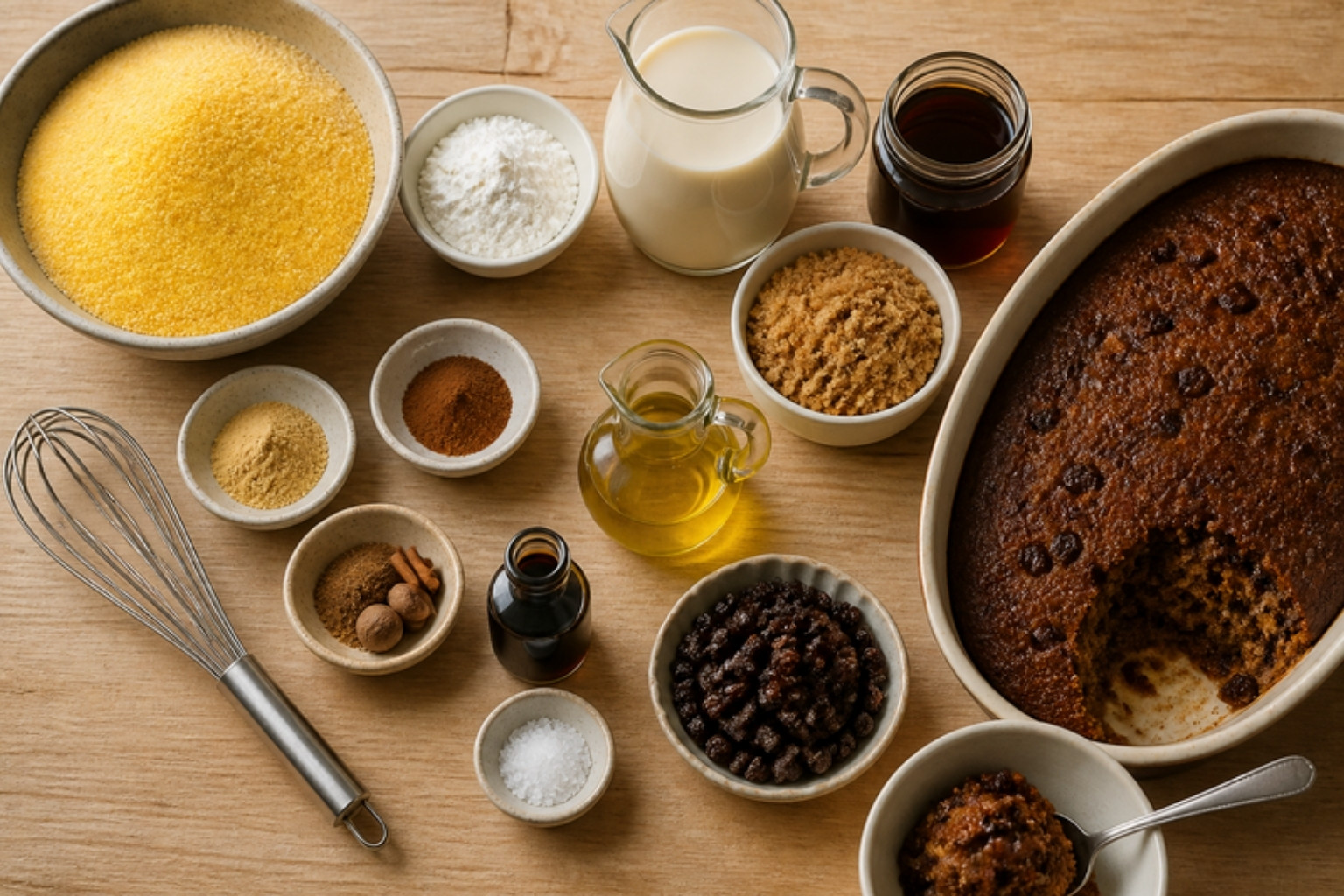
Indian Pudding (Baked Cornmeal and Molasses Pudding)
Ingredients
Equipment
Method
- Heat the oven to 300°F (150°C). Brush a 1½- to 2-quart baking dish with light-tasting olive oil.
- Heat 3 cups (720 ml) of the oat milk in a heavy saucepan over medium heat until steaming, with small bubbles at the edges.
- Meanwhile, whisk the cornmeal and cornstarch into ½ cup (120 ml) of the cold oat milk until smooth. Whisk this slurry into the hot oat milk.
- Cook over medium-low heat, whisking constantly and scraping the corners, for 10 to 15 minutes, until it thickens to a loose porridge that coats the back of a spoon and holds a trail for a second.
- Remove from the heat and whisk in the molasses, brown sugar, olive oil, ginger, cinnamon, nutmeg, salt, and vanilla. Stir in the raisins, if using.
- Pour into the prepared dish. Slowly pour the remaining ½ cup (120 ml) cold oat milk over the top. Do not stir; it bakes into the soft, custardy layer.
- Bake uncovered for 2 to 2½ hours, until the top is dark brown and slightly puffed, the edges are set and pulling away from the dish, and the center still jiggles like soft pudding.
- Let stand 30 minutes; it thickens as it cools. Serve warm.
Notes
Troubleshooting & Tips
- Lumpy base: the cornmeal went straight into hot milk. Whisk hard or pass it through a sieve; next time, use the cold slurry.
- Too runny after resting: bake it longer. Ovens and dishes vary; a wider, shallower dish cooks faster than a deep one.
- Stiff and dry: it baked too long or too hot. Stir in a splash of warm oat milk when serving.
- Separated or watery layer on top: that’s the poured milk layer and is normal partway through. It sets into a soft skin by the end of the bake.
Make-Ahead & Storage
Indian pudding is good made a day ahead. Cool it, cover, and refrigerate for up to 4 days. Reheat individual portions in the microwave with a splash of oat milk, or warm the whole dish covered at 300°F for about 20 minutes. Freezing isn’t recommended, because thawed cornmeal pudding turns grainy.
It’s traditionally served with vanilla ice cream. A dairy-free ice cream changes the made-without profile depending on its base (many contain coconut, nuts, soy, or added seed oils), so check the label, or serve it with a drizzle of maple syrup.
More Thanksgiving Desserts
See every pie and dessert in our Thanksgiving recipes collection. For more of these flavors, try the old-fashioned gingerbread cake with lemon sauce or the sliceable crustless pumpkin pie. If you like cornmeal at breakfast, there’s also crispy fried cornmeal mush.
FAQ
Why is it called Indian pudding?
Colonial New Englanders called cornmeal “Indian meal,” since corn was a Native American crop. Cooks adapted English “hasty pudding,” usually made with wheat, to the cornmeal that grew well in New England.
What does Indian pudding taste like?
Think of a warm, soft gingerbread you eat with a spoon: molasses-sweet, gently spiced, with a slightly grainy, custardy texture from the cornmeal.
Can I make it in a slow cooker?
Slow-cooker versions exist, but this recipe was written for the oven, and the timing and set haven’t been worked out for a slow cooker. The oven also gives the darker top.
Is Indian pudding gluten-free?
This recipe has no wheat ingredients. Choose cornmeal and oat milk labeled certified gluten-free, since both can be cross-contacted with wheat or barley.
A note before you cook: These recipes are ideas and suggestions, not medical or dietary advice. As with any recipe or ingredient, it is each reader’s responsibility to confirm what they can and cannot eat, read every ingredient label, and source quality ingredients that fit their own needs. Ingredient formulations change, so always check the package you’re using.