
October in the Midwest means jugs of fresh, unfiltered apple cider at every orchard stand, and it also means some of the best grilling weather of the year. These grilled pork chops put the two together. Thick, bone-in chops spend a couple of hours in a lightly sweet cider brine with garlic, thyme, and bay, then hit a hot grill for a deep sear before finishing gently over indirect heat. A quick cider reduction goes on at the end as a sticky, tangy glaze.
Brining is the step that keeps lean pork chops juicy. The salt helps the meat hold on to moisture as it cooks, so you get a little more margin between perfectly done and dry. The flavor comes from cider, spices, and fire rather than bottled sauces, marinades, or rubs that may contain soy, wheat, or sesame. The whole recipe is made without all nine major allergens.
Made without: milk, eggs, wheat, soy, peanuts, tree nuts, fish, shellfish, sesame.
Why You’ll Love These Pork Chops
- Juicy, seasoned all the way through. A short brine does more than any rub can.
- No bottled marinades. No soy sauce, Worcestershire, or barbecue sauce, just cider, salt, sugar, and spices.
- Two-zone grilling. A hard sear for color and a gentle finish for tender meat.
- Built for fall. Pairs naturally with mashed potatoes, roasted squash, or braised cabbage.
How to Get Big Flavor Without Sauces or Marinades
Many grilled pork recipes rely on soy sauce or Worcestershire for savory depth, and bottled marinades often include soy, wheat, sesame oil, or anchovy. This recipe builds flavor in three layers instead:
- The brine: Salt seasons the meat to the center, while cider, garlic, thyme, and bay add gentle background flavor.
- The sear: A dry surface on a hot grate gives you browning, which is where most of the savory flavor comes from. The small amount of sugar in the brine helps the chops color quickly.
- The glaze: Cider reduced with a little brown sugar and vinegar tastes concentrated, sweet, and tart, a little like a thin apple butter.
Ingredients and Swap Ideas
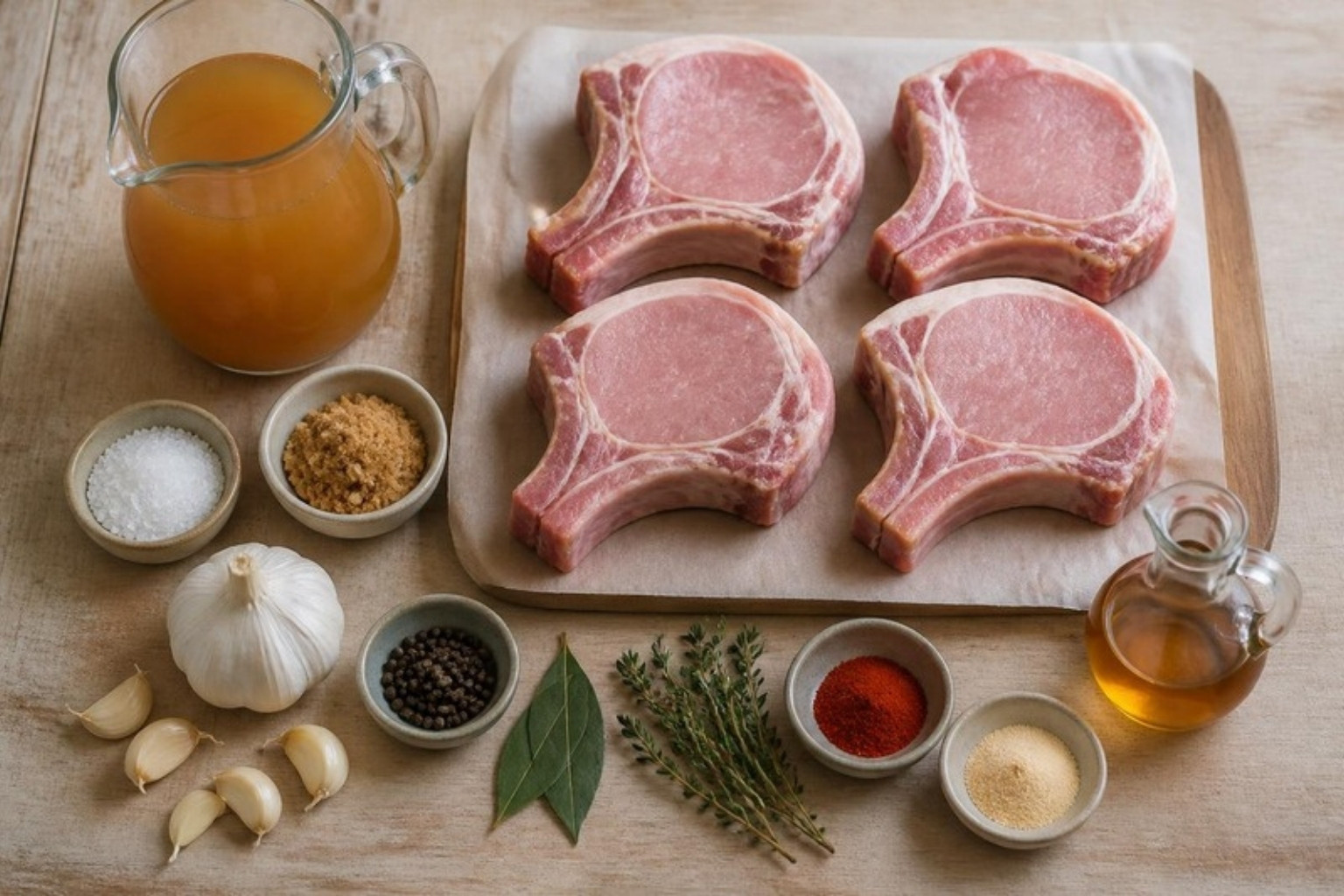
- Bone-in pork chops (4, 1 to 1 1/4 inches thick): Thick chops are much easier to grill without overcooking. Rib chops are the most forgiving; center-cut loin chops are leaner. Skip packages labeled “enhanced” or “solution added,” which are already brined and may include added flavorings. Boneless chops work too; start checking the temperature 2 to 3 minutes sooner.
- Apple cider (3 cups / 720 ml total): Unfiltered, fresh-pressed cider has the most flavor. Shelf-stable apple juice works in a pinch, but the glaze will taste sweeter and less tangy.
- Kosher salt (1/4 cup): Brands differ in density. Use about 36 g of Diamond Crystal or 30 g of Morton. Table salt is much saltier by volume, so use only 2 tablespoons if that’s what you have.
- Smoked paprika and garlic powder: Single-ingredient spices are easiest to check. Pre-made pork rubs and seasoning blends can contain wheat, soy, or sesame, so read those labels closely.
- Light (refined) olive oil: It handles high grill heat better than extra-virgin olive oil and has a mild flavor. Beef tallow or lard also work. We skip seed oils like canola and blends labeled “vegetable oil.”
Equipment
- A gas or charcoal grill set up for two-zone cooking (about 450°F / 230°C with the lid closed)
- An instant-read thermometer
- A gallon zip-top bag or nonreactive container for brining
- A small saucepan, tongs, and a basting brush
Step-by-Step Tips
- Cool the brine completely. Dissolve the salt and sugar in a little warm water, then add the rest of the liquid cold. Warm brine on raw pork is a food-safety problem.
- Keep the brine short. One to four hours is the window. Longer brines make thinner chops taste ham-like and spongy.
- Dry the chops well. A wet surface steams instead of searing. Pat them dry and let them sit on a rack for 10 minutes while the grill heats, if you have time.
- Sear hot, finish cool. Sear over direct heat until the chops release easily, then slide them to the cooler side to finish. Glaze only during the indirect phase so the sugar doesn’t burn.
- Cook to temperature, not time. Pull the chops at 145°F (63°C) in the thickest part and rest 3 minutes, per the USDA safe minimum temperature chart.
Grilled Apple Cider Brined Pork Chops (Top 9 Free)
Ingredients
Equipment
Method
- In a small saucepan, warm 1 cup of the water with the salt and brown sugar, stirring until dissolved. Pour into a large bowl with the remaining 2 cups cold water, the cold cider, garlic, peppercorns, bay leaves, and thyme. The brine should be cool to the touch before the pork goes in; add a few ice cubes if needed.
- Put the chops in a large zip-top bag or nonreactive container, pour in the brine to cover, and refrigerate 1 to 4 hours (2 hours is a good target). Don’t go longer, or the meat can turn spongy and salty.
- While the pork brines, simmer the cider, brown sugar, vinegar, and pinch of salt in a small saucepan over medium heat for 12 to 15 minutes, until reduced to about 1/4 cup and syrupy enough to coat a spoon. It thickens more as it cools.
- Set up the grill for two-zone cooking: high heat on one side and low or no heat on the other. Aim for about 450°F (230°C) with the lid closed. Clean and oil the grates.
- Remove the chops from the brine, discard the brine, and pat the chops very dry with paper towels. Rub with the oil, then season with the smoked paprika, garlic powder, and black pepper (no extra salt needed).
- Sear the chops over direct heat with the lid closed, 3 to 4 minutes per side, until they have deep golden-brown grill marks and release easily from the grate.
- Move the chops to the cooler side, brush with half the glaze, close the lid, and cook 4 to 8 minutes more, until an instant-read thermometer in the thickest part (not touching bone) reads 145°F (63°C).
- Transfer to a plate, brush with the remaining glaze, and rest 3 minutes before serving. The juices should run clear with a faint blush of pink at the center.
Notes
Troubleshooting
- Too salty: The chops brined too long, were thin, or were already “enhanced.” Stick to 2 hours for 1-inch chops and buy unenhanced pork.
- Charred outside, underdone inside: The direct side was too hot or the chops stayed there too long. Move them to indirect heat sooner and close the lid.
- Sticking to the grate: Clean, oil, and fully preheat the grates, and wait to flip until the chops release on their own.
- Glaze too thin: Keep simmering. It should coat a spoon and leave a slow trail when you drag a finger through it.
Storage, Freezing, and Reheating
- Refrigerator: Store cooled chops in an airtight container for up to 3 days.
- Freezer: Wrap cooked chops tightly and freeze up to 2 months. Thaw overnight in the refrigerator.
- Reheating: Slice and warm in a covered skillet over medium-low heat with a splash of cider until hot through. Avoid the microwave on high, which dries out lean pork.
For a full fall dinner, serve these chops with dairy-free mashed potatoes and finish with a warm Michigan apple crisp. Browse more Top 9 Free recipes for weeknight ideas.
Frequently Asked Questions
How long should you brine pork chops?
For 1-inch chops in this brine, 1 to 4 hours, with 2 hours as a good target. Thinner chops need only 30 to 60 minutes.
What temperature should grilled pork chops reach?
The USDA recommends 145°F (63°C) for whole cuts of pork, followed by a 3-minute rest. The center may still look faintly pink, which is normal at that temperature.
Can I cook these in a skillet instead?
Yes. Sear in a hot cast-iron skillet with a little oil for 3 to 4 minutes per side, then finish in a 400°F (200°C) oven until they reach 145°F, brushing with glaze during the last few minutes.
Can I brine the chops the night before?
Not in this brine. For an overnight option, brine for 2 hours, then remove the chops, pat them dry, and refrigerate them uncovered on a rack until you’re ready to grill the next day.
A note before you cook: These recipes are ideas and suggestions, not medical or dietary advice. As with any recipe or ingredient, it is each reader’s responsibility to confirm what they can and cannot eat, read every ingredient label, and source quality ingredients that fit their own needs. Ingredient formulations change, so always check the package you’re using.